






Axial Blower vs Other Blowers: Types, Pros, and Best Applications
An axial blower is often chosen for compact cooling and ventilation because it delivers strong airflow with a simple, space-saving structure. However, buyers and engineers frequently compare it with centrifugal blowers, radial blowers, and even consumer leaf blowers—each optimized for different pressure, noise, and environmental demands. This guide explains what an axial blower is, how it works, the main blower categories, and the practical differences that decide the best application. It also includes selection tips, common mistakes, and quality considerations used in modern OEM and industrial blower fan projects.
What Is an Axial Blower?
Definition of an Axial Blower
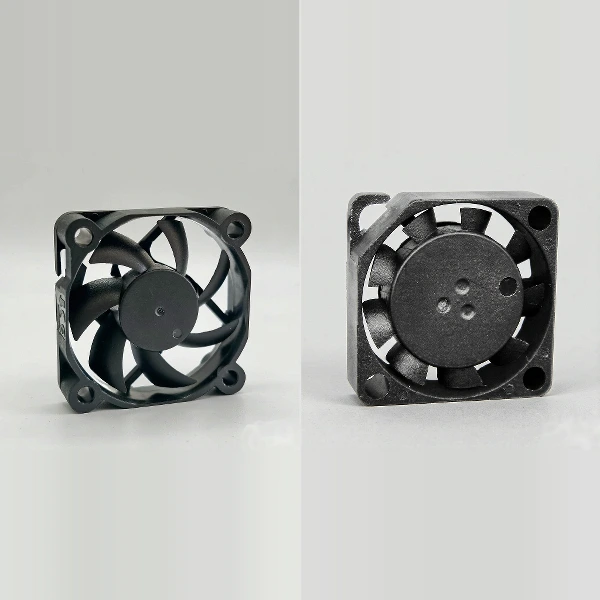
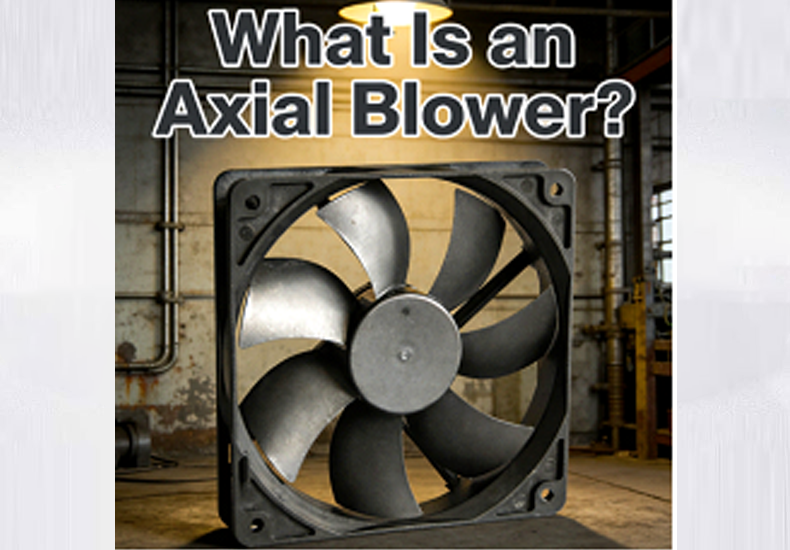
An axial blower is a type of blower fan that moves air in a direction that is largely parallel to the motor shaft. In other words, the airflow enters and exits along the same axis as the rotating impeller or blades. Because the airflow direction resembles an axial fan, many catalogs and purchasing specs group axial blowers together with axial fans—especially when the product is used for electronics cooling, enclosure ventilation, and general air circulation. In practice, the phrase “axial blower” often appears in procurement searches when users want an axial-style airflow device but expect “blower-like” performance or packaging.
For real-world selection, it helps to treat “axial blower” as a functional term: a compact air-moving device designed to provide steady airflow through a system with low-to-moderate resistance. If your system has tight ducts, filters, or dense heatsinks that demand higher static pressure, a centrifugal blower or radial blower may be a better match.
How an Axial Blower Works
An axial blower works by converting the rotational energy of the blades into airflow along the axis. As the blades spin, they create a pressure difference between the inlet and outlet sides. This pressure difference pushes air forward in a relatively straight path. The most important performance relationship to understand is the trade-off between airflow volume and static pressure:
• Airflow volume (often expressed as CFM) describes how much air moves per unit time.
• Static pressure describes how well the blower maintains airflow when the system resists that flow (duct losses, filters, fins, bends, or grilles).
Axial devices typically excel at higher airflow under lower resistance, while centrifugal designs generally deliver higher pressure against restriction.
What Are the Different Types of Blowers?
Classification by Airflow Direction
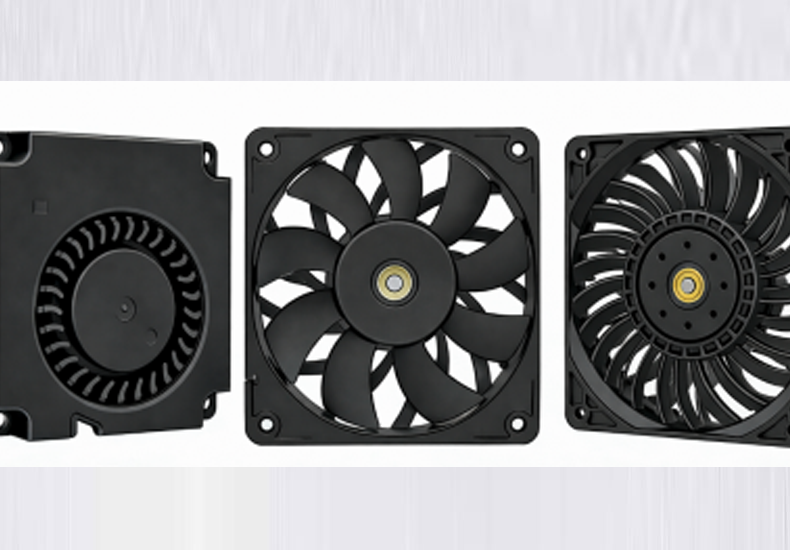
Most blower comparisons start with airflow direction, because direction strongly influences pressure capability, packaging, and best-fit applications:
• Axial blower: air moves parallel to the shaft (straight-through flow).
• Centrifugal blower: air is accelerated by an impeller and exits at about 90° to the inlet.
• Radial blower: a centrifugal variant that discharges more radially, often used for higher pressure or harsher conditions.
Classification by Application
Another useful way to categorize blowers is by the job they are expected to do:
• Blower fan for electronics: compact cooling in power supplies, servers, networking gear, or control boxes.
• Industrial blower fan: heavier-duty operation for equipment cooling, HVAC subsystems, process ventilation, and continuous duty.
• Portable blowers (e.g., leaf blower): high-power consumer tools for outdoor debris movement rather than precision thermal design.
Blower Type Overview (table):
Blower Type | Airflow Direction | Pressure Capability | Typical Use |
Axial Blower | Parallel to shaft | Low–Medium | Electronics, ventilation |
Centrifugal Blower | 90° outlet | Medium–High | HVAC, industrial cooling |
Radial Blower | Radial discharge | Very High | Dust, harsh environments |
Leaf Blower | Straight discharge | Very High | Outdoor debris removal |
What Is the Difference Between Axial and Centrifugal Blowers?
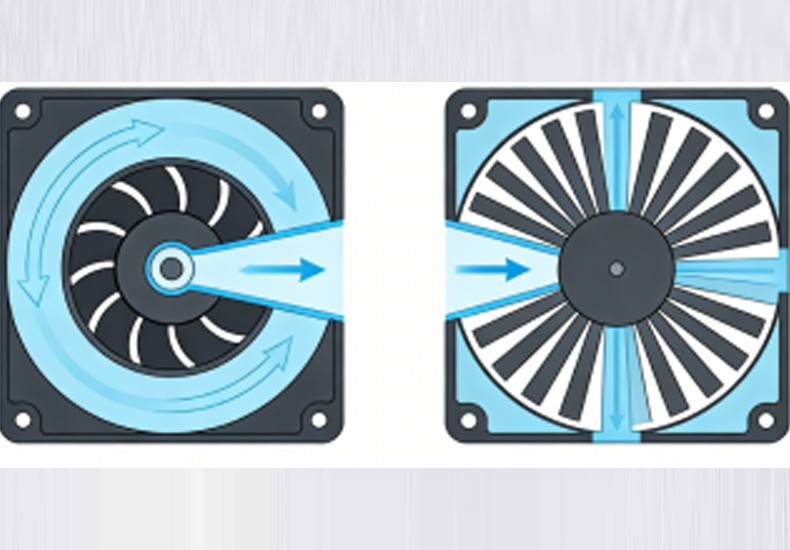
Axial Blower vs Centrifugal Blower: Airflow & Pressure
The fastest way to compare an axial blower with a centrifugal blower is to look at airflow and static pressure. An axial blower typically delivers higher airflow volume in open or low-resistance paths, but it will lose airflow more quickly as restriction increases. A centrifugal blower generally provides higher static pressure, making it better for pushing air through tight heatsinks, long ducts, filters, or complex enclosures.
If your buyer intent includes keywords like “blower fan” you may be looking for airflow and compact size. If you are searching “industrial blower fan,” you are often prioritizing pressure, durability, and performance under resistance.
Structural and Installation Differences
Structurally, axial blowers tend to be compact and straightforward to mount in line with the airflow path. Centrifugal blowers usually require a scroll housing and a 90° discharge, which can simplify ducting in some products but increases package volume. Noise behavior also differs: axial designs can generate tonal blade noise, while centrifugal designs may produce broadband noise depending on turbulence and housing shape.
Axial vs Centrifugal (comparison table):
Feature | Axial Blower | Centrifugal Blower |
Airflow Volume | High | Medium |
Static Pressure | Low–Medium | High |
Size | Compact | Larger |
Typical Keyword | blower fan | industrial blower fan |
What Is the Difference Between Axial and Radial Blower?
Axial vs Radial Blower: Performance Characteristics
A radial blower is typically designed to handle higher pressure demands and, in some designs, better tolerance to particles or harsher industrial conditions. The discharge is more radial, and the impeller/housing geometry often prioritizes pressure generation. By contrast, an axial blower is optimized for continuous airflow with comparatively simple flow paths and efficient air movement at lower resistance.
Application Scenarios
Choose an axial blower when airflow must move through a clean system with low-to-moderate resistance—such as electronics enclosures, ventilation openings, or short duct runs. Choose a radial blower when you need stronger pressure, you expect dust or particulate exposure, or your environment is closer to industrial process ventilation than electronics cooling.
What Is the Difference Between Axial Blower and Leaf Blower?
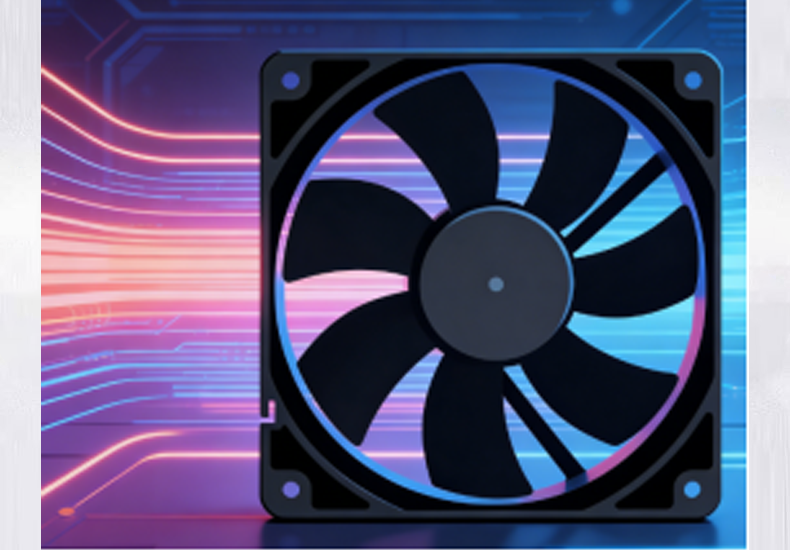
Purpose and Design Intent
Although both devices move air, an axial blower and a leaf blower are engineered for very different goals. An axial blower is built for precision cooling, ventilation, and predictable performance in equipment. A leaf blower is built for outdoor debris removal, emphasizing raw power, large flow bursts, and portability rather than tight acoustic or thermal constraints.
Power, Noise, and Control
Leaf blowers are commonly powered by high-capacity batteries, gasoline engines, or high-wattage AC motors, and they operate at noise levels that would be unacceptable inside products like telecom equipment or medical devices. Axial blowers and blower fans used in equipment are commonly DC or AC powered with speed control options (for example PWM control), enabling designers to balance temperature targets and noise limits.
Suggested visual (for publishing):
Side-by-side illustration idea: axial blower in an enclosure cooling path vs leaf blower used outdoors, highlighting differences in size, power, and noise expectations.
What Are the Advantages of Axial Fan and Axial Blower?

Key Advantages of Axial Blower
Axial blowers offer several advantages that make them popular across electronics cooling and general ventilation:
• High airflow efficiency in low-resistance systems
• Compact design that fits tight product footprints
• Lower energy consumption for a given airflow in open environments
• Cost-effective manufacturing for large production volumes
• Straight-through airflow that simplifies enclosure and inlet/outlet design
Why Axial Blowers Are Popular in Blower Fan Applications
In many cooling architectures, designers want consistent airflow across hotspots—PCBs, heat sinks, power components, and communication modules. An axial blower (or axial-style blower fan) is an easy integration choice when you can provide a reasonable intake and exhaust path. This is common in power supplies, communication equipment, and automation cabinets where air moves through vents, grilles, or short ducts.
Axial Blower vs Other Blowers: Best Application Scenarios
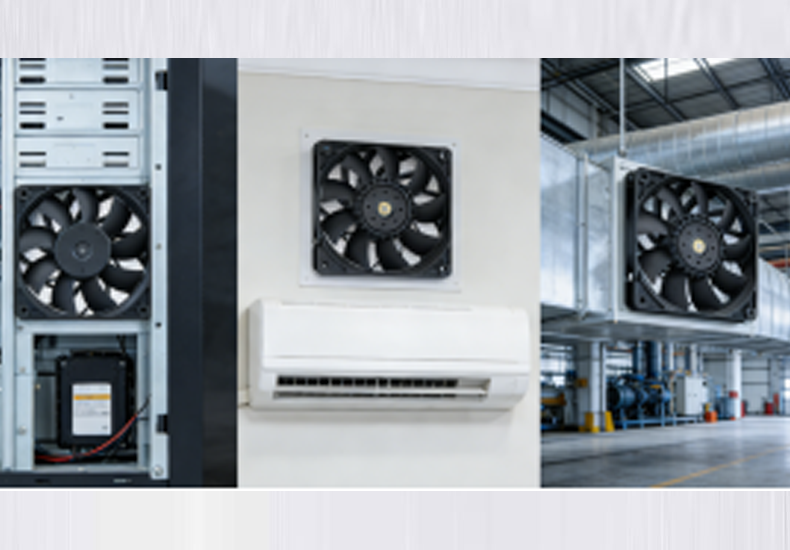
Electronics and Compact Devices
Axial blowers are frequently used in power supplies, servers, and control cabinets where airflow must pass over components and exit quickly. If your enclosure is not heavily restricted, axial blowers can deliver excellent thermal results with lower power draw and simpler mounting. Many “12V blower fan” searches originate from these compact device projects, especially when DC power rails are available.
Industrial Cooling Systems
In industrial systems, the decision often becomes axial blower vs industrial blower fan (a term commonly associated with more rugged centrifugal or higher-pressure designs). If your airflow must travel through filters, longer ducts, or higher resistance heat exchangers, a centrifugal blower may outperform an axial blower. But if the industrial environment is clean and the path is open, axial blowers can still be a cost-effective and efficient solution.
Ventilation and Air Circulation
For ventilation and air circulation—moving air through rooms, cabinets, or enclosures with large openings—axial blowers and axial fans perform well. The straight airflow direction supports predictable circulation patterns and can reduce the need for complex ducting.
Application Matching Guide (table):
Application | Recommended Blower |
Electronics Cooling | Axial Blower |
High-Resistance Ducting | Centrifugal Blower |
Dusty Industrial Use | Radial Blower |
Outdoor Cleaning | Leaf Blower |
How to Choose the Right Axial Blower for Your Application
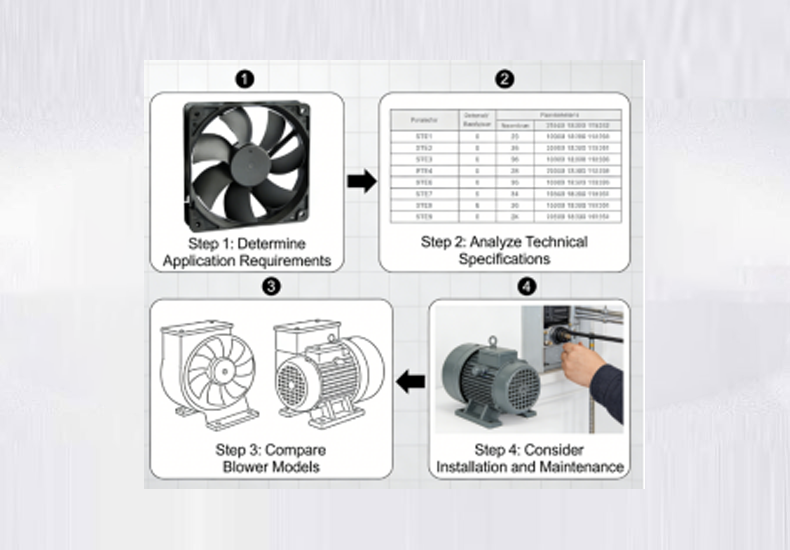
Key Selection Factors
A reliable axial blower selection process considers the system, not just the fan label:
1) Airflow (CFM): estimate how much air is needed to maintain safe component temperatures.
2) Static pressure: evaluate restriction from heatsinks, vents, filters, and ducts.
3) Noise level: define acoustic targets (dBA) for your product environment.
4) Voltage and control: confirm the available supply (e.g., 12V blower fan use cases) and whether PWM/FG feedback is required.
5) Environment: temperature range, humidity, dust exposure, and expected duty cycle.
Practical tip: if two blowers have similar airflow ratings, compare their pressure curves. The model with better static pressure at your operating point will maintain airflow more reliably once installed.
Common Selection Mistakes
Common mistakes can cause underperformance even when the datasheet numbers look good:
• Choosing airflow over pressure: high free-air CFM can collapse in a restricted enclosure.
• Ignoring system resistance: bends, grilles, and filters add pressure loss.
• Not planning intake/exhaust: poor vent design recycles hot air.
• Overlooking control strategy: without PWM or proper speed control, you may waste power or miss noise targets.
Axial Blower in Modern Industrial and OEM Systems
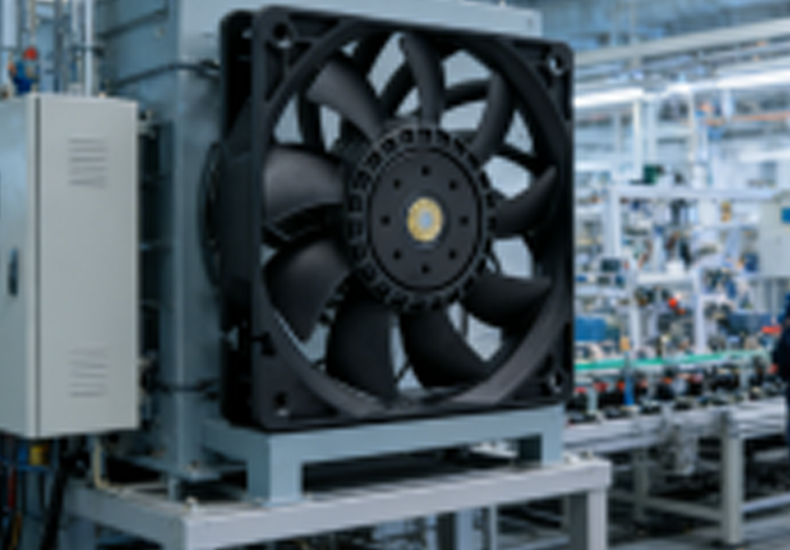
Role of Axial Blower in Industrial Blower Fan Solutions
In OEM programs, an axial blower may be selected to reduce size, simplify integration, and hit energy targets. It often supports continuous duty in automation and electronics cooling. For heavier resistance or harsher conditions, teams may shift to an industrial blower fan—commonly a centrifugal or higher-pressure design—especially when filtration, long ducting, or higher heat loads are involved.
Quality, Testing, and Compliance
For professional buyers, performance is only one part of the decision. Quality systems and verification testing are key to predictable long-term results. Many established cooling fan manufacturers highlight capabilities such as reliability labs, noise testing rooms, airflow & pressure testing chambers, and automated inspection lines. They may also list management system certifications like ISO 9001, ISO 14001, and automotive-oriented IATF 16949 to demonstrate process control.
For example, YCCFAN’s company overview emphasizes industrial cooling fans and blowers and describes development and QA facilities (reliability, noise, airflow/pressure testing), plus certifications (ISO9001, ISO14001, IATF16949)—important when your axial blower must run continuously in an OEM product.
When evaluating suppliers, ask for:
• Airflow/pressure test methodology and traceable reports
• Noise test conditions (distance, background noise, mounting)
• Life testing approach (bearing type, temperature profile, duty cycle)
• Compliance and documentation (RoHS/REACH where applicable, safety standards)
Conclusion: Why Axial Blower Remains a Core Blower Fan Solution
An axial blower remains a core solution because it provides efficient airflow in a compact package—ideal for many blower fan applications such as electronics cooling, enclosure ventilation, and general air circulation. The best choice depends on your system resistance and environmental demands: centrifugal blowers excel when pressure is needed, radial blowers help in harsher or dusty industrial conditions, and leaf blowers are built for outdoor power tasks.
To choose correctly, focus on the application—not just headline airflow numbers. Pair airflow targets with static pressure, noise limits, voltage/control requirements (including common 12V blower fan projects), and supplier quality verification. With these inputs, an axial blower can deliver reliable, efficient cooling performance across a wide range of modern OEM and industrial products.
Read more:
https://www.yccfan.com/articledetail/do-cooling-fans-use-a-lot-of-electricity.html