





How Long Should a Car Cooling Fan Stay On?
This guide gives both: a clear benchmark for what is usually normal, what is not, and how to check your auto cooling fan before booking service.
Table of Contents
How Long Should a Car Cooling Fan Stay On After Shutdown?
When Is a Fan for Car Staying On a Warning Sign?
How to Check an Auto Cooling Fan Before Repair
Common Causes and Fixes for a Faulty Car Cooling Fan
How Long Should a Cooling Fan Keep Running After the Vehicle Is Shut Off?
In many vehicles, the cooling fan may continue to run for a short period after the engine has been shut off. This is part of the vehicle’s normal thermal management system. High ambient temperatures, heavy vehicle loads, trailer towing, or air conditioning use can all cause the fan to run at a higher speed and produce more noise.
If the cooling fan continues running for a few minutes after the vehicle has been driven in high temperatures and then shuts off automatically, this usually does not indicate a fault. After shutdown, residual heat often builds up in the engine compartment. At this point, the cooling fan continues drawing air through the radiator to reduce heat soak and protect surrounding components from excessive temperature. For this reason, brief fan operation after shutdown is very common in modern electronically controlled systems.
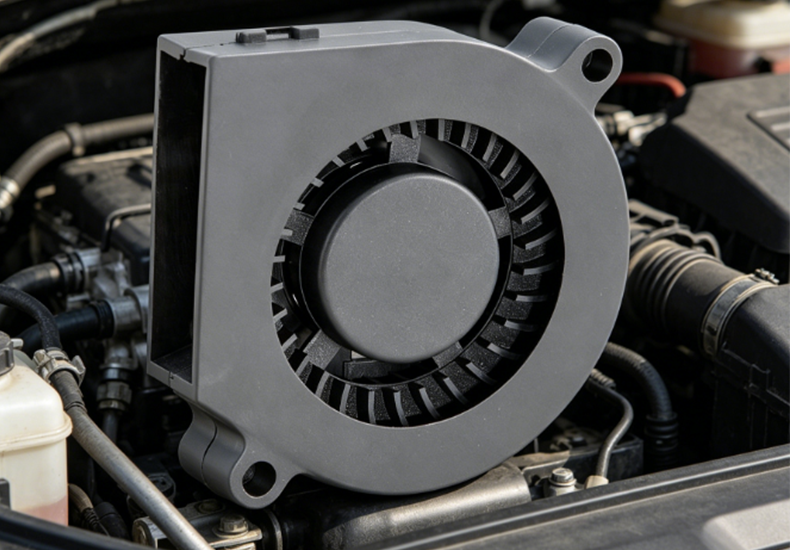
More important than the exact number of minutes the fan runs is the driving context in which it happens. If the fan runs briefly after stop-and-go traffic, summer driving, or extended air conditioning use, there is usually no need for concern. By contrast, if the fan continues running after a short, light-load drive in cool weather, the situation deserves closer attention.
When Is a Fan for Car Staying On a Warning Sign?
A fan for car becomes a warning sign when its behavior starts to feel excessive, unusual, or out of sync with actual driving conditions. The key issue is not simply that the fan remains on after shutdown, but whether it does so too often, for too long, or under conditions that do not normally require extra cooling.
This is especially worth attention when the fan keeps running after a short trip, activates when the engine is still cold, or continues operating in mild weather without any obvious heat load. In these cases, the problem may not be normal heat dissipation at all, but a fault in the electrical or cooling control system.
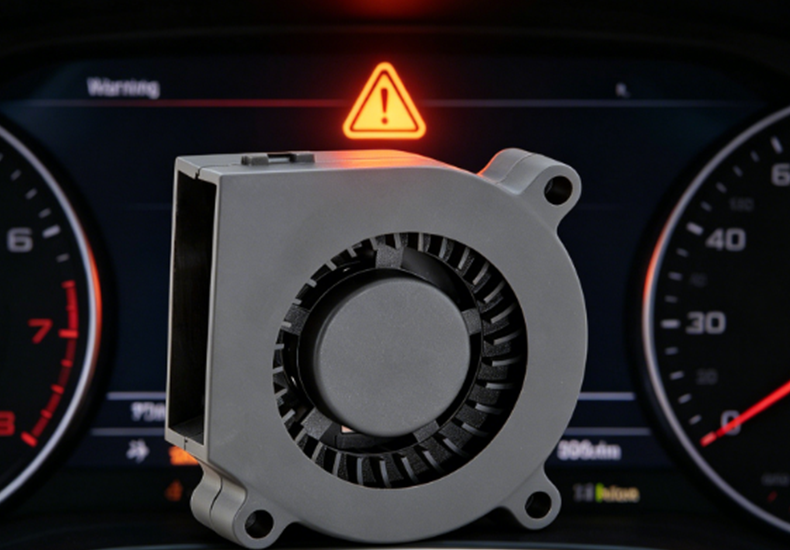
If a radiator fan runs continuously or cycles more often than expected, it is worth checking the fan control unit, relay, thermal switch, or temperature-related sensors. These components control when the fan starts and stops. Once one of them sends the wrong signal or fails to respond properly, the car cooling fan may stay on longer than necessary or switch on at the wrong time.
How to Check an Auto Cooling Fan Before Repair
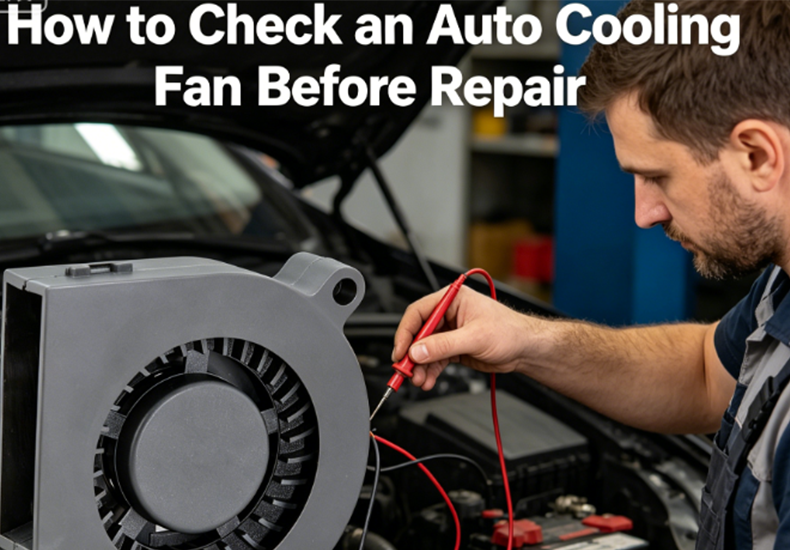
Before paying for a full repair, a driver can do a few safe, simple checks. The goal is not to replace a professional diagnosis, but to separate normal after-cooling from obvious fault patterns.
1.Start with the temperature gauge
If the gauge remains steady in the normal range and the auto cooling fan shuts off by itself, the system may simply be cooling down as designed. If the gauge climbs, fluctuates, or approaches overheating, the issue may involve the thermostat, coolant flow, sensor signals, or radiator airflow.
A good first step is to check whether the temperature reading seems reasonable and whether the fan behavior matches the actual engine condition. If the engine is not hot but the fan keeps running, the problem may be related to the control system rather than real overheating.
2.Check coolant level only after the engine cools
Never open the cooling system while it is hot. Once the engine is fully cool, inspect the coolant reservoir level and look for obvious leaks around hoses, the radiator area, and the water-pump zone. Low coolant can reduce heat transfer efficiency and cause the car cooling fan to run longer as the system struggles to control temperature.
3.Listen to the fan pattern
A healthy fan for car usually sounds controlled. It starts, runs, and then stops without excessive vibration or scraping. A failing fan motor or worn unit may sound rough, uneven, or much louder than before. If the sound changes suddenly, that can be as important as how long the fan runs.
4.DIY check chart for a car cooling fan
What to check | What you want to see | What may be wrong |
Temperature gauge | Stable normal reading | Sensor, thermostat, circulation issue |
Coolant level | Correct level when cool | Leak or low coolant |
Fan pattern | Short, controlled cycle | Stuck relay or control fault |
Fan sound | Smooth airflow sound | Worn motor, vibration, blade damage |
Battery condition | No unusual drain | Fan staying powered too long |
Common Causes and Fixes for a Faulty Car Cooling Fan
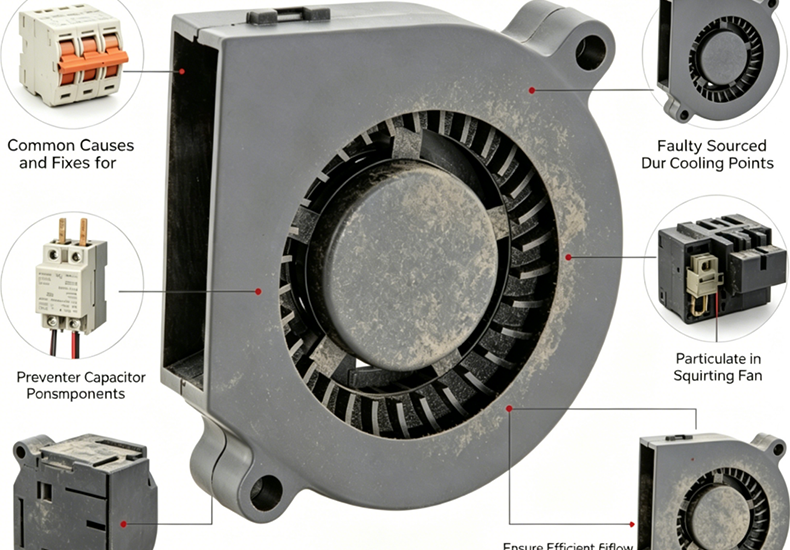
Once a car cooling fan starts behaving abnormally, the cause is often one of a few repeat problems rather than something mysterious.
1.Faulty fan control unit or relay
One of the most common causes is a control problem. If the relay sticks or the control unit fails, the fan may continue receiving power even when it should not.
Typical fix: test the control unit, relay logic, and power supply path. Replace the faulty part if confirmed.
2.Bad coolant temperature signal
If the sensor sends incorrect readings, the vehicle may believe the engine is hotter than it really is. That bad data can affect auto cooling fan logic and make the fan stay on longer than normal.
Typical fix: test the sensor and wiring, then replace the faulty sensor if needed.
3.Thermostat, airflow, or coolant circulation problems
A fan is only one part of the cooling system. If the thermostat does not open correctly, airflow is restricted, or coolant circulation is weak, the fan may run longer because it is trying to compensate for another failure.
Typical fix: inspect thermostat operation, radiator cleanliness, and coolant condition before replacing the fan alone.
4.Why replacement quality matters
If replacement is necessary, the quality of the fan for car matters more than many buyers realize. A good automotive fan should deliver stable airflow in tight spaces, stay quiet, resist vibration, and handle long service hours.
YCCFAN highlights five key considerations for a car cooling fan: wide temperature tolerance, anti-vibration design, low-noise operation, smart speed control, and long lifespan under continuous use. YCCFAN also presents a Seoul compact-vehicle case in which its YDL4010X12 fan was used in a limited-airflow engine-bay environment. According to the company, testing reduced engine-compartment temperature from 58°C to 46°C and lowered operational noise by 7 dB.
Replacing a faulty fan is not only about restoring basic operation. It is also about improving overall cooling efficiency, protecting nearby components, and maintaining stable performance in demanding driving conditions.
Conclusion
if you need a dependable replacement or automotive cooling solution, choose a supplier that focuses on stable airflow, low noise, vibration resistance, and long service life. Explore YCCFAN’s automotive cooling solutions and find the right fan for your application today.
Read more:
https://www.yccfan.com/articledetail/how-cooling-fan-manufacturers-ensure-product-quality.html
https://www.yccfan.com/articledetail/how-many-db-is-a-quiet-fan.html