



Custom Cooling Fans Manufacturer: Custom Size, Voltage, Airflow, and Connector Options
In this guide, we will explain what can be customized in a cooling fan project and how you can work with YCCFAN to move from requirements to samples, testing, production, and delivery.
Table of Contents
1.Why Custom Cooling Fans Matter for OEM/ODM Projects
2.Custom Size and Structure Options for Cooling Fans
3.Custom Voltage, Airflow, and Noise Control Options
4.How YCCFAN Supports Custom Cooling Fan Projects
Why Custom Cooling Fans Matter for OEM/ODM Projects
Standard cooling fans can meet many general applications, but not every project can use an off-the-shelf model. Your equipment may have limited installation space, special airflow direction, a specific voltage system, strict noise limits, or a unique connector requirement. In these situations, a custom cooling fan can help the product fit better and perform more reliably.
For OEM/ODM projects, customization is not only about changing a label or package. It often involves matching the fan to the actual working environment.
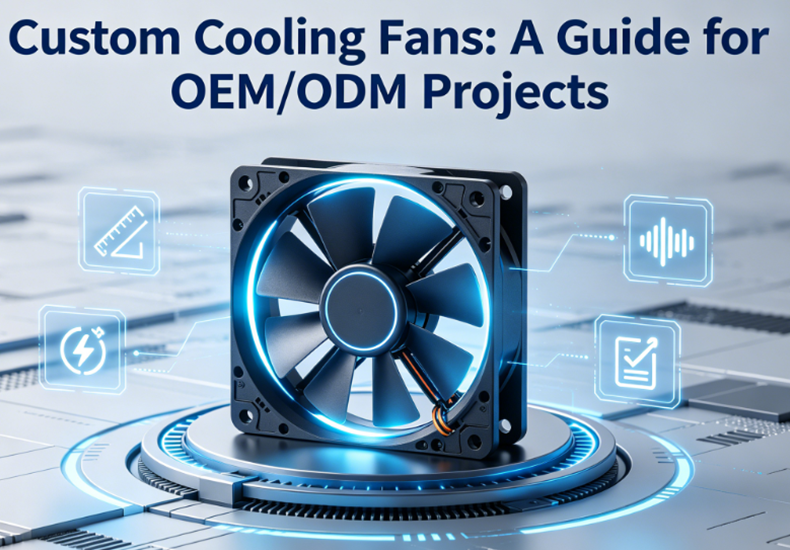
That is why buyers should not evaluate custom cooling fans only by price. The better approach is to compare whether the supplier can understand your application, adjust key parameters, provide sample testing, and support repeatable production.
As a custom cooling fans manufacturer, YCCFAN works with buyers who need more than standard fan selection. We focus on helping you confirm the right size, voltage, airflow, noise target, connector, and project details before moving into sampling or production.
Custom Size and Structure Options for Cooling Fans
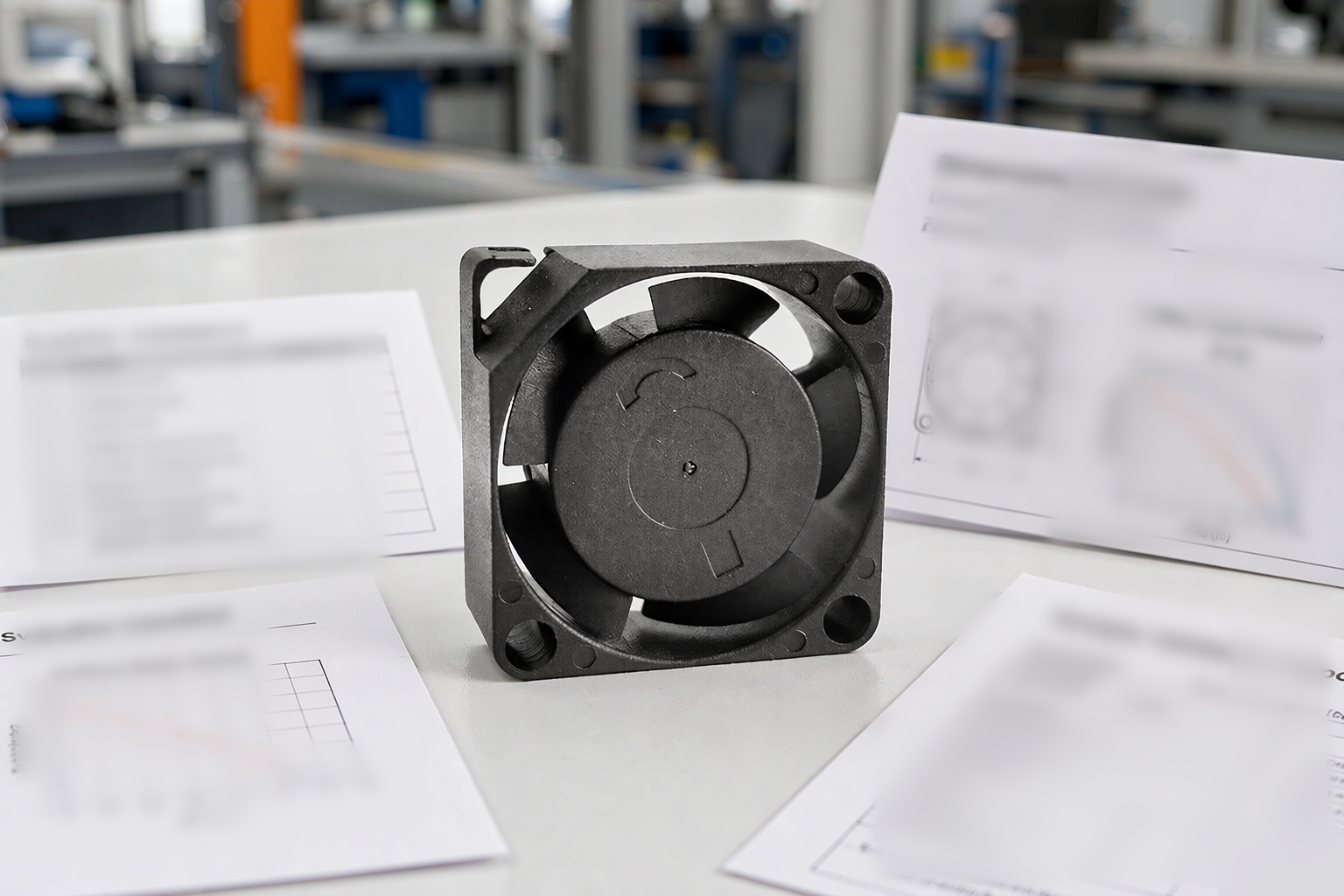
Fan size is one of the first details to confirm in a custom cooling fan project. However, size does not only mean the outer frame dimension. It may also include thickness, mounting holes, frame structure, airflow direction, blade design, installation angle, and available space around the fan.
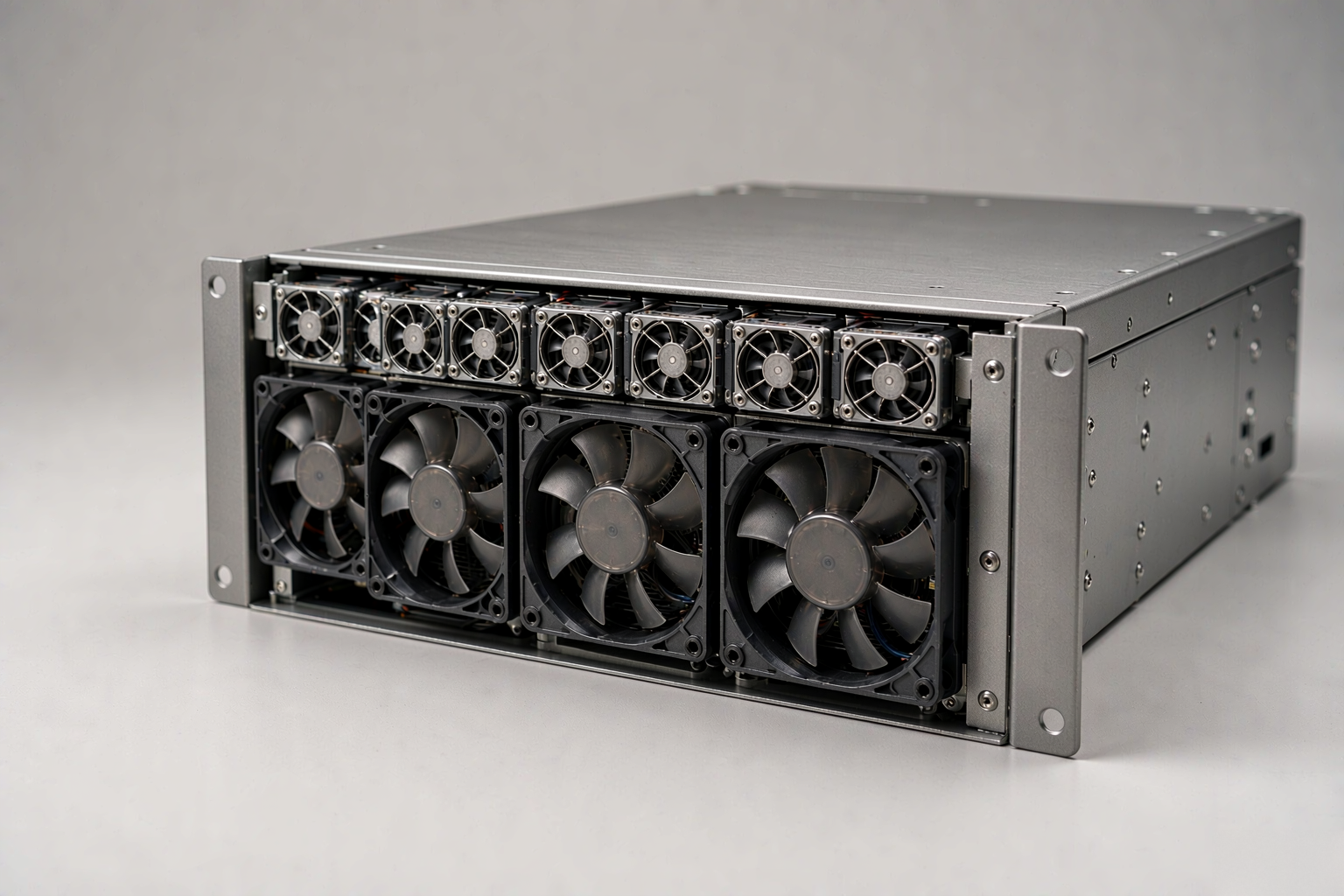
For compact electronics, the challenge is often limited space. A smaller fan may fit the structure, but it must still provide enough airflow for heat dissipation. For larger power systems or industrial equipment, a bigger fan may help move more air at a lower speed, which can reduce noise while maintaining cooling performance.
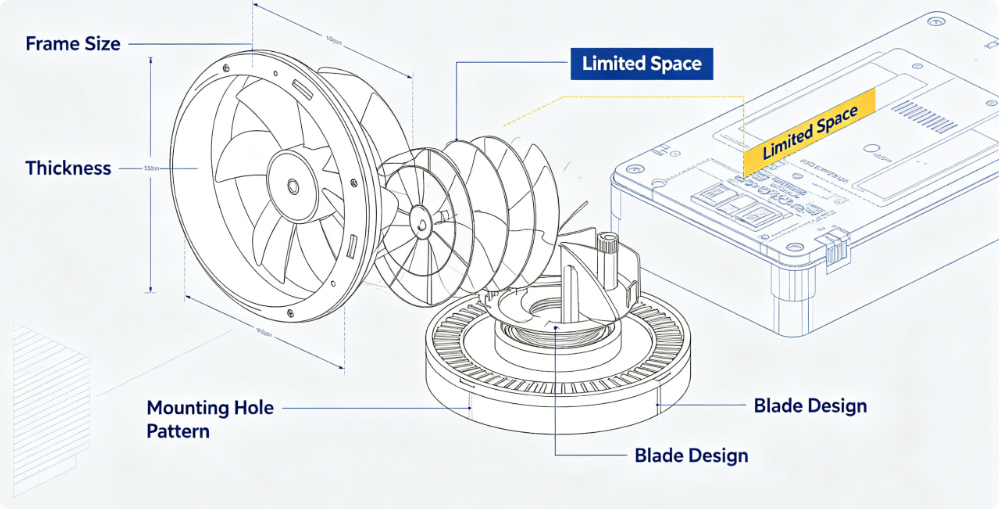
When we discuss a custom size cooling fan, we usually need to understand the equipment structure first. If your device already has fixed mounting holes or a narrow internal space, the fan design must match those limits. If airflow direction is restricted by surrounding components, the structure may need to be adjusted.
Before sampling, buyers should confirm:
Custom Size Detail | Why It Matters |
Frame size | Determines whether the fan fits the equipment |
Thickness | Affects installation space and airflow path |
Mounting holes | Ensures smooth assembly |
Airflow direction | Helps match the cooling route |
Frame structure | Supports special installation needs |
Nearby components | Avoids airflow blockage |
Mold requirement | Needed when standard structures cannot fit |
If the existing model can meet the requirement, the project can move faster. If a special structure is needed, mold development or structural modification may be required.
YCCFAN can support custom cooling fan projects that require size adjustment, structural review, and engineering sample confirmation. This helps you avoid choosing a fan that fits on paper but fails during real installation.
Most custom projects start from standard DC fan models and then adjust frame size, voltage, connector and speed curve around them.
Custom Voltage, Airflow, and Noise Control Options
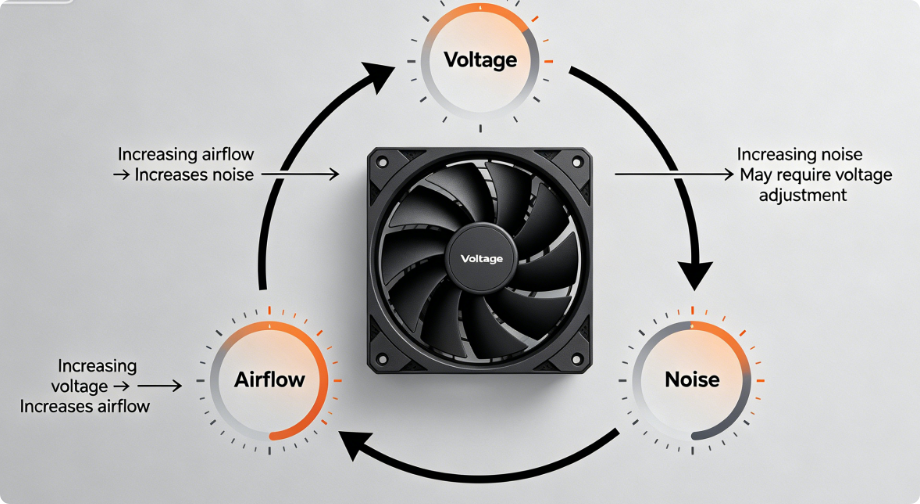
Voltage, airflow, and noise are closely connected in cooling fan customization. Changing one parameter may affect the others. For example, increasing speed may improve airflow, but it may also increase noise and power consumption. Lowering noise may require speed adjustment, blade optimization, or a different bearing option.
A good custom cooling fan solution should balance cooling performance, power system compatibility, and user experience.
1.Custom voltage options
A custom voltage cooling fan must match your equipment power system. Common DC cooling fan voltages may include 5V, 12V, 24V, and 48V. Some applications may also require AC voltage options.
When you provide voltage requirements, it is helpful to include:
Rated voltage
Operating voltage range
Current limit
Power consumption target
Starting voltage requirement
Control method, if needed
The goal is to make sure the fan can start smoothly and operate stably under your system conditions.
2.Custom airflow and static pressure
A custom airflow fan should be selected based on the real cooling environment. If the fan works in an open space, airflow may be the main focus. If the air must pass through a heat sink, filter, dense components, or a narrow duct, static pressure becomes more important.
Instead of only asking for the highest airflow, we should confirm how the air moves inside your equipment. This helps us recommend or adjust a fan that works in the actual structure.
Application Condition | Custom Focus |
Open enclosure | Higher airflow |
Heat sink cooling | Stronger static pressure |
Narrow duct | Airflow and pressure balance |
Noise-sensitive product | Lower speed and noise control |
Long-running equipment | Reliability and stable airflow |
3.Noise control in custom cooling fans
Noise control is often important in home appliances, medical equipment, office devices, indoor electronics, and communication terminals. Fan noise can be affected by speed, blade structure, bearing type, motor design, and dynamic balance.
When you have a noise requirement, it is better to provide a target dBA value and the expected operating condition. This allows the engineering team to balance airflow and noise instead of reducing speed blindly.
At YCCFAN, we usually review airflow, pressure, speed, and noise together. This helps make the custom fan more practical for real applications, not just acceptable in a datasheet.
How YCCFAN Supports Custom Cooling Fan Projects
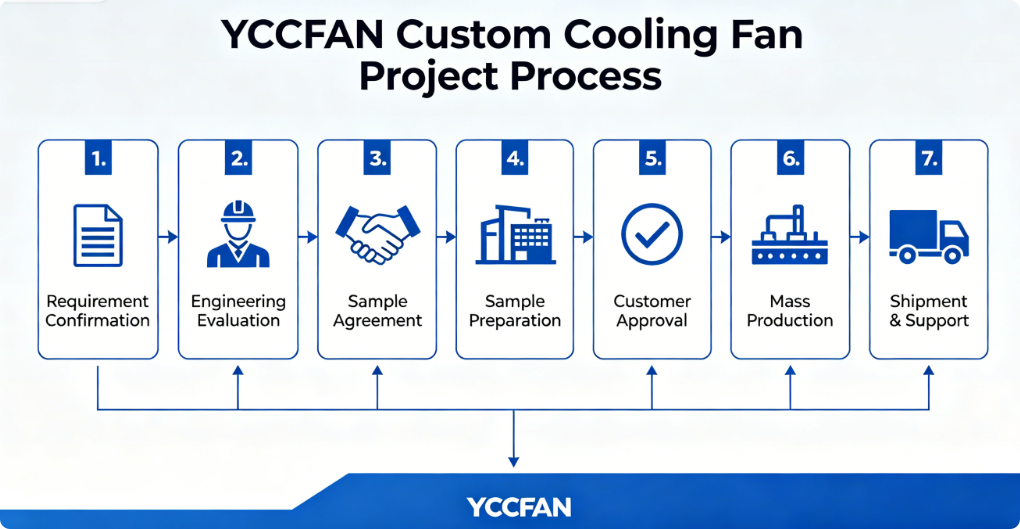
A custom cooling fan project should be clear, controlled, and easy to follow. At YCCFAN, we do not want customization to feel complicated for buyers. The process starts with your requirements and moves step by step toward sample approval, production, and delivery.
A typical custom cooling fan project works like this:
Stage | What Happens |
Requirement confirmation | You provide size, voltage, speed, airflow, pressure, noise, bearing, connector, certification, and working temperature needs |
Engineering evaluation | We review feasibility and recommend a suitable solution |
Sample agreement | Both sides confirm sample details, lead time, and cost if applicable |
Mold or sample preparation | We prepare engineering samples or develop molds if needed |
Internal testing | Performance, safety, and reliability-related checks are completed |
Customer approval | Samples are sent for your testing and confirmation |
Formal order | Price, lead time, packaging, inspection standard, PO, and deposit are confirmed |
Mass production | Materials are prepared, production is arranged, and process quality is controlled |
Inspection and packaging | Finished fans are inspected, packed, and labeled according to requirements |
Shipment and support | Balance payment, logistics, delivery, and after-sales support are completed |
In many custom projects, the sample development cycle is around two weeks, depending on complexity. If new tooling, special materials, certification support, or additional testing is required, the timeline may be longer.
For suitable projects, YCCFAN can provide up to 3 pcs free samples to help buyers complete early installation checks, airflow evaluation, and compatibility testing. This helps reduce early project risk before formal orders begin.
Looking for a custom cooling fan for your project? Contact YCCFAN today to discuss your specifications and request sample support.
Frequently Asked Questions
1.What can be customized in a cooling fan project?
Common customization options include fan size, thickness, voltage, speed, airflow, static pressure, noise level, bearing type, wire length, connector type, PWM function, FG/RD signal, IP rating, label, packaging, and certification requirements.
2.What information should I provide before customizing a cooling fan?
You should provide the fan size, voltage, speed, airflow and pressure target, noise limit, bearing preference, wire and connector details, certification requirements, working temperature, application environment, and estimated order quantity. Clear information helps the manufacturer recommend a more suitable solution.
3.How long does it take to develop a custom cooling fan sample?
For many custom cooling fan projects, the sample development cycle is around two weeks. The exact lead time depends on whether the project requires mold development, special materials, additional testing, or certification support.
4.Can YCCFAN provide free samples for custom cooling fan projects?
For suitable projects, YCCFAN can provide up to 3 pcs free samples to support early testing and project evaluation. Buyers can use samples to check installation fit, airflow performance, noise level, connector compatibility, and overall suitability before placing a formal order.
5.When does a custom cooling fan require mold development?
Mold development may be required when the project needs a special frame size, unique mounting structure, different airflow direction, custom housing design, or other structural changes that standard fan models cannot support.
6.Can the voltage and airflow of a cooling fan be customized together?
Yes. Voltage, speed, airflow, static pressure, and noise are closely related. When customizing a fan, these parameters should be evaluated together to make sure the fan matches the equipment power system and cooling performance requirements.
7.What connector details should be confirmed before sample production?
Before sample production, buyers should confirm cable length, wire gauge, terminal type, connector direction, and whether signal functions such as PWM, FG, or RD are needed. Confirming these details early helps avoid assembly delays and sample revisions.
8.Why choose YCCFAN as a custom cooling fans manufacturer?
YCCFAN supports OEM/ODM cooling fan projects from requirement evaluation and sample testing to mass production, inspection, packaging, shipment, and after-sales support. Buyers can work with YCCFAN to customize size, voltage, airflow, noise level, wire connector, and other project-specific details.
Explore standard and custom DC fans to find the closest baseline for your OEM/ODM specification.