





What are The Applications of Temperature Controlled DC Fan?
In the following sections, we’ll explain how temperature-controlled DC fans work, why they matter, and where they are most commonly applied—from CPU/GPU cooling and power supplies to HVAC systems, industrial control cabinets, server rooms, and precision equipment.
What Is a Temperature Controlled DC Fan?
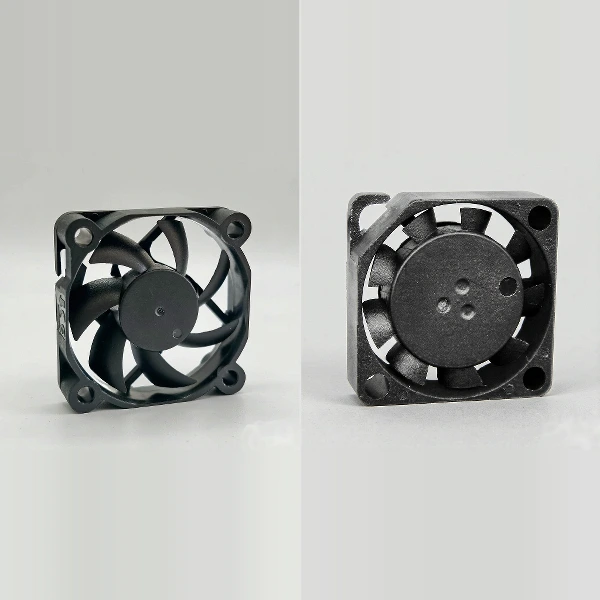
A temperature-controlled DC fan is a DC-powered cooling device designed to dynamically adjust its operating speed in response to temperature changes, ensuring precise and efficient heat dissipation. Depending on the design, temperature feedback may come from an internal sensing element or an external thermal control input, enabling the fan to accelerate as ambient or component temperatures rise and decelerate when cooling demand decreases—effectively minimizing energy waste and operating noise.
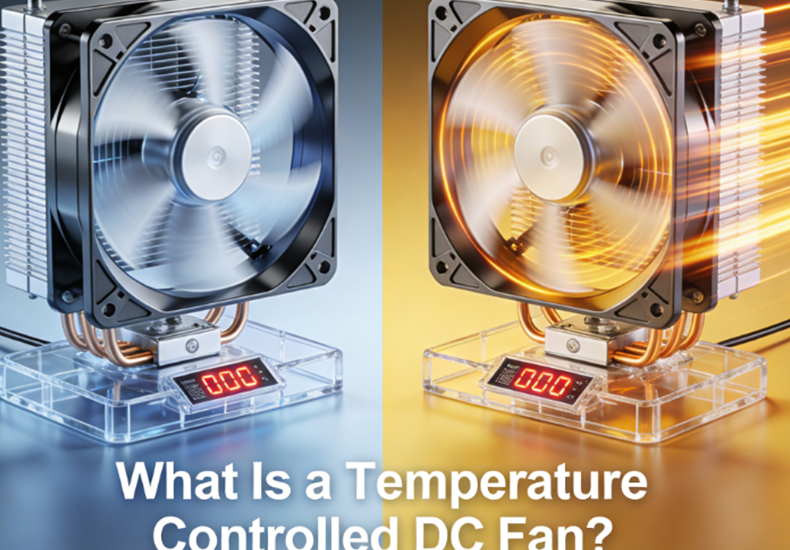
In practical applications, temperature regulation in DC fans relies on a combination of thermal sensing and electronic speed control to convert temperature variations into controlled RPM changes.Typical solutions include embedded thermistors positioned near critical heat-generating components, remotely mounted NTC or PTC sensors for greater system flexibility, and motor control techniques such as PWM or adjustable voltage drive, which fine-tune airflow output to maintain consistent and safe operating temperatures.
Why Temperature Controlled DC Blowers Are Important
1.Energy Efficiency and Smart Power Consumption
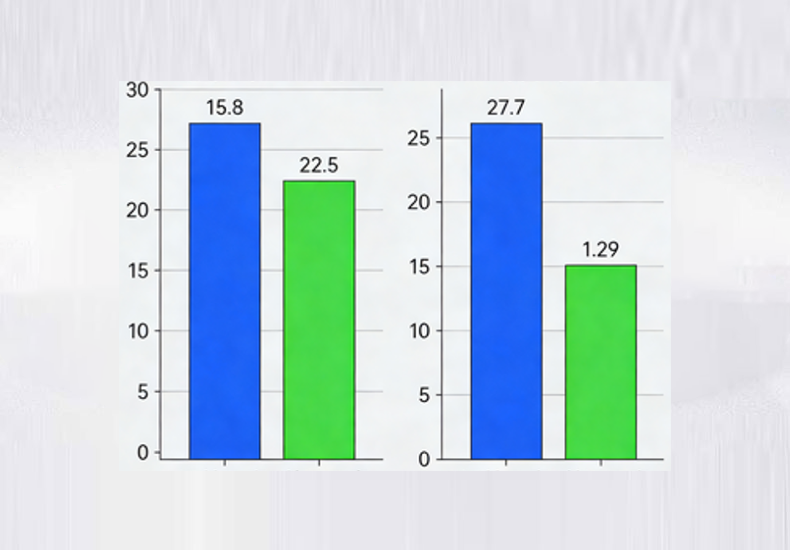
Temperature-controlled DC blower fans improve energy efficiency by supplying only the airflow a system needs at any given time. Rather than running at a constant high speed, the fan speeds up as heat load rises and slows down when temperatures are lower. This reduces unnecessary power draw, cuts operating costs, and supports energy-saving targets in everyday, real-world operation.
2.Noise Reduction in Practical Applications
Because they operate at lower RPM under low or moderate temperatures,temperature-controlled DC fans can noticeably reduce noise while still providing reliable cooling. This makes a real difference in noise-sensitive spaces—such as offices, bedrooms, classrooms, and medical environments—where the fan stays quiet during light workloads and becomes more audible only when higher cooling performance is truly required.
3.Extending Equipment and Component Lifespan
Consistent thermal control is a key reason temperature-controlled DC blowers help extend equipment lifespan. By avoiding repeated overheating and reducing sudden temperature swings, they lower thermal stress on critical parts such as processors, power electronics, and even fan bearings. Keeping components within stable temperature ranges can reduce long-term failure risk and improve overall system reliability.
Typical Application Scenarios Overview
Application Area | Role of DC Fan | Key Benefit |
CPU / GPU Cooling | Adaptive thermal control | Performance+silence |
HVAC Systems | Airflow regulation | Energy saving |
Server Rooms | Heat load response | System stability |
Industrial Equipment | Cabinet cooling | Reduced downtime |
Medical Devices | Precision cooling | Reliability & safety |
Primary Applications of Temperature Controlled DC Blower Fan
1.Electronic Device Cooling
In electronics where heat rises and falls with workload, temperature-controlled DC fans—especially compact DC blower fans—deliver targeted airflow without running loudly all the time. In real products like office equipment and compact enclosures, they ramp up only when internal temperature increases, staying quieter and more efficient during standby.
Computers and CPUs
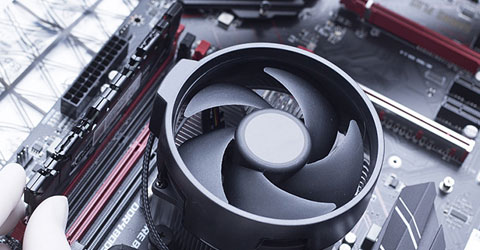
For laptops, desktops, and workstations, YCCFAN temperature-controlled DC cooling fans track CPU/GPU heat during gaming, rendering, or heavy multitasking. In everyday use, this keeps performance stable under load while avoiding“always-on”fan noise when the workload drops.
Power Supplies and Amplifiers
Power supplies and amplifiers create hotspots around MOSFETs and magnetics, so DC blower fans are often placed close to those areas and managed by PWM or temperature feedback. Practically, the fan stays low most of the time and only ramps during peak output—reducing overheating risk, noise, and wear.
2.Industrial Machinery and Equipment Cooling
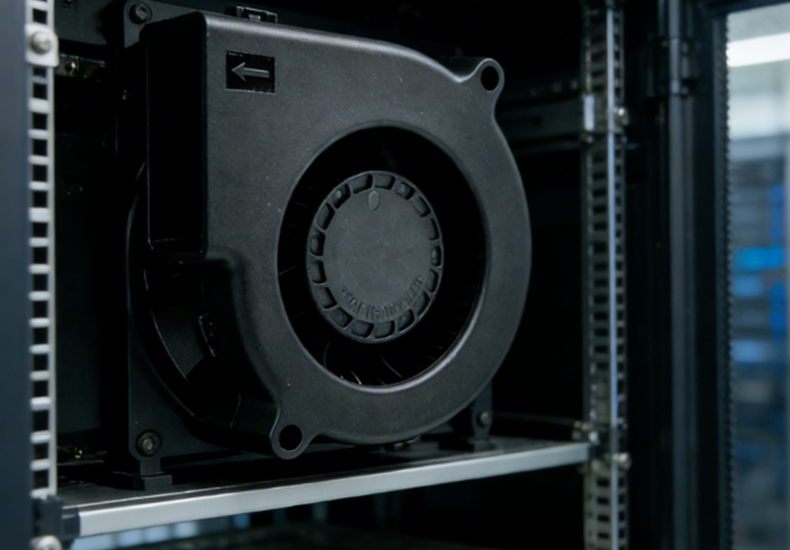
In CNC systems, control cabinets, and automation equipment, temperature-controlled DC blower fans are a reliable choice when airflow paths are tight and resistance is higher. In the field, using temperature control usually means fewer fan replacements and fewer heat-related cabinet faults, while keeping PLCs, power modules, and I/O units in a safer temperature range.
3.Environmental and Residential Control Applications
For building and home equipment, temperature-controlled DC cooling fans help maintain comfort with less noise and lower energy use. In real operation, they rarely need full speed, so systems feel smoother and less intrusive.
HVAC Systems
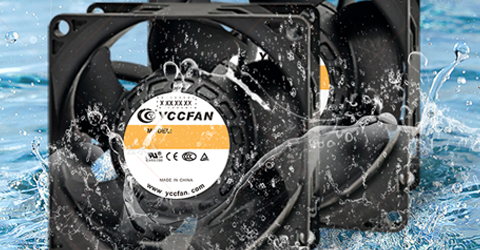
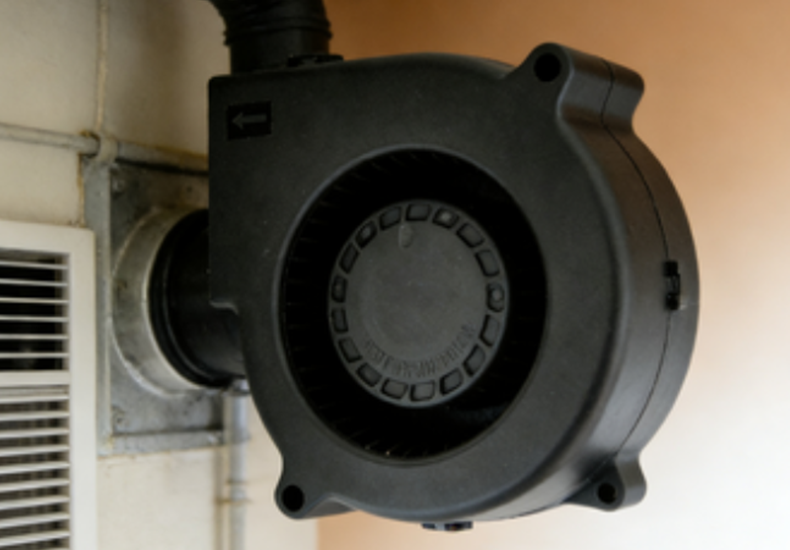
In HVAC/ventilation, YCCFAN DC fans (75×75 ×30mm)match airflow to real thermal demand. Under partial load (common in mild weather), running slower is where the long-term energy savings typically come from.

Smart Home Appliances
Devices like printers, air purifiers, and compact appliances often use DC blower fans for enclosed cooling. Temperature control prevents constant high-speed running, which is noticeable in quieter operation and reduced standby power draw.
4.Server Rooms and Data Centers
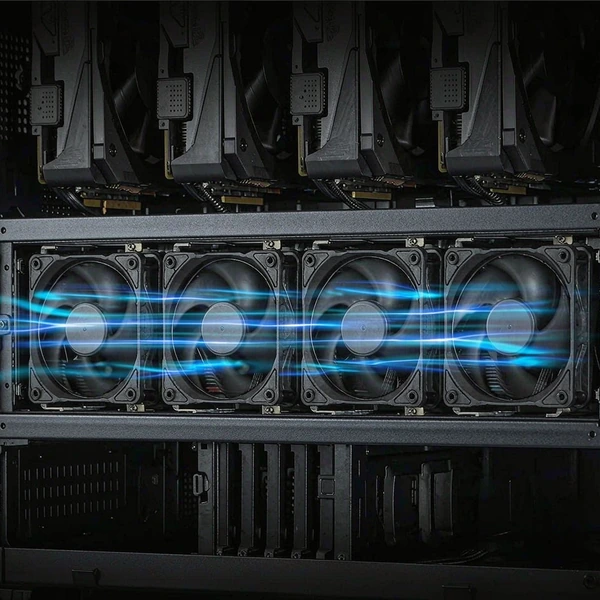
In server rooms, temperature-controlled DC fans respond quickly to changing heat loads—ramping during peak traffic and easing off when demand drops. This improves cooling efficiency and helps cut continuous background noise, especially in smaller or office-adjacent server areas.
Specialized Applications of Temperature Controlled DC Cooling Fan
1.Automotive Applications
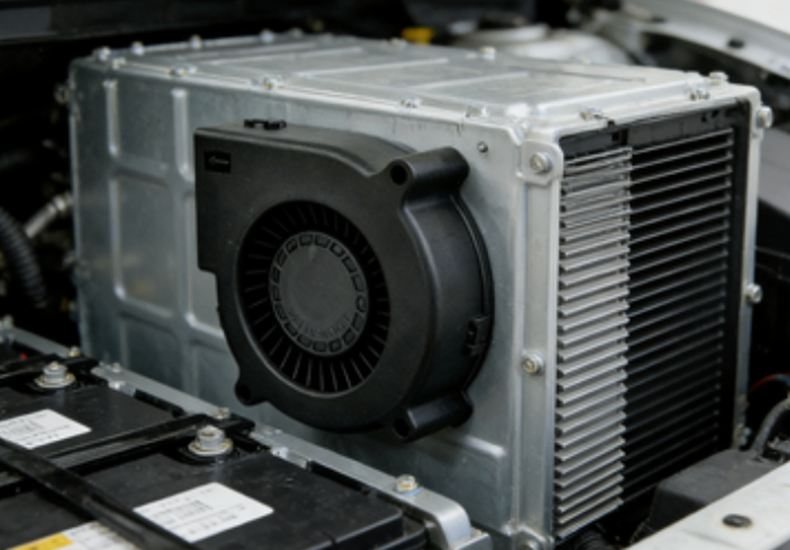
In automotive systems, temperature-controlled DC cooling fans are a practical fit for spaces that are tight and heat output can change quickly. You’ll often see them used in EV battery packs and power electronics, around ECUs and control modules, and in certain in-cabin ventilation sections. In real driving conditions—traffic stops, hot weather, and semi-sealed compartments—variable-speed control lets the fan add airflow when temperatures climb, then back off when things stabilize, which helps limit both power draw and cabin noise.
2.Medical and Scientific Instruments
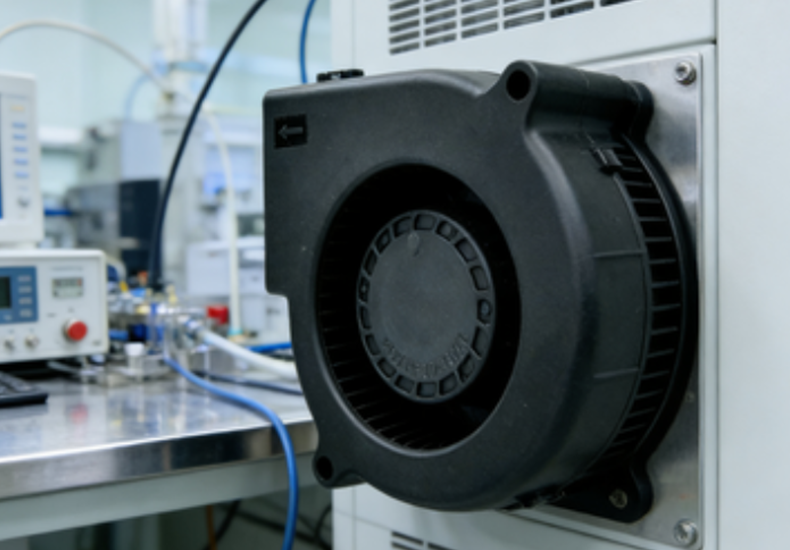
Many medical and scientific devices need cooling that is steady and predictable, but also quiet and low-vibration—exactly where temperature-controlled DC fans are commonly chosen. They’re used in imaging systems, lab equipment, and research instruments where even small temperature shifts can affect readings or stability. In practice, DC fans tend to perform better than AC fans in these settings because they can run smoothly at low speed, respond more precisely to sensor feedback, and integrate more easily into controlled thermal loops.
Key Advantages of Temperature Controlled DC Fan in Applications
1.Energy Efficiency
A temperature-controlled DC fan doesn’t need to run hard all the time—it speeds up when heat builds and stays low when cooling demand is light. Across real applications like servers, cabinets, HVAC, and office equipment, this adaptive behavior is usually where the biggest energy savings come from, especially compared with constant-speed fans that keep consuming the same power regardless of temperature.
2.Noise Reduction
Since the fan spends much of its time at lower RPM, temperature-controlled DC fans typically sound quieter in everyday operation. That matters in places where people work or rest—offices, homes, hospitals, and labs—because constant high-speed fan noise becomes noticeable fast, even if the system isn’t actually running hot.
3.Improved Reliability and Safety
Good thermal control is one of the simplest ways to improve reliability. Temperature-controlled DC fans help avoid hotspots and repeated overheating, which reduces thermal stress on electronics and lowers the chance of unexpected shutdowns. This is especially valuable in continuous-duty setups such as control cabinets and data rooms, where stability matters more than short bursts of maximum airflow.
FAQ
1) What are the three applications of a temperature sensor?
Monitoring, control, and protection. It measures temperature for real-time tracking, drives automatic adjustment (fans/heaters), and triggers alarms/shutdowns to prevent overheating.
2) What is the purpose of a temperature controller?
To keep a system at a set temperature automatically. It reads sensor data and controls cooling/heating output to stay stable and efficient.
3) How does a temperature-controlled DC cooling fan work?
A DC cooling fan changes speed based on temperature. As heat rises it ramps up (often via PWM/voltage), and it slows down when cooling demand drops.
4) Why use a DC fan instead of an AC fan for temperature control?
Better speed control and quieter low-speed operation. DC fans integrate easily with sensors and PWM for precise thermal management.
5) What should I consider when choosing a DC fan for temperature-controlled cooling?
Match airflow/pressure and control method first. Then confirm voltage (5V/12V/24V), size, noise, bearing life, and whether you need PWM/FG/RD signals.
Read more:
https://www.yccfan.com/articledetail/when-should-my-cooling-fan-kick-on.html
https://www.yccfan.com/articledetail/how-to-choose-an-industrial-cooling-fan.html
Conclusion
Overall, temperature-controlled DC fans provide a practical upgrade over constant-speed cooling: they deliver airflow only when needed, stay quieter in day-to-day operation, and help extend equipment lifespan by maintaining stable operating temperatures.