


DC Fan Manufacturer vs Distributor: Which Should OEM Buyers Choose?
When sourcing DC cooling fans for industrial equipment, OEM buyers often face a choice: purchase directly from a manufacturer or work with a distributor. Both channels can supply reliable products, but they offer different advantages depending on the project's technical requirements, order volume and production schedule.
A DC fan distributor may be the more convenient option for standard fans, small orders or urgent replacements. A DC fan manufacturer is often better positioned to handle customized configurations, engineering changes and repeat production orders.
For equipment manufacturers, however, the decision should go beyond unit pricing. The right supplier must be able to provide a fan that meets the equipment's cooling requirements and remains consistent throughout production.
Quick Answer: Manufacturer or Distributor for OEM DC Fans?
Choose a DC fan manufacturer when your project requires customized specifications, direct engineering support, sample validation or controlled long-term production.
Choose a DC fan distributor when you need a standard model, smaller quantities, local inventory or access to multiple established brands.
For OEM projects, the best purchasing channel is the one that can support the required fan configuration, technical documentation and supply schedule—not necessarily the one offering the lowest initial quotation.
What Is the Difference Between a DC Fan Manufacturer and a Distributor?
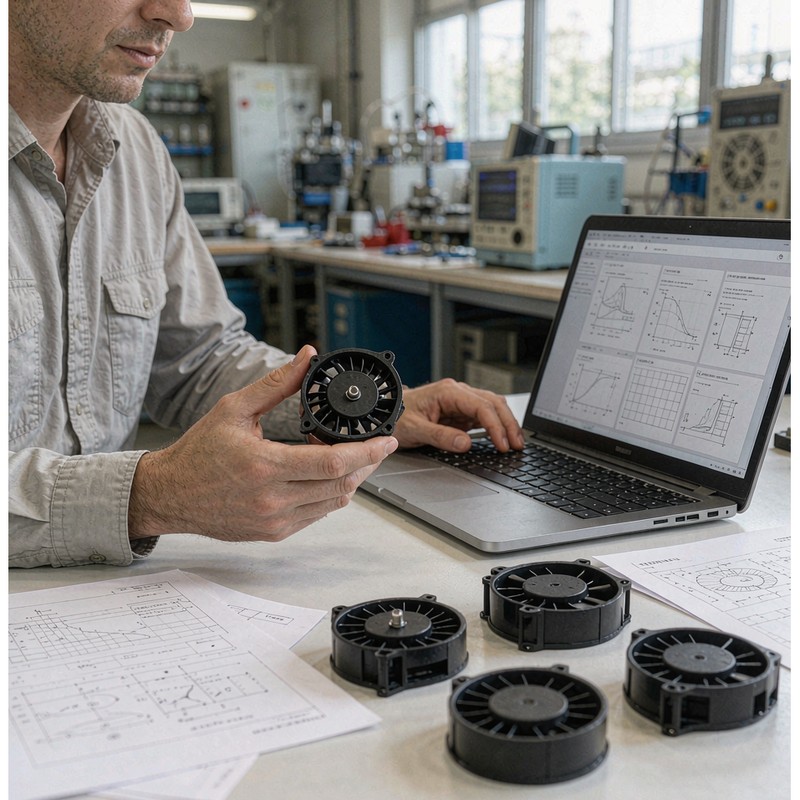
A DC fan manufacturer develops or manufactures cooling fans and may support modifications to their electrical, mechanical or performance specifications.
A distributor sources finished fans from manufacturers and supplies them to customers. Some distributors focus on inventory and logistics, while others provide technical assistance and coordinate custom requirements with their manufacturing partners.
The difference becomes more important when a fan is incorporated into equipment that will be produced repeatedly over several years.
| Purchasing factor | DC Fan Manufacturer | DC Fan Distributor |
|---|---|---|
| Product availability | Standard and production-order configurations | Often stocked standard models |
| OEM customization | Direct access to available manufacturing and engineering capabilities | Usually coordinated with the original manufacturer |
| Small orders | Subject to model and factory requirements | Often more flexible for stocked products |
| Technical documentation | May supply model-specific test data and drawings | Usually provides manufacturer documentation |
| Engineering changes | Can coordinate changes with production teams | May need additional manufacturer approval |
| Lead time | Depends on production schedules and specifications | Can be shorter when inventory is available |
| Repeat production | Direct coordination of approved product configurations | Depends on manufacturer and distributor agreements |
| Brand selection | Usually limited to the manufacturer's product range | May provide several brands |
These are typical differences rather than universal rules. A well-established distributor may provide stronger local engineering and inventory support than a manufacturer selling directly.
The key is to understand which organization is responsible for the fan's final specification, production and after-sales support.
When Should OEM Buyers Source DC Fans Directly From a Factory?
Direct factory sourcing becomes particularly useful when a fan is part of a new equipment design rather than a simple replacement.
Three situations deserve attention.
Custom DC Fan Configurations
Standard DC fans may meet a project's voltage and size requirements but still need changes to fit the equipment.
An industrial controller, for example, may require a 24V DC fan with a specific cable length, connector and speed feedback signal. The fan's external dimensions could be standard, while its electrical interface requires modification.
Working with a manufacturer allows the buyer to discuss which requirements can be met through an existing model and which need further development.
Common OEM DC fan requirements include voltage and speed configurations, wire and connector arrangements, bearing options and control functions such as PWM, FG and RD.
However, not every option is available on every fan model. The final configuration should always be confirmed against the proposed product specification.
Engineering Support for Restricted Cooling Systems
A fan that performs well in open air may behave differently inside an enclosure.
Heat sinks, filters, ventilation grilles and narrow airflow passages create resistance. As a result, a fan's maximum CFM rating does not tell the whole story.
Consider an industrial power supply with limited internal space. Two fans of the same size may provide different airflow at the system's actual resistance level. The buyer needs to compare the fan performance curves and evaluate the cooling result inside the equipment.
Direct manufacturer support can be valuable when the project requires a different speed configuration, a particular static-pressure characteristic or a modified installation arrangement.
A distributor may also assist with this process, provided it has access to accurate engineering data and the manufacturer's technical team.
Long-Term Production and Specification Control
For OEM equipment, product consistency matters as much as the initial sample.
A change to the bearing, motor, connector or electrical configuration could affect cooling performance or installation compatibility.
When arranging repeat orders, buyers should establish the approved model specification, identify any customized components and agree on how future changes will be communicated.
Direct factory coordination can simplify this process, although distributors with established manufacturing partnerships can also manage long-term supply programs effectively.
When Is Buying From a DC Fan Distributor More Practical?
A distributor is often the better choice when speed, availability and purchasing flexibility matter more than customization.
For example, a maintenance team replacing several failed fans may already know the correct manufacturer part number. If a distributor has the exact model in stock, sourcing it locally may be faster than placing a new production order.
Distributors can also be useful during early product development. Engineers may want to compare standard fans from several manufacturers before choosing a specification for further testing.
In these situations, buyers should still verify the fan's voltage, dimensions, connector, airflow and static-pressure characteristics.
A similarly sized fan is not necessarily an interchangeable replacement.
How Do Custom DC Fan Requirements Affect Supplier Selection?
OEM sourcing often involves several specifications that must work together.
Fan size and voltage are usually the starting point, but they are rarely sufficient for final model approval.
| Requirement | What the buyer should verify | Why it matters |
|---|---|---|
| Frame dimensions | Width, height, thickness and mounting holes | Determines installation compatibility |
| Rated voltage | 5V, 12V, 24V or other required configuration | Must match the equipment power system |
| Airflow and static pressure | Performance under the intended system resistance | Determines cooling effectiveness |
| Noise | Rated dB(A), speed and measurement conditions | Important for noise-sensitive equipment |
| Bearing | Available bearing configuration and operating conditions | Affects suitability for the duty cycle |
| Speed control | PWM availability and control requirements | Supports adjustable cooling |
| Monitoring | FG or RD signal requirements | Supports speed monitoring or fault detection |
| Wiring | Cable length, connector and pin assignment | Ensures electrical integration |
These requirements help determine whether a standard model is sufficient or a customized configuration is necessary.
For instance, a buyer may initially specify an 80mm 24V cooling fan. After reviewing the installation drawing, the project may also require a 15mm frame depth and a particular noise limit.
This additional information can change the model selection significantly.
A supplier should therefore confirm the complete equipment requirement before committing to a final configuration.
What Should Industrial Buyers Compare Beyond Unit Price?
Buying directly from a factory does not automatically mean lower total cost.
A manufacturer may offer attractive pricing for repeat production, but customization, tooling, minimum order quantities and engineering validation can affect the quotation.
A distributor may be more economical for smaller orders when suitable fans are already stocked.
For a fair comparison, buyers should evaluate the complete purchasing arrangement rather than comparing two quoted unit prices.
| Cost consideration | Questions to ask |
|---|---|
| Unit price | Are both quotations based on the same model and configuration? |
| Minimum order quantity | Does customization change the MOQ? |
| Sample cost | Are engineering samples charged separately? |
| Development requirements | Are tooling or configuration charges involved? |
| Testing | Which performance or inspection documents are included? |
| Delivery | Is the quoted lead time based on stock or production? |
| Logistics | What shipping terms and costs apply? |
| Repeat orders | How will specifications and pricing be managed over time? |
For an equipment manufacturer planning repeated production runs, a slightly lower initial unit price may offer limited value if it comes with unsuitable specifications or an uncertain delivery schedule.
The better comparison is the total cost of obtaining and maintaining the approved cooling component.
How Can Buyers Identify a Reliable Industrial DC Fan Manufacturer?
When selecting a reliable DC fan manufacturer, buyers should look for verifiable manufacturing capabilities and product information rather than general marketing claims.
A manufacturer should be able to identify its actual production range, explain available configurations and provide technical documents for the proposed fan.
Model-specific specifications are particularly useful. A datasheet should allow engineers to distinguish between different speed and voltage variants rather than treating all fans of the same dimensions as interchangeable.
Manufacturing and quality information also matters. Buyers can review available certifications, production capabilities, testing processes and the manufacturer's ability to maintain a consistent product configuration.
These details help establish whether a company can support an industrial equipment program.
The purpose of comparing manufacturers and distributors is not to assume one channel is always more reliable. It is to identify who can provide the required technical and commercial support for the project.
What Does a Real DC Fan Specification Comparison Look Like?
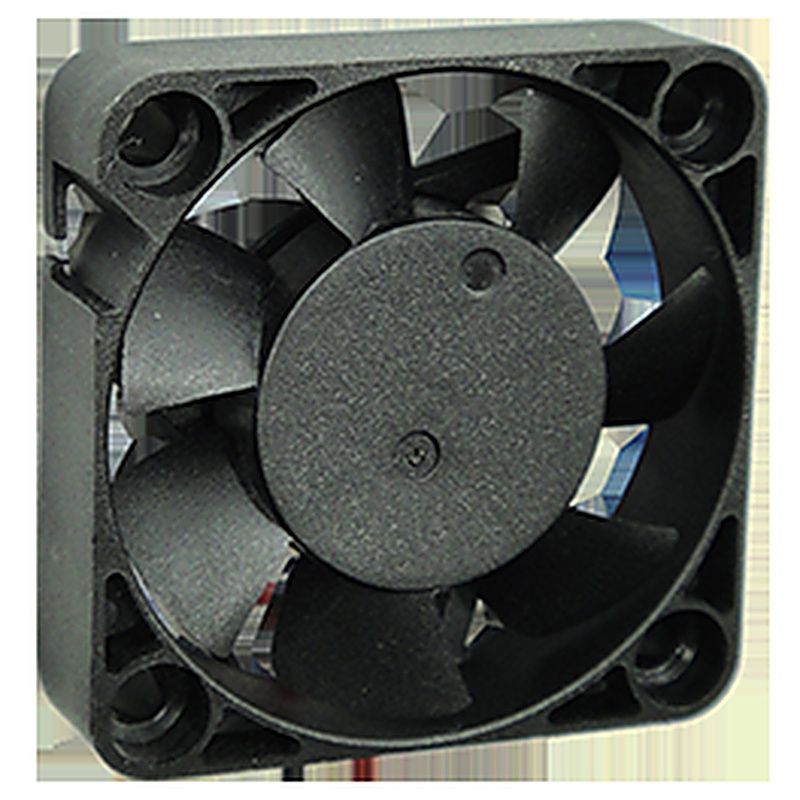
YCCFAN's published DC cooling fan range provides examples of how different configurations can be compared before requesting a quotation.
The DC4010F is a 40×40×10mm cooling fan series with 5V, 12V and 24V versions. The published 24V configurations include three speed choices:
| DC4010F 24V Model | Speed | Airflow | Static Pressure | Noise |
|---|---|---|---|---|
| YDH4010X24F | 8,000 RPM | 8.80 CFM | 5.39 mmH₂O | 31.10 dBA |
| YDM4010X24F | 6,500 RPM | 7.15 CFM | 3.56 mmH₂O | 26.60 dBA |
| YDL4010X24F | 5,000 RPM | 5.50 CFM | 2.10 mmH₂O | 20.90 dBA |
These are published catalog values for individual variants, not measurements taken from a customer's finished equipment.
All three models share the same nominal frame dimensions and rated voltage, but their performance and noise characteristics differ.
For an OEM buyer, this means specifying only “40mm 24V fan” is insufficient. The purchasing specification should identify the required speed, cooling performance and other applicable configuration details.
The DC4010F series provides model-specific performance specifications for further technical review.
A similar distinction applies to larger models.
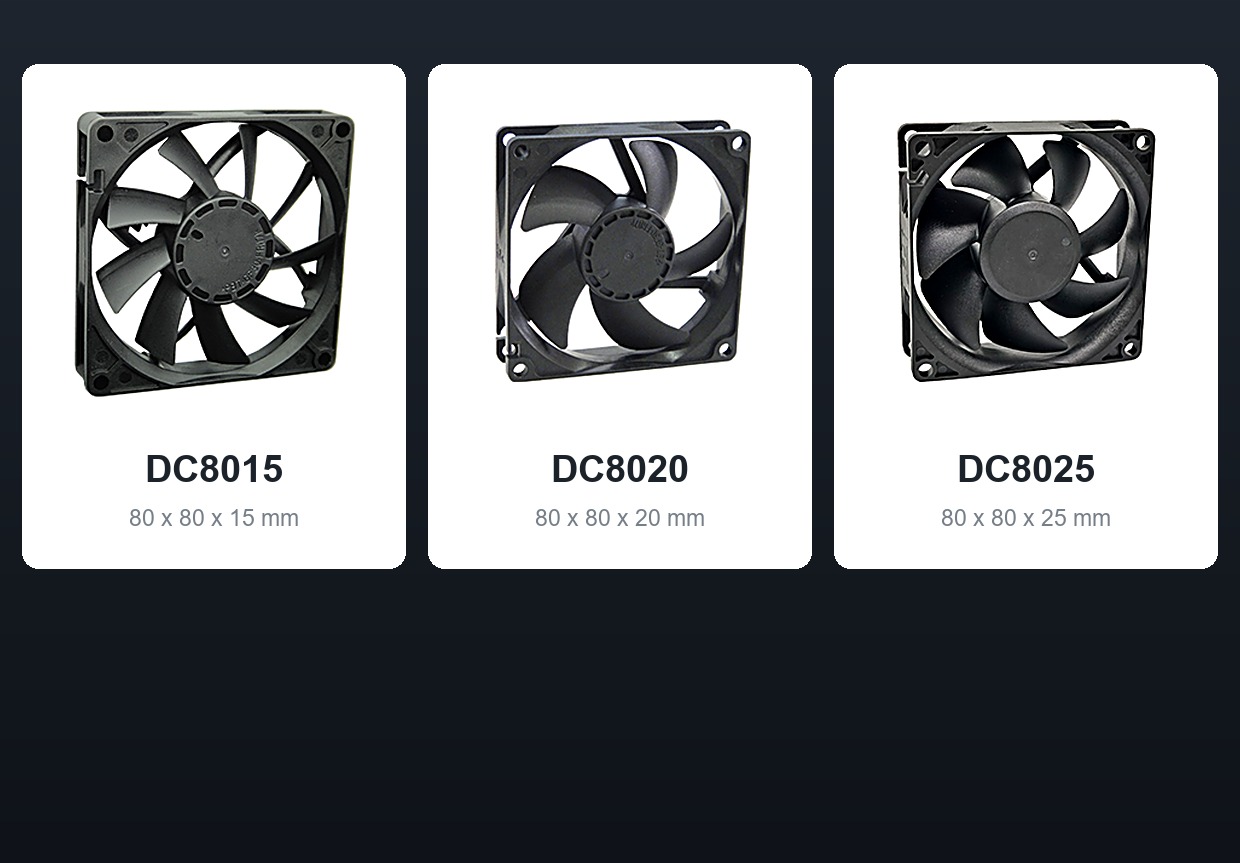
The DC8015 80×80×15mm DC fan offers 12V and 24V versions with published speed options of 2,000, 3,000 and 4,000 RPM. Its catalog airflow spans 23.23–46.47 CFM across the listed configurations.
For a compact power or control enclosure, the engineering team can use these specifications to shortlist suitable models before testing the fan in the actual equipment.
This is where working directly with a manufacturer can be useful: the buyer can discuss the exact fan variant, available interfaces and any required configuration changes.
How Does YCCFAN Support Factory-Direct OEM DC Fan Sourcing?
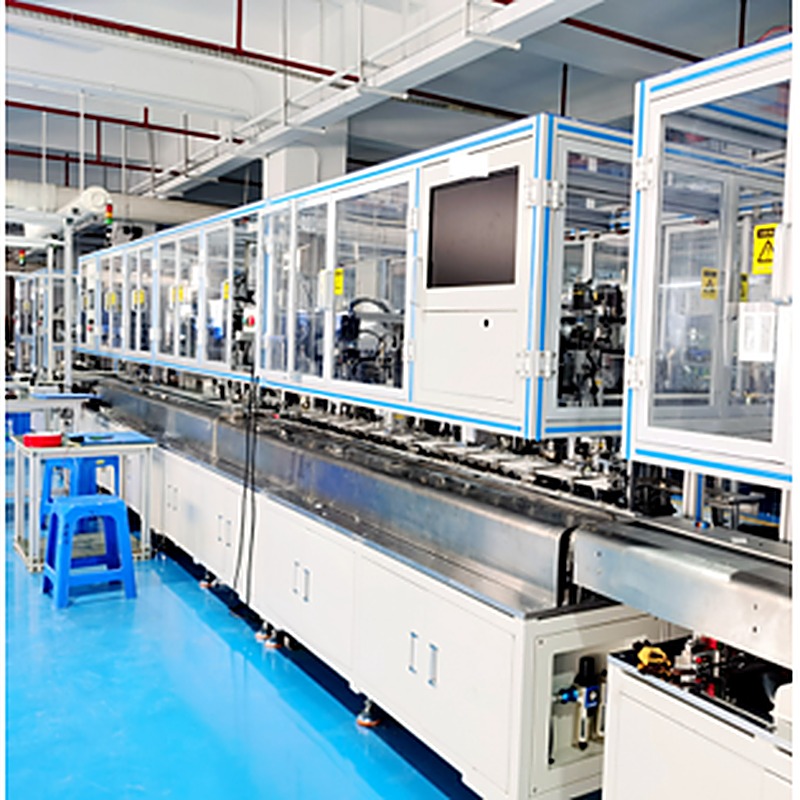
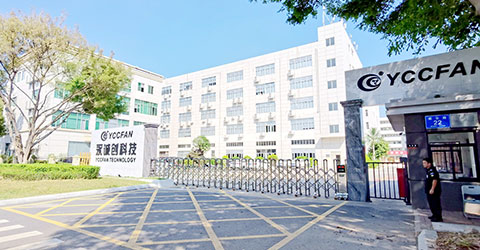
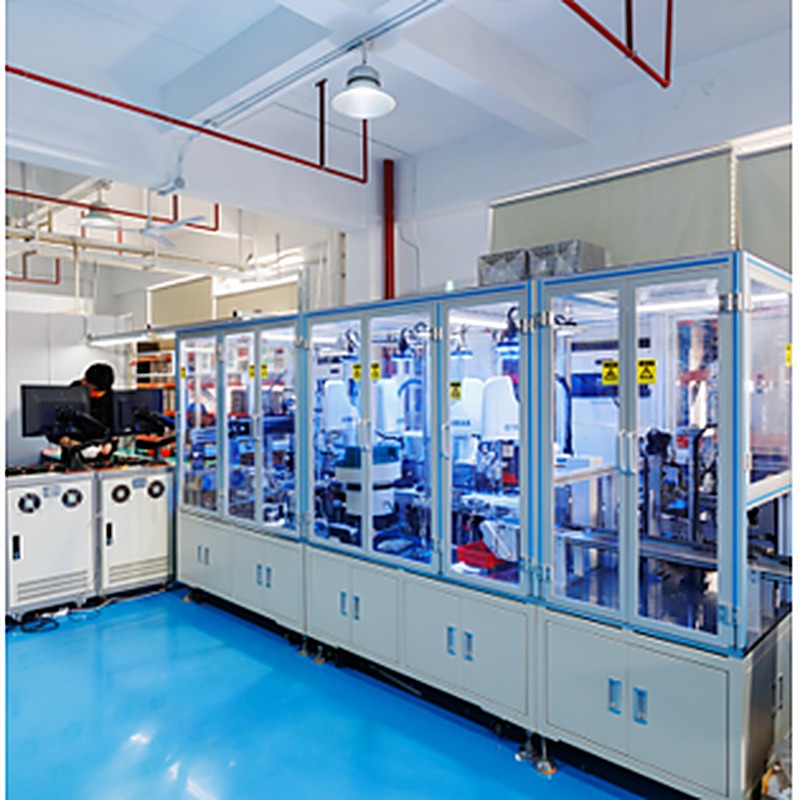
Founded in 2011, YCCFAN specializes in the development and manufacturing of cooling fans for electronics and industrial applications.
Its product portfolio includes DC axial fans, DC blowers, AC fans, EC fans and miniature cooling fans. The published range covers frame sizes from 20mm to 250mm, with different voltage and performance configurations depending on the model.
For OEM projects, YCCFAN provides standard fan selection and customization support involving dimensions, voltage, speed, airflow, static pressure, cables and connectors.
Its published quality-control information includes airflow, static pressure, speed, noise and electrical performance verification. The company also lists product certifications such as UL, CUL, TÜV and CE, with applicability to be confirmed for the selected product.
Rather than beginning with a custom design for every project, buyers can first review YCCFAN's existing DC cooling fan models and identify the closest standard configuration.
The next step is to confirm whether that model satisfies the equipment's requirements or needs an adjusted configuration.
For factory-direct sourcing, buyers should provide the proposed application, available mounting space, voltage, cooling requirement, connector details and estimated order quantity.
This information gives the engineering and sales teams a more useful starting point than requesting a quotation based on fan size alone.
FAQs About DC Fan Manufacturers and Distributors
1. Is buying directly from a DC fan manufacturer always cheaper?
No. Factory-direct purchasing can be cost-effective for repeat production or customized orders, but it depends on quantity, tooling, development and shipping requirements. Distributors may offer better value for smaller orders of stocked standard fans.
2. Can distributors provide custom DC cooling fans?
Some can. Distributors with established manufacturer relationships may coordinate custom connectors, wiring or other configurations. Buyers should confirm who approves the technical specification and controls production changes.
3. What should I check when choosing an industrial DC fan supplier?
Start with the supplier's actual product range, model-specific specifications, technical documentation, available customization support and ability to supply the approved configuration. Quality-control and production information should also be verifiable.
4. When should OEM buyers choose factory-direct DC fans?
Factory-direct sourcing is particularly useful when an equipment project requires custom specifications, direct engineering coordination or controlled repeat production. For standard fans needed in smaller quantities, a distributor may be more convenient.
5. Can I order samples before placing a bulk DC fan order?
Sample availability depends on the manufacturer, model and customization requirements. Buyers should confirm the sample configuration and testing requirements before ordering, especially when the fan will be used in a new equipment design.
Conclusion
Choosing between a DC fan manufacturer and a distributor depends on how the fan will be used and purchased.
Distributors are often a practical choice for standard models, local inventory and smaller replacement orders. Manufacturers can offer advantages when an OEM project requires customized specifications, engineering coordination or ongoing production supply.
For industrial equipment manufacturers, the priority is to select a technically suitable fan and maintain that configuration throughout the product lifecycle.
If your project requires a standard or customized DC cooling fan, contact YCCFAN with your equipment specifications to discuss suitable options.