




Which Fan Is Better—AC or DC ?
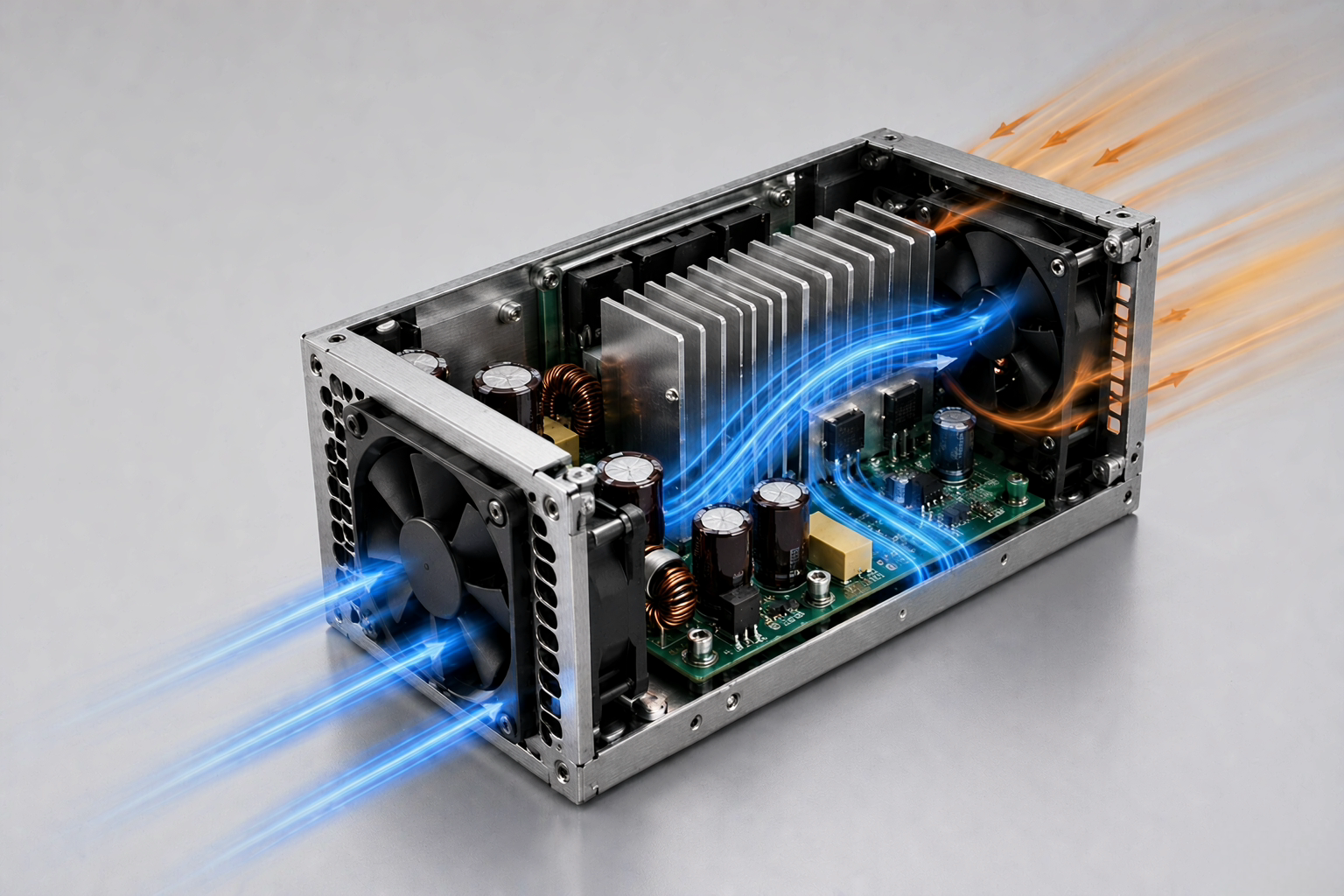
Choosing between AC and DC cooling fans isn’t about brand or buzzwords—it’s about matching motor physics and controls to your real operating conditions. This guide explains how each fan type works, compares their strengths, and shows when to pick a DC cooling fan for precision and efficiency versus an industrial AC industrial cooling fan for simplicity and rugged duty. Use it to align airflow and static-pressure needs with power availability, control strategy, environment, certifications, noise limits, and total cost.
How AC and DC Cooling Fans Work
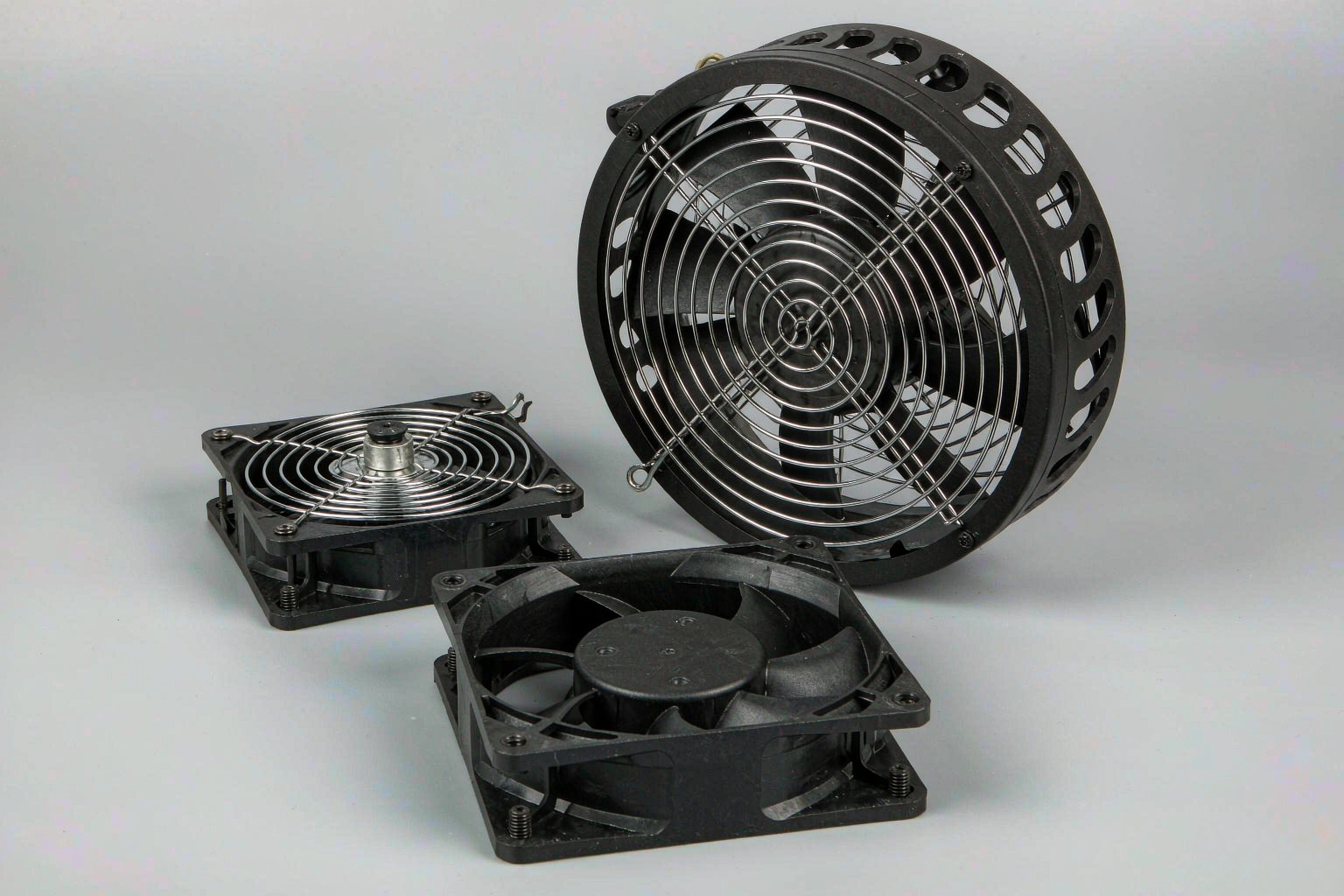
AC fans draw power directly from the mains and use shaded-pole, PSC, induction, or synchronous motors. Their speed is set primarily by line frequency and pole count—synchronous speed ns = 120 * f / p—with slip determining the actual RPM under load. Control is therefore coarse unless you add hardware: multi-tap windings or a triac/auto-transformer for basic steps, or a VFD on larger drives for true variable speed. The appeal is simplicity and toughness: an industrial AC cooling fan can hold a fixed operating point for years and usually tolerates higher ambient heat and dust. The trade-offs are predictable—phase-angle control can sap torque and introduce audible hum, while VFDs bring smoother turndown and better efficiency but add cost, require EMI filtering, and may demand attention to cable shielding and motor insulation. Part-load efficiency typically trails modern EC/BLDC options.
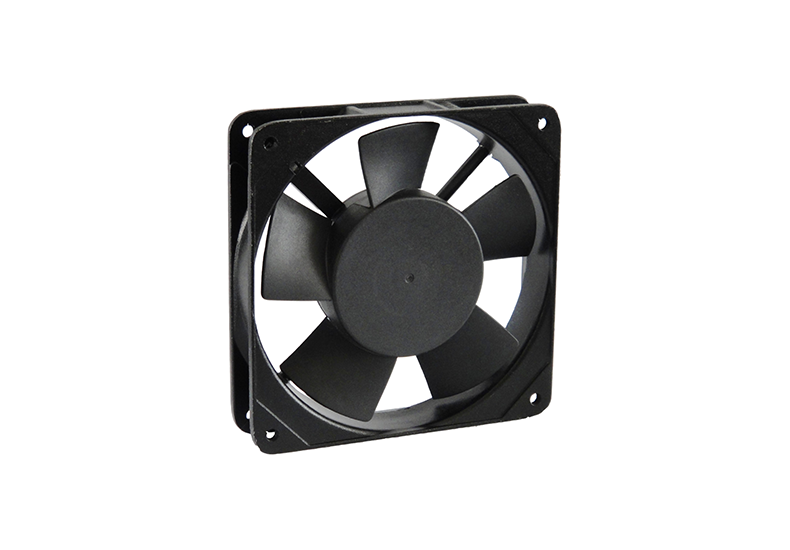
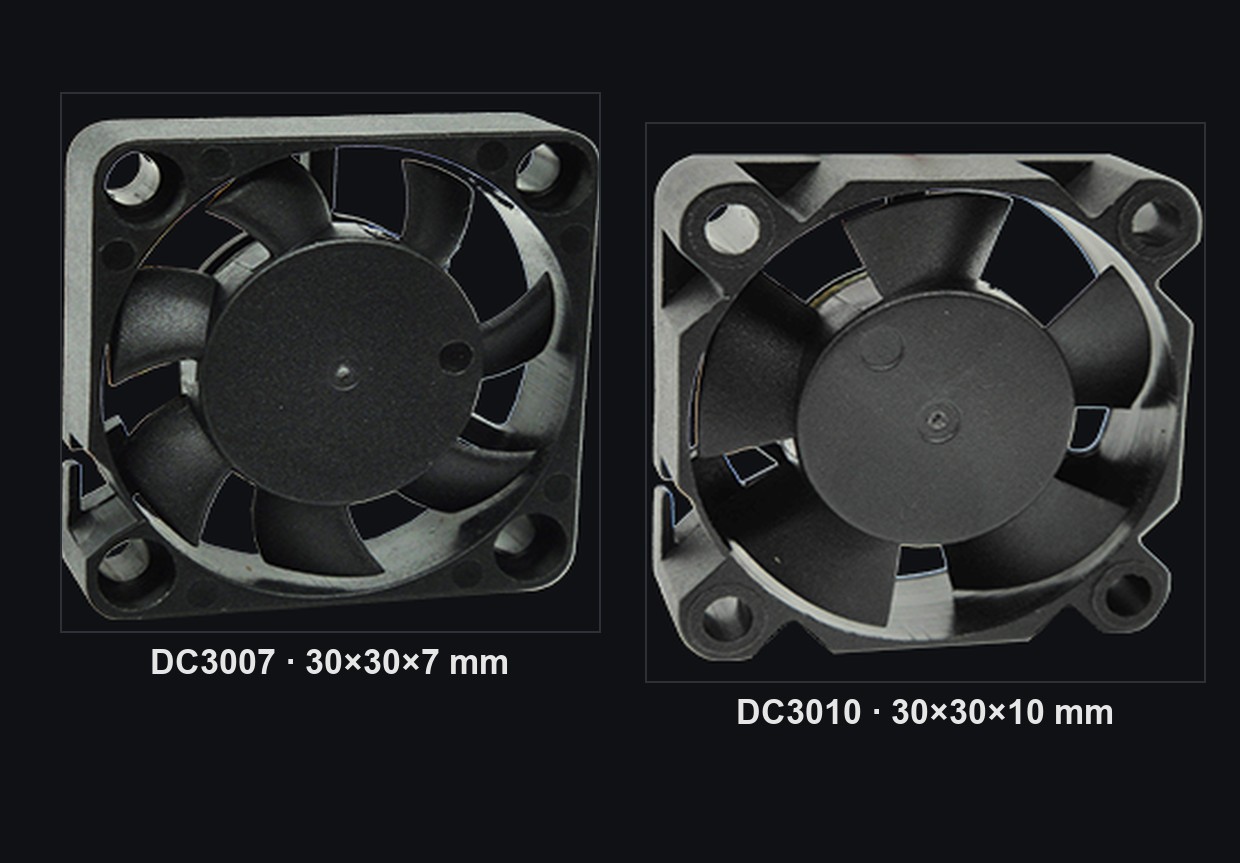
DC fans exist in brushed form, but the standard today is brushless DC (BLDC/EC). A compact driver handles commutation—Hall-sensored or sensorless/FOC—so speed control via PWM or 0–10 V is precise, stable, and easy to automate; tach and fault outputs are common. Many EC fans accept AC supply and rectify internally, keeping installation simple while the motor runs as DC for higher efficiency and tight closed-loop control. In practice, an industrial DC cooling fan offers wide turndown with steady torque, soft-start that tames inrush, and excellent part-load performance. The main caveat is environmental: ensure the electronics are rated for your ambient temperature, surge/EMC profile, and ingress protection so reliability matches the duty.
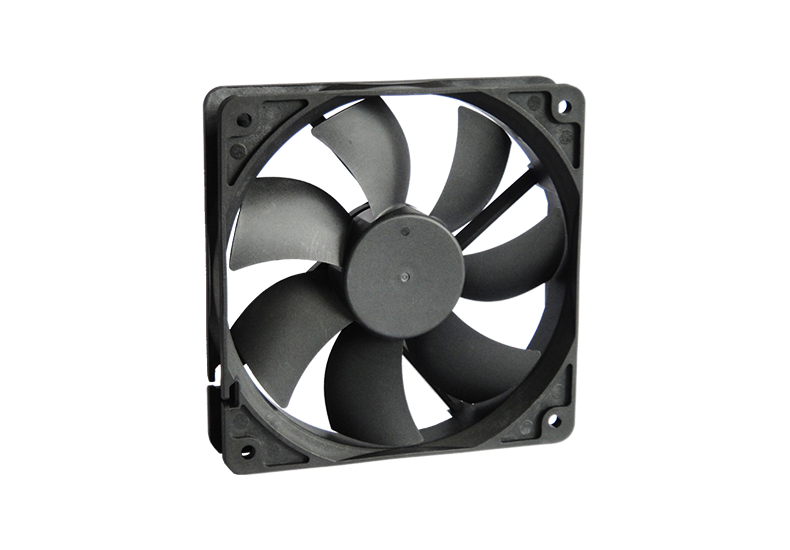
AC vs DC Industrial Cooling Fans: Comparison
Aspect | AC Fan | DC / EC Fan |
Power source | Direct from mains (110–480 V AC) | Low-voltage DC (5/12/24/48 V) or AC-input EC (internal rectifier) |
Speed control | Basic (taps/triac); good with VFD on bigger motors | Excellent via PWM/voltage; wide turndown with stable torque |
Efficiency (esp. part-load) | Fair–good; improves with VFD | Generally higher; strong part-load efficiency |
Noise at low speed | Can hum at reduced voltage/frequency | Very quiet; smooth commutation at low RPM |
Features | Usually on/off; fewer telemetry options | Tach output, alarms, soft-start, stall detect common |
Cost & simplicity | Lower upfront; minimal electronics | Higher upfront; savings from energy/control |
Heat & environment | Tolerates higher ambient heat; simple electronics | Electronics need rated temps; sealed EC models available |
Reliability & maintenance | Very robust; fewer electronic failure modes | Long life; electronics are the main added failure point |
EMI / harmonics | Triac/VFD can add harmonics; mitigation needed | Driver can emit EMI; good designs filter well |
Typical uses | HVAC blowers, large industrial/harsh duty, fixed speed | IT/electronics cooling, variable-speed HVAC, energy-savvy retrofits |
When to Choose a DC Fan
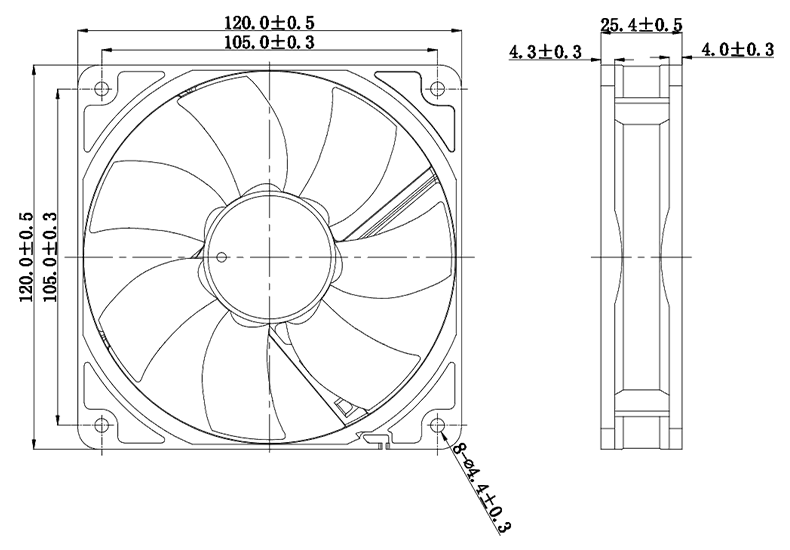
If you need precise variable speed and quiet low-RPM operation—especially under closed-loop control—a DC industrial cooling fan (EC/BLDC) is the right tool. Integrated drivers deliver smooth turndown (about 20–100%) with stable torque and avoid the hum common to phase-angle dimming. It’s straightforward to bind airflow to a PID loop so the fan tracks coil ΔP or outlet temperature in real time, holding setpoints tightly during load swings.
Where site power is low-voltage DC (battery systems, solar, telecom 48 V) or you want high efficiency without adding an external VFD, EC industrial cooling fans simplify deployment. Many accept AC input and rectify internally, so wiring stays simple while the motor side benefits from DC efficiency and fine speed control. Soft-start limits inrush on backup supplies, reduces contact wear, and can ease breaker sizing.
If energy use and part-load performance are priorities—labs, data centers, cleanrooms, or modulated HVAC zones—DC/EC designs excel. Most fans operate below peak; BLDC efficiency remains high at low speed, so turndown yields meaningful kWh savings and cuts waste heat reintroduced to the space, improving both comfort and capacity headroom.

For reliability and visibility, a DC fan integrates cleanly with BMS/SCADA. Standard tachometer and fault outputs enable alarms, automatic failover, and condition-based maintenance long before airflow falls out of spec (for example, rising ΔP or early bearing wear). This telemetry shortens troubleshooting time and supports higher uptime.
When acoustics matter, DC/EC fans help you meet stringent noise limits without sacrificing control authority. Lower tonal content at reduced RPM—and the absence of phase-angle buzz—make them well suited to hospitals, labs, and offices while still delivering the required airflow. Just confirm the driver’s temperature, EMC, and ingress ratings if the installation sits near heat sources or contaminants.
When to Choose an AC Industrial Cooling Fan
For fixed-speed ventilation with simple on/off control and tight budgets, an industrial AC cooling fan is the straightforward pick. In exhaust, make-up air, or constant-duty enclosures, AC units are inexpensive, widely available, and quick to swap—ideal for drop-in replacements and standardized MRO programs where common spares matter.
In hot, dirty, or abrasive environments, AC fans often outlast EC designs because there’s little onboard electronics to fail. Induction/PSC motors tolerate higher ambient temperatures and airborne debris, and the simpler construction means fewer failure modes—useful on rooftops, near kilns, or in foundry bays. Specify insulation class, bearing type, and enclosure (TEFC/TEAO) to match site conditions.

If your facility already runs larger motors with VFDs—or power is strictly mains AC and maintenance prefers standard gear—staying with AC is practical. In the 1–10 hp range and up, VFD-driven induction fans are proven, serviceable with off-the-shelf parts, and familiar to plant technicians. You keep variable speed and solid efficiency without introducing EC electronics into a harsh area.
When certifications and mechanical formats drive the spec, AC options are easier to source across vendors. Explosion-proof and wash-down assemblies, plus specific NEMA/IEC frame sizes and enclosures, are broadly cataloged—simplifying code compliance and keeping spare-parts strategies consistent across sites.
Choose AC industrial cooling fan when simplicity is paramount: two wires in, air out, long service life, and fast like-for-like replacement. AC fans shine where controls are minimal and uptime depends on quick swaps. Just confirm voltage/frequency, enclosure rating (e.g., NEMA/IP), and temperature class to ensure the fan truly fits the application.
Conclusion
There’s no one-size-fits-all winner. DC/EC fans lead when you need tight speed control, quiet low-RPM operation, telemetry, and strong part-load efficiency. AC fans shine for fixed-speed ventilation, harsh environments, standardized frames, and fast, low-cost swaps—especially with VFDs on larger motors. Make the call by defining power source, airflow and static pressure, control method, ambient conditions, compliance (NEMA/IP, ATEX/IECEx), and acoustic targets.