





Axial Fan vs Regular Fan Key Differences in Airflow, Performance and Applications
This guide explains the key differences between axial fans and regular fans, including their working principles, performance characteristics, applications, and selection considerations.
What Is a Regular Fan?
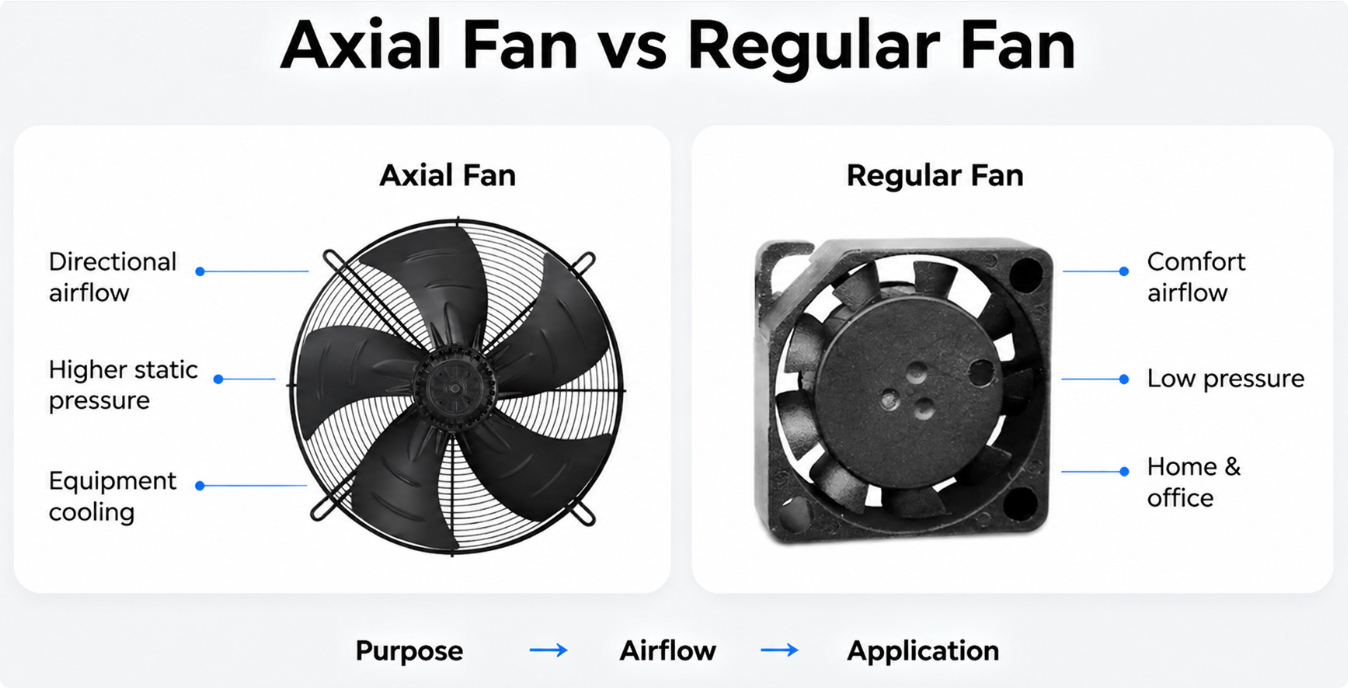
A regular fan is designed for general air circulation and personal comfort, helping move air in open spaces such as homes and offices. Its main purpose is to improve airflow and create a cooling sensation rather than manage heat generated by electronic or industrial equipment.
Compared with cooling fans used in technical applications, regular fans typically have a simpler design and lower pressure performance. They work well in environments with little airflow resistance but are not suitable for systems that require air to pass through filters, heat sinks, or enclosed structures.
What Is an Axial Fan?
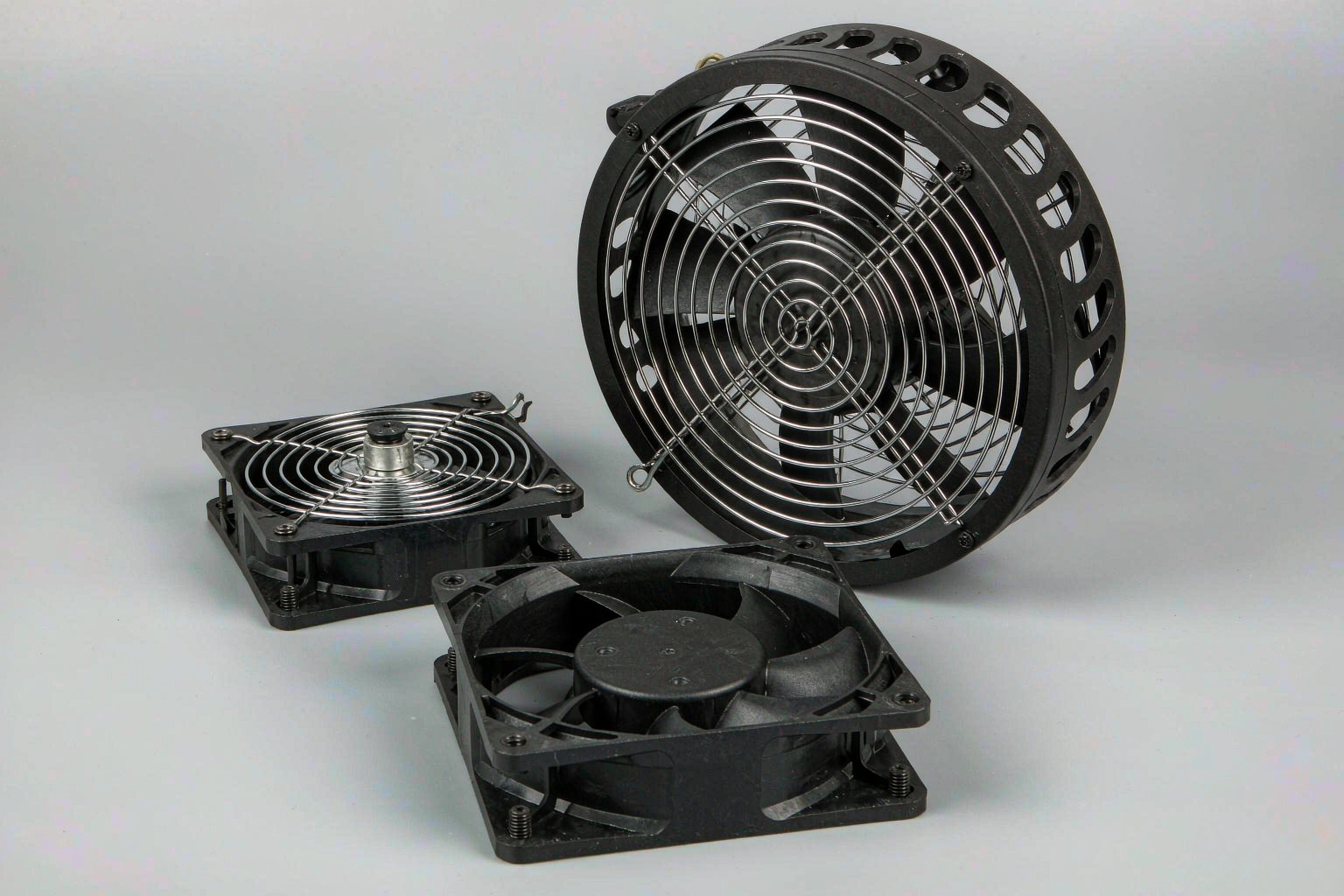
An axial fan is a fan that moves air parallel to the rotating shaft. The blades create airflow by pushing air in a straight path along the fan axis, which defines its axial airflow design.
Also called an axial flow fan, it is designed for applications where a consistent and directional airflow path is required for ventilation and cooling.
How Does an Axial Flow Fan Work?
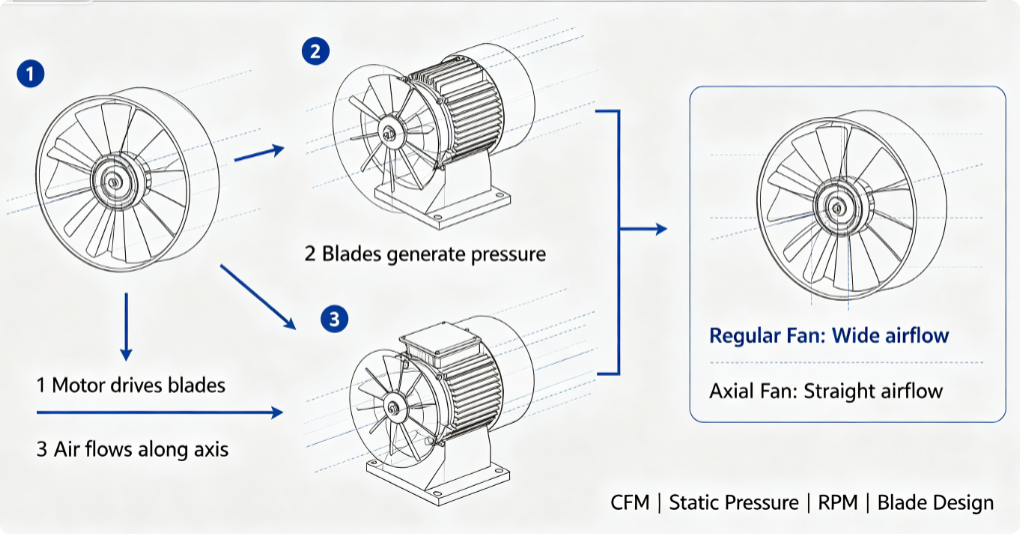
An axial flow fan operates by using an electric motor to rotate the impeller and convert mechanical energy into airflow. During operation, the rotating blades generate a pressure difference that drives air through the fan along the shaft direction.
1. Motor Drives Blade Rotation
The motor supplies the rotational force needed to spin the impeller at a designed speed. The rotation speed determines how much air the blades can move, while the motor performance affects the fan’s overall efficiency and operating stability.
2. Blade Design Generates Air Pressure
The blades are designed with specific angles and shapes to control how air is accelerated through the fan. When the blades rotate, they create a pressure difference between the inlet and outlet sides, allowing air to flow smoothly through the intended path.
3. Air Moves Along the Axial Direction
Unlike centrifugal designs that redirect airflow, an axial fan moves air directly along the fan axis. This straight airflow path makes it suitable for systems that require efficient air movement within a limited installation space.
The performance of an axial fan is determined by several important factors, including:
Airflow volume (CFM): Determines the amount of air the fan can move.
Static pressure: Indicates the fan’s ability to overcome airflow resistance.
Rotation speed (RPM): Affects airflow output and cooling capacity.
Blade design: Influences airflow efficiency and pressure performance.
Motor efficiency: Impacts energy consumption and operating reliability.
Fan size: Determines installation compatibility and airflow capability.
Together, these factors define the fan’s operating performance and help engineers select a suitable cooling solution for different applications.
Axial Fan vs Regular Fan: Main Differences
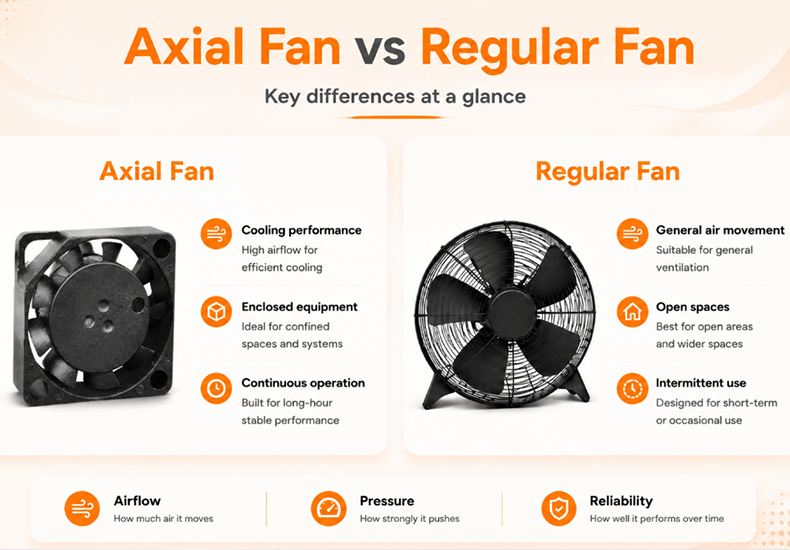
Although both fans move air, their designs and purposes are significantly different.
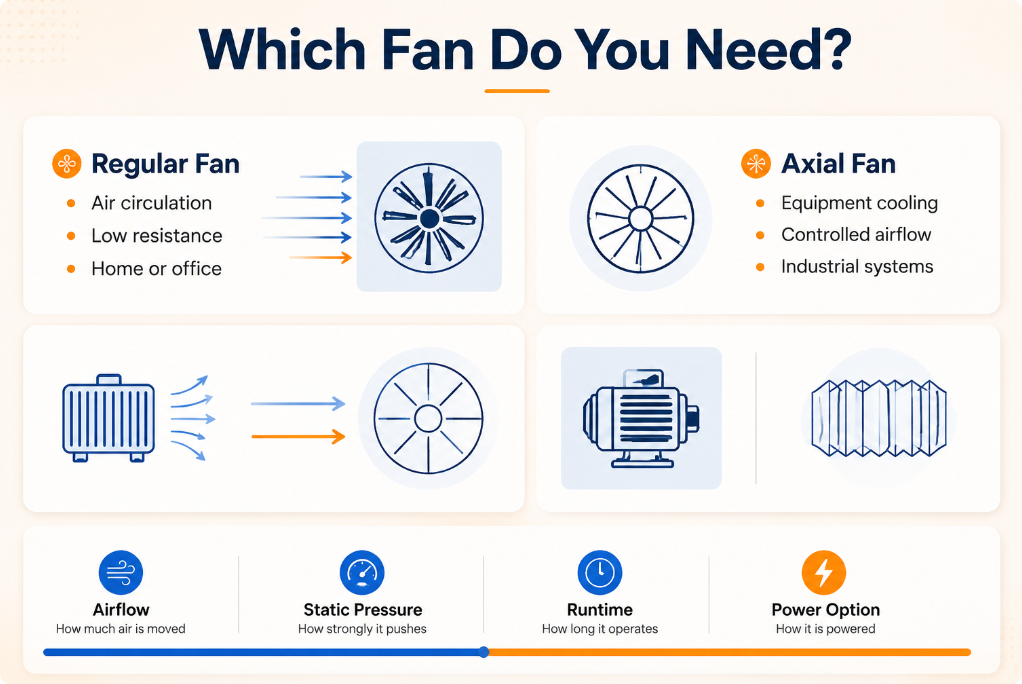
Comparison | Regular Fan | Axial Fan |
Main Purpose | Personal comfort and air circulation | Equipment cooling and thermal management |
Airflow Direction | General airflow | Air moves parallel to fan axis |
Pressure Capability | Low pressure | Designed for controlled airflow |
Operating Environment | Homes and offices | Industrial and electronic systems |
Working Time | Intermittent operation | Continuous operation |
Structure | Simple motor and blade design | Engineered motor, blade, and frame structure |
Control Options | Usually fixed speed | PWM control, alarm signals, monitoring options |
Power Options | Mainly AC power | 5V, 12V, 24V, 48V DC options |
The main difference is that regular fans are designed to improve human comfort, while axial fans are designed to maintain equipment temperature and system reliability.
Performance Differences Between Axial Fan and Regular Fan
The performance difference between a regular fan and an axial fan comes from their different design purposes. While regular fans focus on general air circulation, axial cooling fans are developed for applications that require more controlled airflow, stronger pressure capability, and reliable operation under specific cooling conditions.
The main differences can be seen in airflow performance, static pressure capability, and long-term operating stability.
1.Airflow Performance
Regular fans are mainly designed for open environments where air can move freely with minimal resistance. They are effective for improving ventilation and creating a comfortable airflow experience but are not intended for directing air through complex equipment structures.
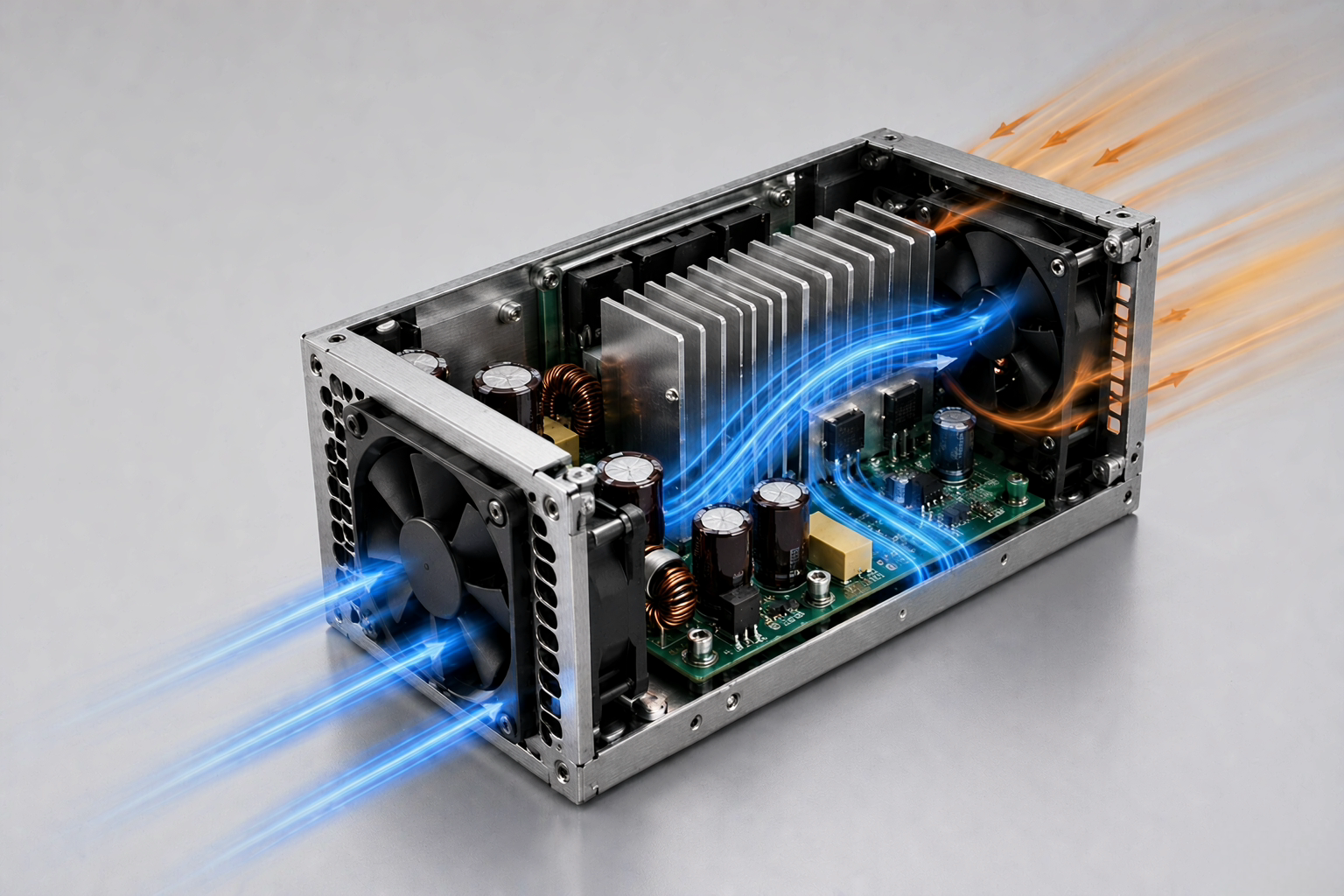
An axial fan moves air parallel to the fan shaft, creating a more directional airflow path. This design allows cooling air to be delivered more efficiently through compact spaces and internal layouts, making axial fans suitable for applications such as electronic enclosures, communication equipment, and power systems.
2.Static Pressure Capability
Static pressure is an important factor that distinguishes regular fans from axial cooling fans. In open environments, regular fans can operate effectively because airflow encounters little resistance.
However, equipment cooling often requires air to pass through components such as filters, protective grills, heat sinks, and internal structures. Under these conditions, a fan with suitable pressure performance can maintain more consistent airflow and improve cooling efficiency.
To ensure reliable performance, YCCFAN conducts airflow and pressure testing to evaluate key parameters such as airflow capacity and static pressure. Fan performance can be verified under different airflow and pressure conditions to ensure the selected axial cooling fan meets the thermal requirements of specific equipment.
3.Reliability for Continuous Cooling
Regular fans are generally designed for daily ventilation and short-term cooling, while industrial equipment often requires fans that can operate continuously for extended periods.
A DC axial fan is commonly selected for these applications due to its efficient motor operation, flexible voltage options, and stable performance. Depending on system requirements, DC axial fans are available in configurations such as 5V, 12V, 24V, and 48V DC, allowing them to integrate with different equipment power systems.
Applications of Axial Fans vs Regular Fans
The application differences between regular fans and axial fans are mainly determined by their airflow requirements, installation environments, and cooling purposes.
Comparison | Regular Fan | Axial Fan |
Main Purpose | General air circulation and personal comfort | Equipment cooling and thermal management |
Installation Environment | Open spaces with low airflow resistance | Compact systems and enclosed equipment |
Airflow Requirement | Broad air movement | Directional and controlled airflow |
Operating Condition | Short-term or daily operation | Continuous operation in industrial systems |
Typical Applications | Homes, offices, commercial areas | Electronic equipment, telecom systems, power devices, automotive electronics |
Regular fans are commonly used in open spaces where the goal is to improve air circulation and provide general ventilation. They are suitable for environments such as homes, offices, and public areas where airflow resistance is low and precise temperature control is not required.
In contrast, axial fans are designed for equipment cooling applications where airflow needs to be directed through specific areas and maintained under different operating conditions.
FAQ About Axial Fans
1.What are the advantages of axial fans?
Axial fans provide high airflow capacity, compact design, and efficient directional airflow for cooling applications. By moving air parallel to the fan shaft, axial fans can deliver consistent airflow in systems that require effective heat dissipation and continuous operation. They are commonly used in electronic equipment, communication systems, power devices, and industrial cooling applications.
2.What are the disadvantages of axial fans?
The main disadvantage of axial fans is their limited pressure capability compared with centrifugal fans in high-resistance airflow systems. When air needs to pass through dense filters, long ducts, or complex ventilation paths, airflow performance may decrease. However, properly selected axial fans can provide reliable cooling for applications with moderate airflow resistance and compact installation requirements.
3.What are the three types of axial fans?
The three common types of axial fans are propeller fans, tube axial fans, and vane axial fans. Propeller fans are mainly used for high airflow and low-pressure applications, while tube axial and vane axial fans are designed for more controlled airflow and higher pressure requirements. For electronic cooling applications, DC axial fans and brushless axial fans are commonly selected due to their compact size and reliable performance.
4.What is the difference between an axial fan and a regular fan?
The main difference between an axial fan and a regular fan is their intended purpose and airflow design. Regular fans are mainly used for general air circulation in open spaces, while axial fans are designed to provide directional airflow for equipment cooling where factors such as static pressure, reliability, and continuous operation are important.
5.When should I choose an axial fan for cooling applications?
An axial fan should be selected when a system requires continuous airflow, compact installation, and effective heat dissipation. They are commonly used for electronic equipment, communication systems, power supplies, and industrial devices where airflow needs to pass through specific cooling paths. Before selection, engineers should consider airflow volume, static pressure, voltage, fan size, and operating environment.
Conclusion
By considering factors such as airflow, static pressure, voltage, size, and operating conditions, engineers can select the most suitable cooling solution. YCCFAN provides customized DC axial fan solutions with reliable performance testing and engineering support to meet different application requirements.
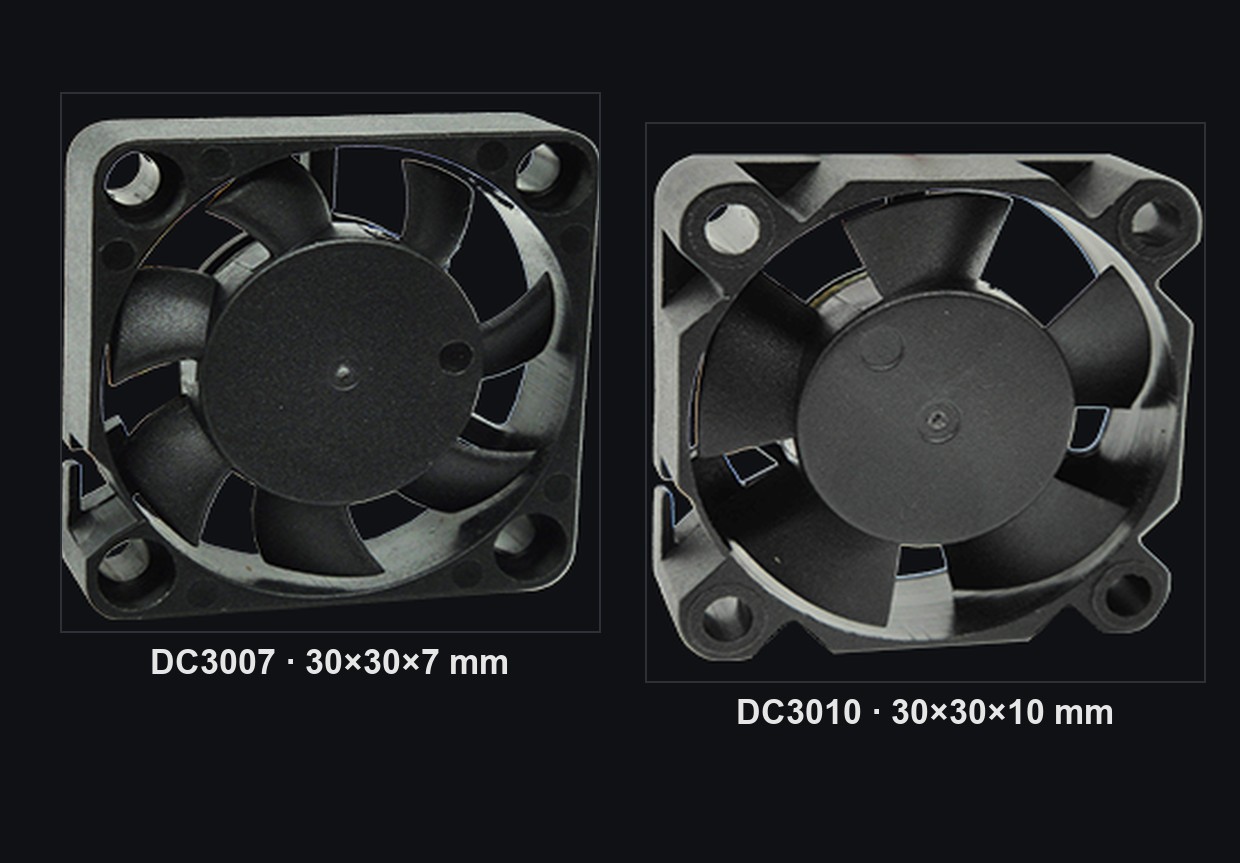
Compare DC axial cooling fans across frame size, voltage and airflow class before settling on a layout.