







Is The Cooling Fan The Same As The Radiator Fan?
This article explains the difference between a radiator fan and a cooling fan, when the two terms overlap, and how to select the right automotive cooling fan based on size, voltage, airflow, static pressure, noise, bearing life and control functions.
What Is a Radiator Fan?
A radiator fan is a fan used in the vehicle engine cooling system. It is usually installed in front of or behind the radiator and helps move air through the radiator core. This airflow allows heat from the engine coolant to be released more efficiently, helping the engine stay within a safe operating temperature range.
In daily driving, the radiator fan becomes especially important when natural airflow is not enough, such as during idling, low-speed driving, traffic jams, hot weather, or heavy engine load. Without proper airflow through the radiator, the coolant may not cool down effectively, which can lead to engine overheating.
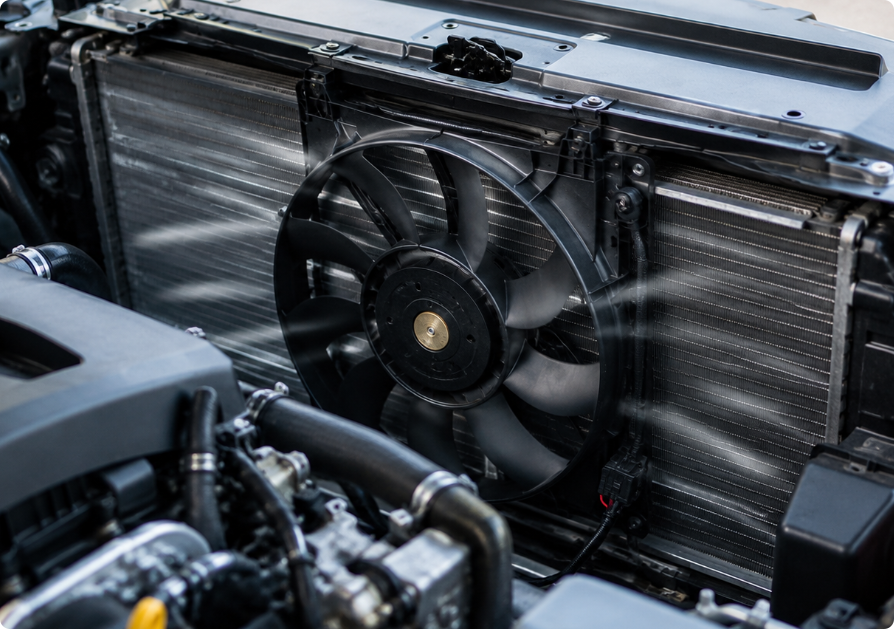
Radiator fans can be mechanical or electric. A mechanical radiator fan is usually driven by the engine, while an electric radiator fan is controlled by temperature signals, relays, or the vehicle’s electronic control system. Depending on the design, the fan may work as a puller fan behind the radiator or a pusher fan in front of it.
In simple terms, the radiator fan is a specific type of cooling fan designed mainly for radiator and engine coolant cooling.
What Is a Cooling Fan in a Vehicle?
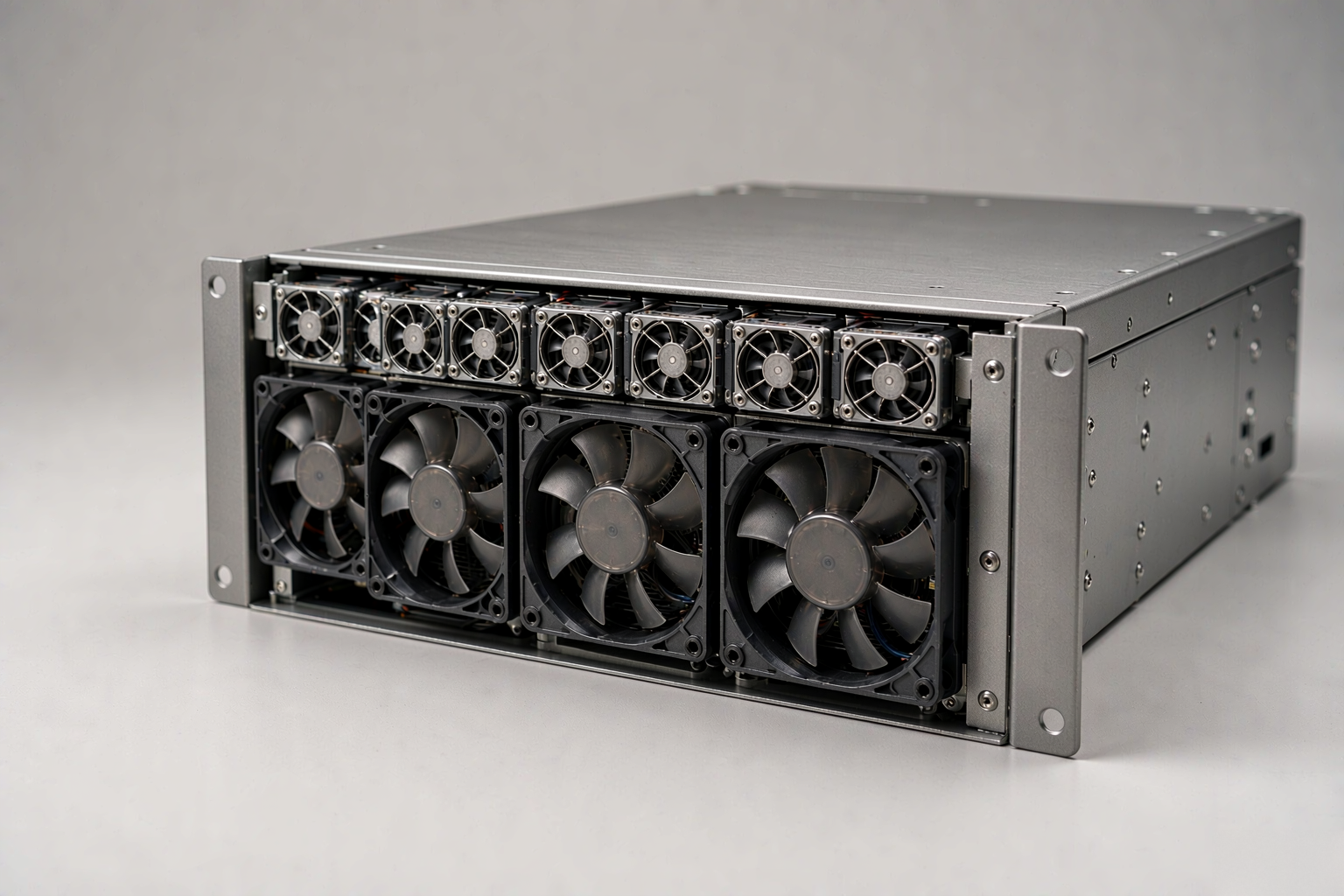
A cooling fan in a vehicle is a broader term for a fan used to help control heat. In many repair situations, people use “cooling fan” to mean the radiator fan. However, in vehicle design and module cooling, the term can also refer to smaller fans used inside vehicle-mounted systems and electronic components.
As vehicles become more electric, intelligent and compact, heat is no longer generated only by the engine. Power modules, control units, battery-related systems, LED lighting, onboard electronics and cabin display components may also need dedicated airflow. In these cases, the cooling fan may be a DC cooling fan, brushless DC fan, axial fan or compact blower fan used for local heat dissipation.
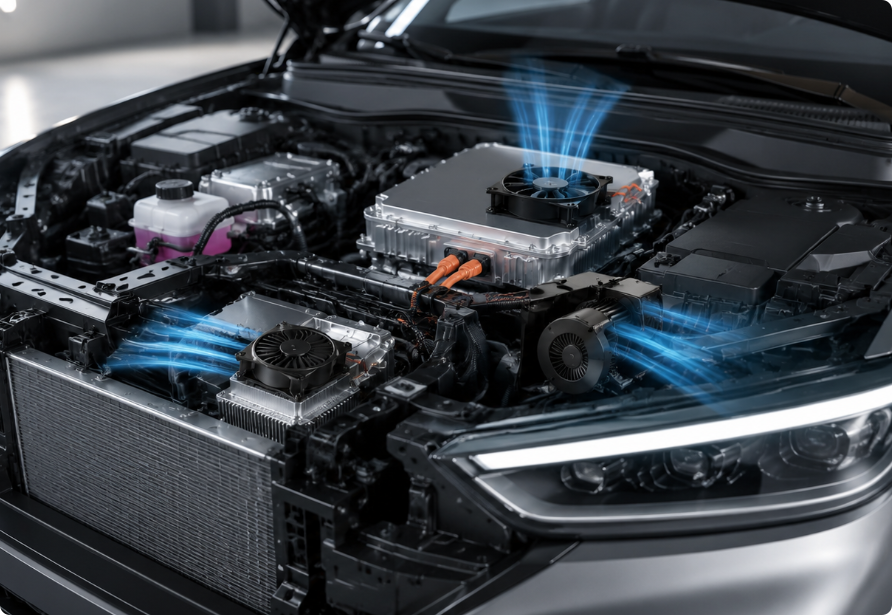
So, the key difference is context. In engine cooling, a cooling fan often means the radiator fan. In vehicle-mounted electronics and system design, a cooling fan can refer to different fan types used to protect components and improve long-term reliability.
Cooling Fan vs Radiator Fan: Key Differences
Comparison Point | Cooling Fan | Radiator Fan |
Meaning | A broad term for fans used to remove heat in automotive systems | A specific fan used to cool the radiator and engine coolant |
Main Function | Cools electronic modules, power systems, battery systems, control units, or radiator systems | Moves air through the radiator core to reduce coolant temperature |
Typical Location | Radiator area, power module, battery system, LED lighting module, cabin electronics, control cabinet | Front or rear of the radiator |
Common Types | DC fan, brushless DC fan, axial fan, blower fan, compact cooling fan | Mechanical fan or electric radiator fan |
Selection Basis | Size, voltage, airflow, static pressure, noise, bearing, PWM/FG/RD control | Vehicle model, radiator size, fan motor, airflow direction |
Typical User | Automotive OEM, module manufacturer, vehicle electronics supplier, repair market | Vehicle repair, radiator replacement, engine cooling system maintenance |
When Does “Cooling Fan” Mean “Radiator Fan”?
In vehicle repair and parts replacement, “cooling fan” often refers to the radiator fan. For example, when a mechanic says the cooling fan is not working, they may be talking about a radiator fan that does not spin, a fan motor issue, a relay problem, or an abnormal temperature signal.
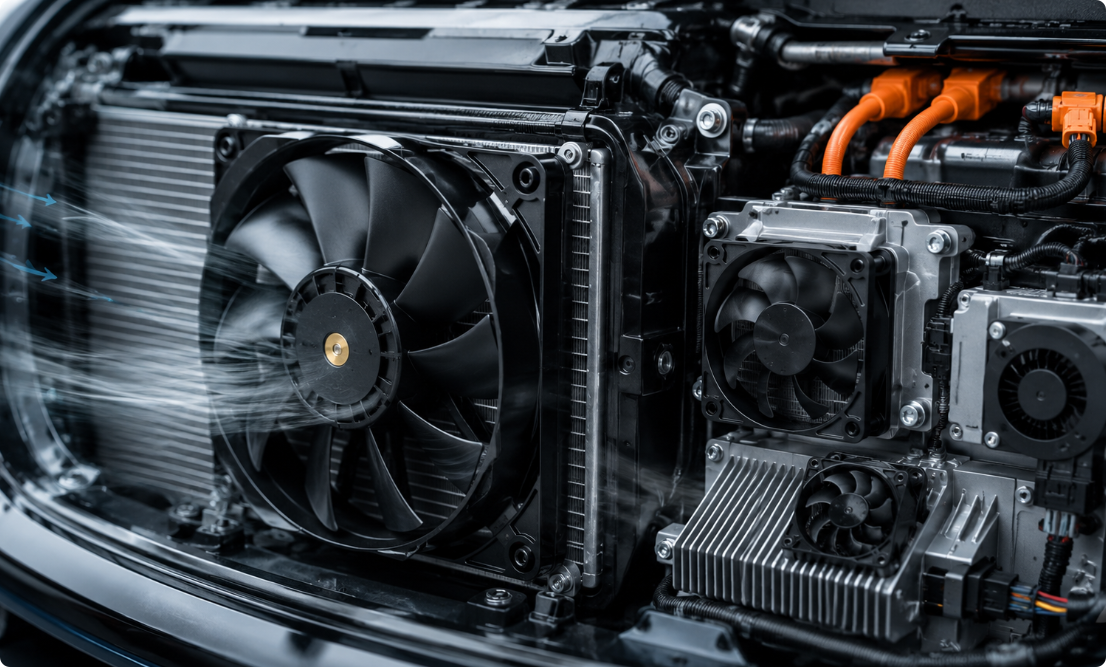
This is why the two terms are sometimes used interchangeably in engine cooling discussions. If the problem is engine overheating, radiator fan not working, or electric radiator fan replacement, the “cooling fan” usually means the fan used to move air through the radiator.
When Is an Automotive Cooling Fan Not a Radiator Fan?
A radiator fan is part of the vehicle cooling system, but it is not the only fan used for thermal management. Its main job is to move air through the radiator core and help reduce engine coolant temperature. In modern vehicles, however, heat is also generated by many electronic and power-related systems that are not directly connected to the radiator.
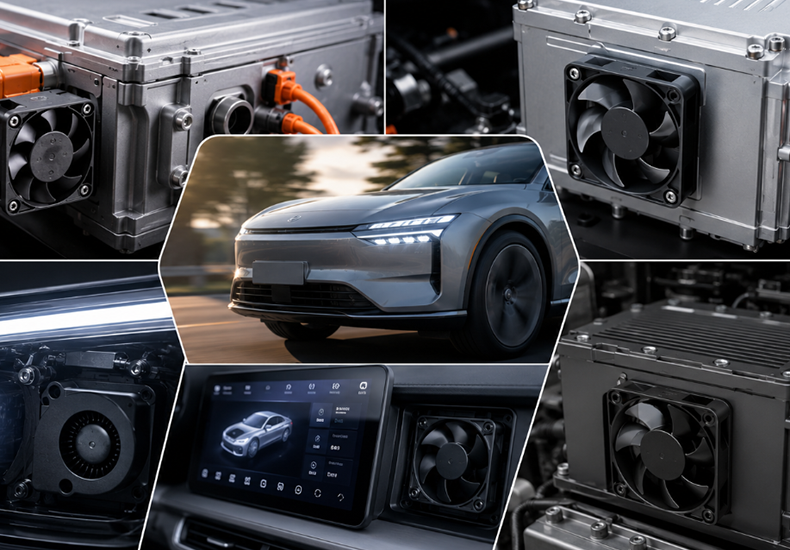
For example, electric vehicles, smart cabin systems, onboard chargers, LED lighting modules, battery-related components and commercial vehicle control boxes may all need dedicated airflow. These fans are usually smaller than a traditional radiator fan and are designed to protect sensitive components, keep temperatures stable and support long-term reliability.
Common non-radiator cooling applications in vehicles include:
Application | Cooling Purpose |
ECU, ADAS and control units | Helps manage heat around electronic control components |
EV battery and BMS area | Supports stable temperature around battery-related systems |
Onboard charger and power module | Removes heat from OBC, DC-DC converters, inverters or charging modules |
LED headlight module | Provides compact airflow for high-heat lighting components |
Cabin display and infotainment system | Helps reduce heat in smart cabin electronics with lower noise |
Commercial vehicle control box | Supports airflow in trucks, buses, construction machinery and special vehicles |
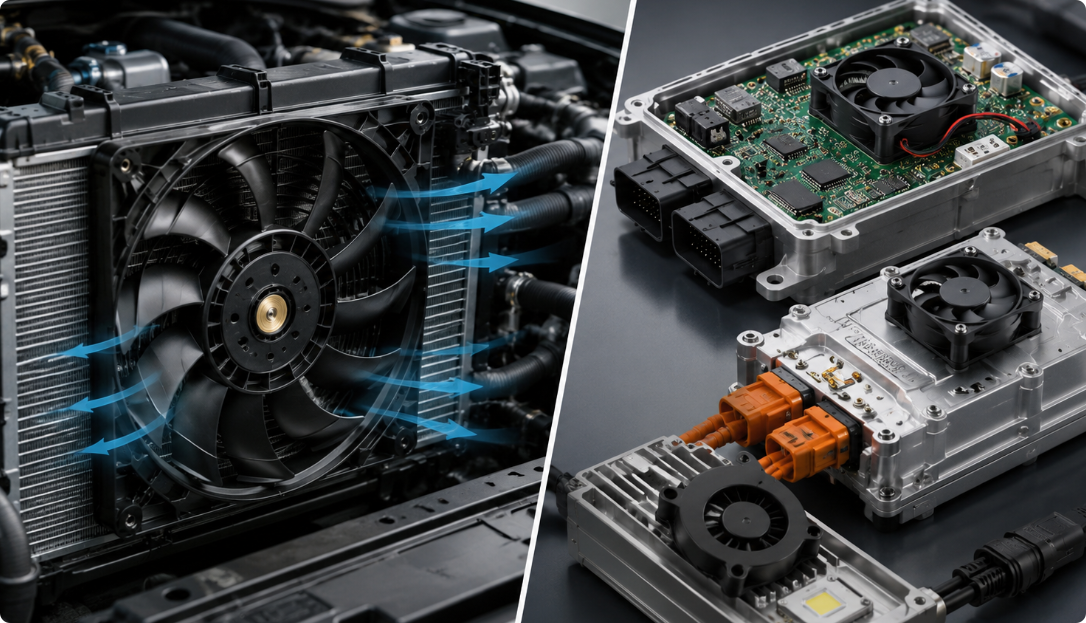
In short, if the fan is cooling the radiator, it is usually called a radiator fan. If it is cooling an electronic module, battery-related area, power unit, lighting system or control box, it belongs to a broader group of automotive cooling fans. These may include DC fans, brushless DC fans, axial fans or compact blower fans, depending on the space, airflow path and heat source.
How to Select an Automotive Cooling Fan for Vehicle Systems
Selecting an automotive cooling fan for a vehicle system depends on more than the fan name. The first step is to understand where the heat comes from, how the airflow will move, and how much space is available inside the system.
For a radiator fan, selection is usually related to the vehicle model, radiator size, airflow direction and motor power. For smaller fans used in vehicle-mounted electronic systems, the focus is different. Engineers need to consider the heat source, installation space, voltage, airflow resistance, noise level, vibration, bearing life and control functions.
1.Match the Fan to the Cooling Position
Before selecting a fan, first confirm where it will be installed and what it needs to cool. A radiator fan is usually a larger fan assembly designed to move high-volume airflow through the radiator core. For this type of application, fan diameter, airflow direction and CFM output are key factors because insufficient airflow can lead to engine overheating.
For vehicle-mounted electronics, the cooling target is different. The fan may need to cool a power module, control unit, battery-related area or lighting component inside a much smaller space. In EV battery-related systems, for example, temperature stability is critical because lithium-ion batteries generally perform best within a controlled temperature range, often around 15–35°C or 20–40°C depending on the battery system. In these applications, the right fan is not simply the largest or fastest one, but the one that matches the installation space, airflow path, heat source and required temperature control.
2.Check the Available Space Before Selecting Fan Size
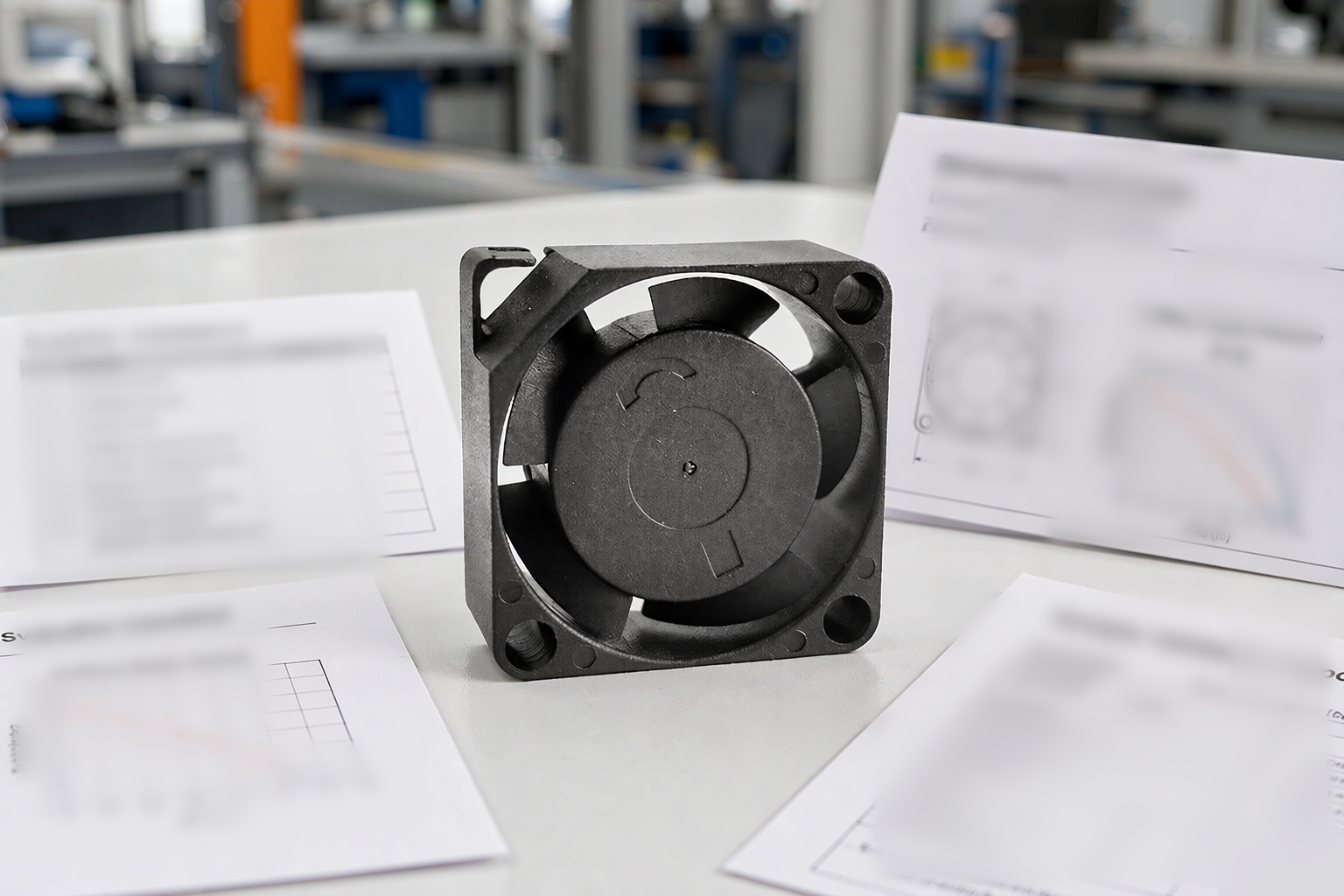
In vehicle-mounted electronic modules, the cooling fan often has to fit into a limited housing while still keeping airflow close to the heat source. If the fan is too large, it may not fit the module structure; if it is too small, it may not provide enough airflow for stable cooling.
For compact control units, LED lighting modules or small electronic housings, YCCFAN 40mm and 60mm DC fans can help solve space-limited local cooling needs. For charging modules, power units or equipment compartments with higher heat output, 80mm and 92mm DC fans can provide stronger airflow while still keeping the structure compact. For larger enclosed areas, such as commercial vehicle control boxes, 120mm DC fans can support higher airflow requirements.
3.Select the Voltage Based on the Vehicle Power System
Fan voltage should match the vehicle or module power supply. For passenger vehicle modules, lighting systems and small power units, YCCFAN 12V brushless DC fans can support common low-voltage cooling needs. For trucks, buses, construction machinery and commercial vehicle control systems, 24V DC fans are often more suitable. For EV-related modules or special power designs, 48V fan solutions can also be considered.
If the project requires a specific connector, cable length, mounting structure or control signal, YCCFAN can provide customized configurations to reduce voltage mismatch, wiring inconvenience and installation difficulty.
4.Balance Airflow with Static Pressure
A radiator fan mainly needs large airflow through the radiator core, but vehicle-mounted electronics often face narrower airflow paths. Heat sinks, ducts, grilles, filters or sealed housings can increase resistance, so CFM alone is not enough.
For open structures, a YCCFAN axial DC fan can provide direct airflow. For LED headlight modules, onboard chargers, power modules or enclosed control boxes, a high static pressure fan or compact DC blower may be more suitable. This helps avoid the problem of “enough airflow on paper, but poor cooling in the real structure.”
5.Consider Noise, Bearing Life and Vibration Control
In vehicle applications, noise, vibration and service life are as important as cooling performance. For cabin displays, infotainment systems and LED lighting modules, low noise performance is especially important because the fan is close to the user.
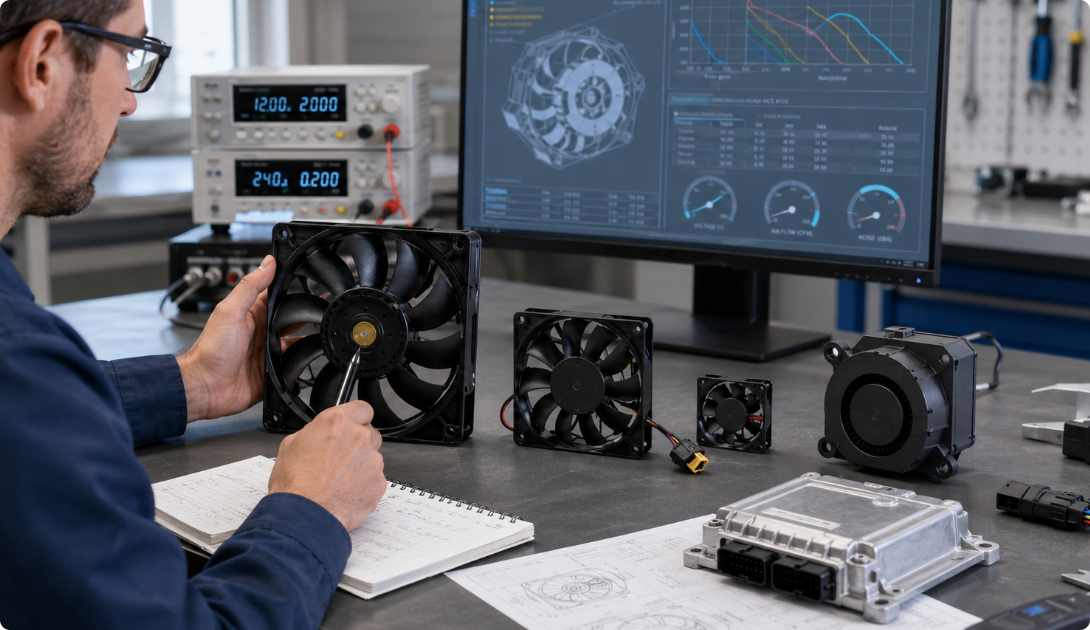
YCCFAN ball bearing DC fans are suitable for long-life, higher-temperature or continuous-operation projects. The company also supports noise testing, airflow and pressure testing, reliability testing and high-precision dynamic balancing to improve stability and batch consistency.
6.Use Control Signals for Smarter Thermal Management
Many vehicle-mounted systems need more than simple on/off fan operation. YCCFAN DC fans can support PWM, FG and RD functions according to project requirements.
PWM helps adjust fan speed based on temperature to reduce noise and power consumption. FG provides speed feedback for system monitoring, while RD helps detect fan stop or abnormal operation. These functions make the cooling fan part of the vehicle’s thermal management system, not just a basic airflow component.
Conclusion
If you need a cooling fan for vehicle-mounted electronics, power modules, battery-related systems or control boxes, YCCFAN can help match the right DC fan, brushless DC fan, axial fan or DC blower solution based on your space, voltage, airflow and control requirements.