



Ball Bearing vs Sleeve Bearing Fans: Which Is Better for Continuous Operation?
Cooling fans used in industrial controllers, communication equipment, power supplies, and other electronic devices often need to operate for thousands of hours without interruption. While airflow and static pressure are essential selection parameters, the bearing system can also influence long-term reliability, mechanical noise, mounting flexibility, and maintenance requirements.
This makes the choice between a ball bearing fan and a sleeve bearing fan particularly important for OEM engineers.
Both bearing types can deliver effective cooling, but their suitability changes with operating temperature, installation orientation, equipment service life, and cost expectations. Understanding these differences helps manufacturers make a more informed decision rather than choosing a fan solely by its rated airflow or initial price.
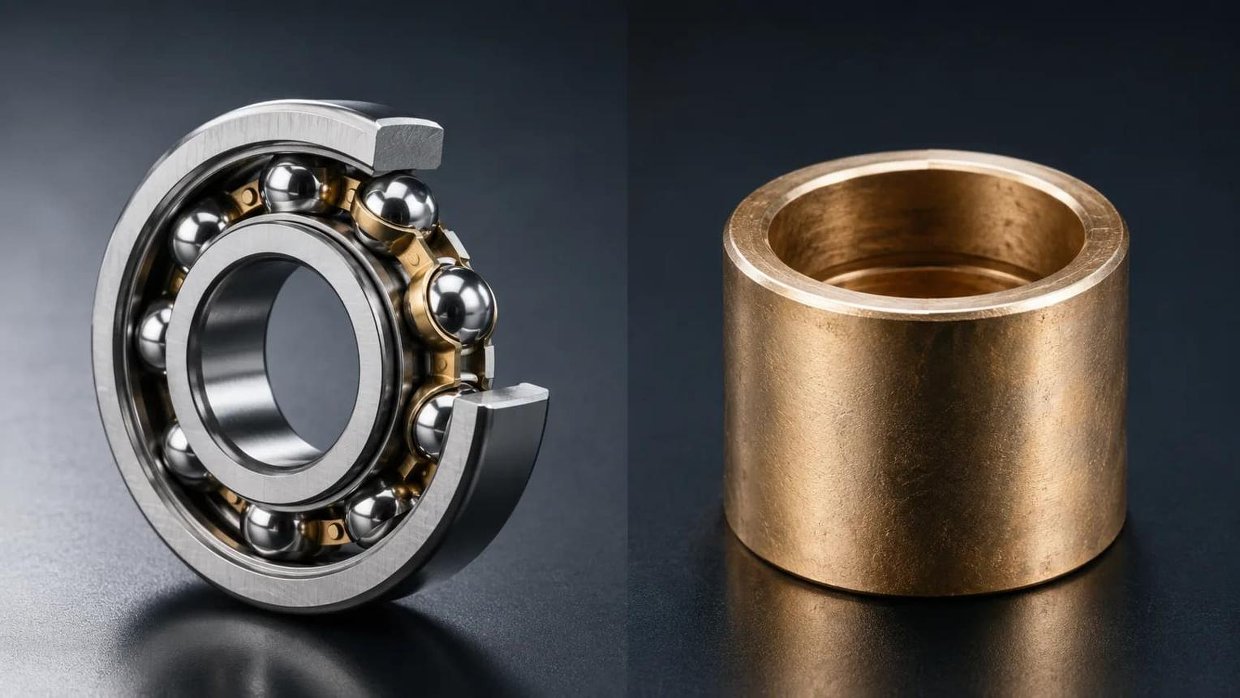
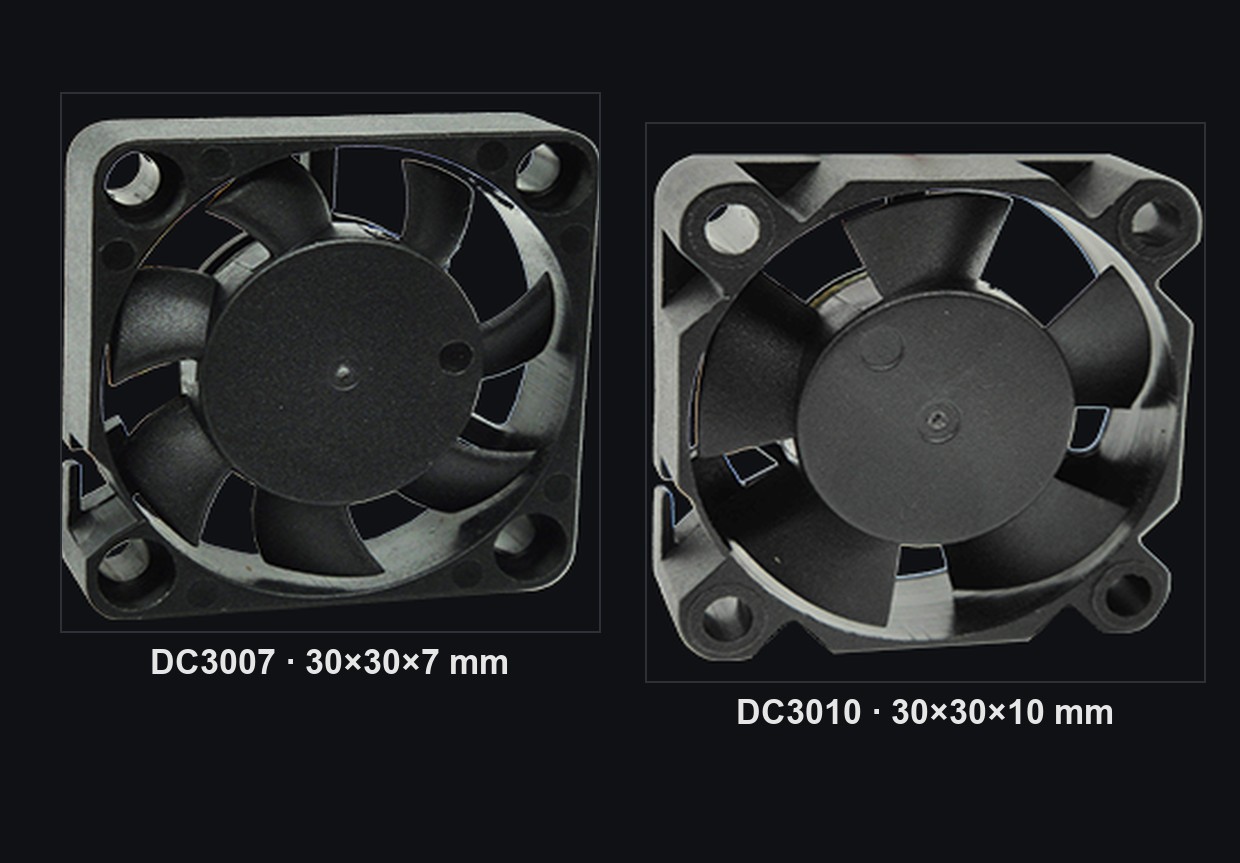
Ball bearing (left) and sleeve bearing (right) construction used in DC cooling fans
Quick Answer
A ball bearing fan is generally the better choice for continuous operation, especially in elevated temperatures or equipment with limited maintenance access. A sleeve bearing fan may suit quieter, cost-sensitive applications under controlled conditions. The final decision should consider actual operating temperature, mounting orientation, lifetime ratings, airflow, and noise.
Key Takeaways
- Ball bearing fans are generally better suited to demanding continuous-duty applications, particularly when operating temperatures are elevated.
- Sleeve bearing fans can offer lower initial cost and favorable noise performance under suitable conditions.
- Mounting orientation, lubrication, and operating temperature influence bearing durability.
- Fan lifetime ratings should be compared under equivalent conditions rather than by advertised hours alone.
- OEM engineers must verify airflow, static pressure, and actual equipment performance alongside bearing selection.
How Do Ball Bearing and Sleeve Bearing Fans Compare?
The primary difference between ball bearing and sleeve bearing fans is how the rotating motor shaft is supported.
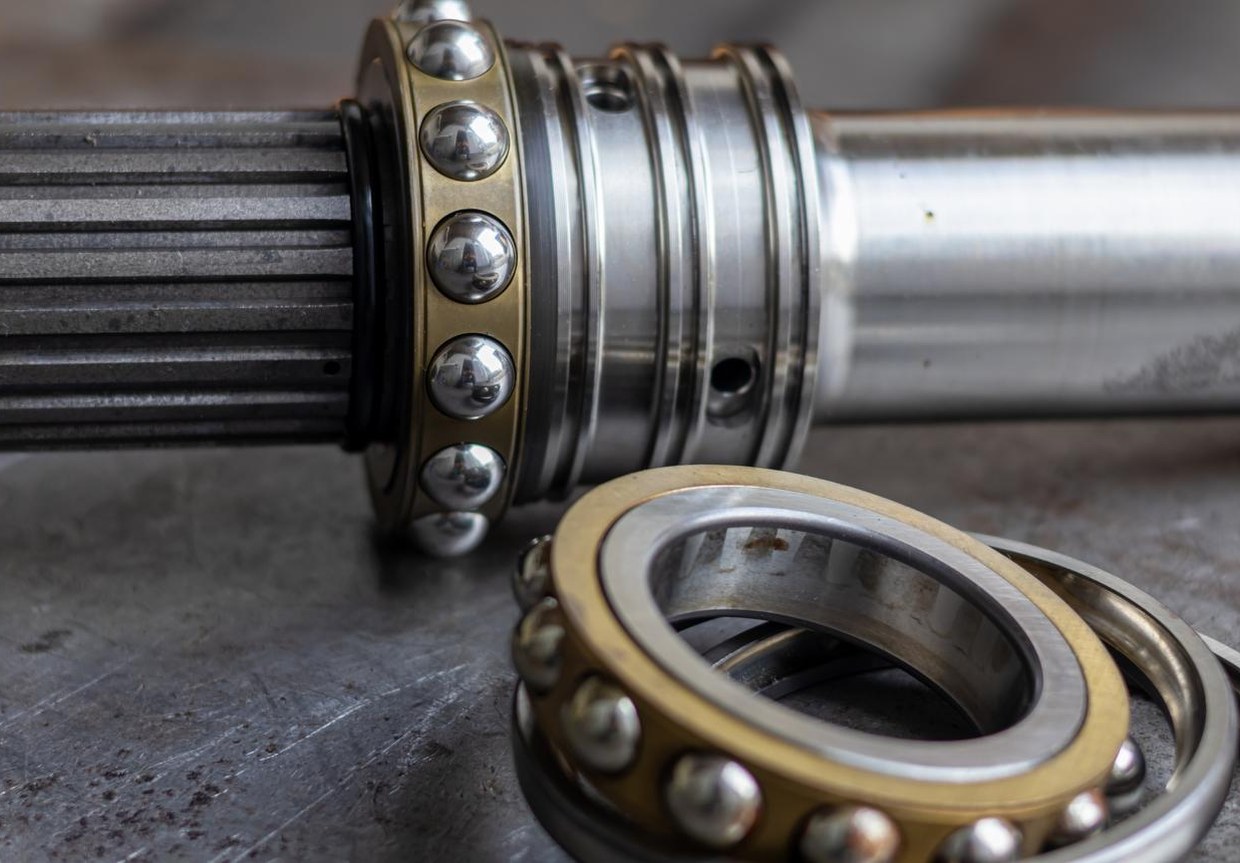
A ball bearing fan uses rolling elements between bearing races to support shaft movement. This arrangement is generally associated with good mechanical stability, relatively low rolling friction, and suitability for extended operating periods.
A sleeve bearing fan uses a lubricated cylindrical bearing surface. The rotating shaft is supported by a film of lubricant, making the construction relatively simple and often more economical to manufacture.
Although both designs are widely used in cooling equipment, their long-term behavior differs depending on lubrication conditions, shaft loading, temperature, and operating orientation.
Ball Bearing vs Sleeve Bearing Fan Comparison
| Selection factor | Ball bearing fan | Sleeve bearing fan |
|---|---|---|
| Bearing mechanism | Rolling-element bearing | Lubricated sliding bearing |
| Initial component cost | Generally higher | Generally lower |
| Continuous-operation suitability | Often preferred for demanding 24/7 applications | Suitable when rated conditions are met |
| Elevated-temperature operation | Often offers better durability | More sensitive to lubricant deterioration |
| Mounting orientation | Generally more flexible | Conventional designs may have restrictions |
| Initial mechanical noise | May produce more bearing-related noise | Can be quieter initially |
| Noise over time | Depends on bearing quality and wear | May increase as lubrication deteriorates |
| Maintenance considerations | Often preferable when replacement is difficult | Suitable for controlled or shorter-duty applications |
These differences are general engineering tendencies rather than guaranteed characteristics of every fan. Bearing quality, lubrication, motor construction, and product design can significantly influence actual performance.
For OEM manufacturers, the bearing should therefore be considered as part of the complete cooling-system design.
Why Bearing Type Matters for Continuous Operation
A cooling fan operating continuously accumulates approximately 8,760 running hours every year. Over five years, that represents around 43,800 operating hours.
For electronic equipment that relies on active cooling, bearing deterioration may eventually affect rotational stability, vibration, noise, or fan speed. Any loss of cooling performance can become particularly important when equipment operates unattended or maintenance requires a shutdown.
Three operating conditions deserve special attention.
Operating Temperature and Lubrication
Temperature is an important factor affecting fan bearing life.
As bearing temperature increases, lubricant deterioration may accelerate. Over time, changes in lubrication can contribute to increasing friction and mechanical wear.
Both ball and sleeve bearings depend on suitable lubrication, but the ways in which they manage mechanical loads and lubricant distribution differ.
In electronic equipment, the fan's actual operating environment can be considerably warmer than the surrounding room. A fan installed beside a power supply or heat-generating circuit board may experience elevated local temperatures during peak operation.
For this reason, engineers should evaluate the temperature at the fan installation position, not merely the external ambient temperature.
SANYO DENKI's technical reference, Understanding Fan Life, provides additional information about bearing construction, temperature, and fan service life.
Mounting Orientation and Mechanical Loading
Mounting orientation can influence how a bearing system supports the rotating shaft.
Conventional sleeve bearing fans may be more sensitive to installation orientation because shaft loading and lubricant distribution can change with the mounting position.
Ball bearing designs generally provide greater flexibility in vertical, horizontal, or inclined installations.
However, engineers should still confirm the permitted installation orientations for the exact model rather than assuming that every fan with the same bearing type has identical requirements.
This is particularly important in compact industrial electronics, where the available installation space may dictate the fan's orientation.
Maintenance Access and Equipment Downtime
The consequences of fan failure depend on the type of equipment.
Replacing a fan in an accessible device may require relatively little effort. In contrast, replacing a fan inside a sealed industrial enclosure, remote communication cabinet, or permanently installed control system can involve substantial service time.
For equipment expected to operate continuously over an extended service period, a ball bearing configuration may justify a higher initial purchase price if it helps meet the required maintenance interval.
A sleeve bearing option may be appropriate when the equipment operates at moderate temperatures, maintenance is straightforward, and the expected service life is shorter.
Neither choice should be made based on bearing type alone. The complete fan design and manufacturer's lifetime evidence remain essential.
Which Bearing Type Is Better for Different Electronic Applications?
The most suitable bearing type depends on how the equipment operates and how difficult it is to maintain.
For example, a continuously operating industrial controller may prioritize durability and long maintenance intervals. A compact consumer-facing electronic device may place greater emphasis on initial noise and component cost.
The following decision matrix provides a starting point.
| Application requirement | Suggested starting choice | Key consideration |
|---|---|---|
| 24/7 industrial controllers | Ball bearing | Extended operation and reliability |
| Communication equipment | Ball bearing | Continuous duty and service access |
| Power supply cooling | Ball bearing often preferred | Local temperature and operating hours |
| Compact electronics in controlled environments | Either, depending on specifications | Size, noise, cost, service life |
| Noise-sensitive electronic equipment | Compare complete fan models | Installed noise and speed |
| Intermittently operated devices | Sleeve bearing may be sufficient | Duty cycle and cost |
| Equipment with varied mounting orientations | Ball bearing generally preferred | Shaft support and approved orientation |
| Long-service-life equipment with difficult maintenance | Ball bearing often preferred | Lifetime evidence and replacement cost |
This table is an initial decision framework. It does not replace the manufacturer's model-specific lifetime data or equipment-level testing.
In particular, choosing a ball bearing fan does not automatically resolve airflow problems. Fan dimensions, rotational speed, airflow resistance, and static pressure must still match the cooling requirements.
Are Ball Bearing Fans Noisier Than Sleeve Bearing Fans?
Sleeve bearing fans are often associated with lower initial mechanical noise because of their lubricated sliding surfaces. Ball bearings may produce a different sound signature due to the interaction between rolling elements and bearing races.
However, bearing construction is only one contributor to total fan noise.
Fan noise is also influenced by rotational speed, blade geometry, airflow turbulence, mechanical vibration, and the surrounding enclosure.
A small fan operating at high speed may generate considerable aerodynamic noise even when its bearing mechanism is relatively quiet.
Noise characteristics can also change as the bearing ages. As lubrication deteriorates or mechanical wear develops, a fan may exhibit additional vibration or audible noise.
For OEM electronics, noise should therefore be evaluated under the final equipment's intended operating conditions.
A useful comparison requires fans to be assessed at similar cooling performance levels, not simply at identical voltages or maximum rotational speeds.
For example, comparing a high-speed 40mm fan with a low-speed 120mm fan would not isolate the effect of bearing type. The differences in fan size, blade design, and airflow conditions would also influence the result.
When selecting cooling fans for acoustic-sensitive equipment, engineers should review the complete fan specifications and verify sound performance inside the finished device.
How Long Do Ball Bearing Fans Last?
Ball bearing fans often provide longer service life than conventional sleeve bearing fans under demanding conditions, but no universal lifetime value applies to all models.
The expected service life depends on bearing construction, lubricant quality, temperature, rotational speed, mechanical loading, and the manufacturer's reliability criteria.
A lifetime rating should always be interpreted together with its specified test conditions.
Understanding Fan Lifetime Ratings
| Lifetime metric | Meaning | Important consideration |
|---|---|---|
| L10 life | The operating duration associated with 90% survival under defined conditions | Compare temperature and end-of-life criteria |
| Expected life | Manufacturer-defined estimate of operating life | Check the rating method and conditions |
| MTBF | Statistical mean time between failures under a stated reliability model | Not equivalent to guaranteed service life |
| Warranty | Commercial coverage period | Not a technical lifetime rating |
An L10 rating does not guarantee that every fan will achieve the stated operating duration. It represents a defined reliability threshold for a population of products.
Similarly, MTBF should not be interpreted as the lifespan of an individual fan.
If two manufacturers publish lifetime ratings using different temperatures or failure definitions, their numbers may not be directly comparable.
Engineers should request equivalent operating conditions before drawing conclusions about which bearing configuration will last longer.
Consider the Actual Equipment Service Period
For equipment intended to operate continuously, lifetime requirements should be defined in terms of the system's expected service period.
| Operating schedule | Approximate annual operating hours |
|---|---|
| 8 hours per day, 5 days per week | 2,080 |
| 12 hours per day, 7 days per week | 4,380 |
| 24 hours per day, 7 days per week | 8,760 |
A device operating continuously for five years accumulates approximately 43,800 hours.
However, selecting a fan with a published lifetime near that number does not automatically satisfy a five-year reliability requirement. Temperature, reliability confidence, failure criteria, and system-level operating conditions must also be evaluated.
For critical equipment, fan lifetime assessment should be part of the broader thermal-management and maintenance strategy.
How to Choose the Right Ball Bearing DC Fan for OEM Equipment
After determining which bearing construction is appropriate, engineers must select a fan that fits the equipment's mechanical and thermal requirements.
The same bearing type may be available in fans with significantly different dimensions, voltage ratings, airflow capacities, and static-pressure characteristics.
For example, a 40mm ball bearing fan may be suitable for compact electronics with limited installation space, while a 120mm ball bearing fan may be considered for larger enclosures requiring greater airflow capacity.
Selecting between these options requires more than comparing nominal dimensions.
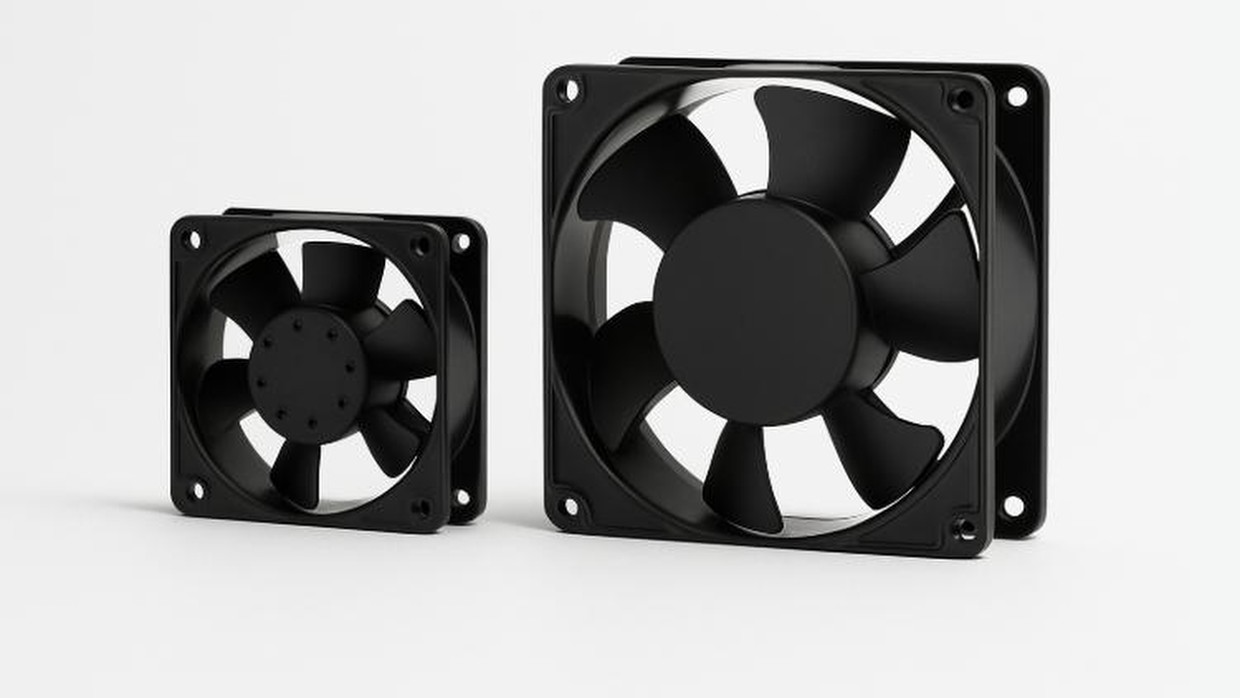
Typical 40mm and 120mm DC cooling fan frame sizes
40mm Ball Bearing Fans for Compact Electronics
Compact electronic devices often have limited space for airflow channels, cooling fans, and other thermal-management components.
In these applications, fan thickness, supply voltage, airflow resistance, and noise may be just as important as bearing selection.
The YCCFAN DC4010 40×40×10mm cooling fan is an example of a compact axial DC fan designed for electronic cooling. This product family offers 5V, 12V, and 24V configurations, with selectable C/B bearing options.
Its 40×40×10mm frame allows it to fit into compact devices such as embedded control units, communication modules, and electronic enclosures where a larger fan may not be practical.
The following 24V configurations demonstrate how speed selection changes the published airflow, static pressure, and noise characteristics.
| DC4010 model | Voltage | Speed | Maximum airflow | Maximum static pressure | Noise |
|---|---|---|---|---|---|
| YDH4010X24 | 24V | 8,000 RPM | 6.76 CFM | 4.35 mmH₂O | 29.60 dBA |
| YDM4010X24 | 24V | 6,500 RPM | 5.49 CFM | 2.87 mmH₂O | 25.10 dBA |
| YDL4010X24 | 24V | 5,000 RPM | 4.22 CFM | 1.77 mmH₂O | 19.50 dBA |
Specifications represent the published DC4010 model ratings. Maximum airflow and maximum static pressure are measured under different airflow conditions and should not be treated as simultaneous values.
When evaluating a 24V 4010 ball bearing fan, engineers should confirm the exact bearing option and required speed configuration before selecting a sample.
The C/B designation used for this product family represents the available CycleSeal and ball bearing options. CycleSeal should not automatically be treated as a conventional sleeve bearing construction.
For applications requiring a different airflow-pressure profile within the same 40×40×10mm dimensions, the YCCFAN DC4010F 40mm cooling fan provides another option. Its published high-speed configuration offers maximum airflow of 8.80 CFM and maximum static pressure of 5.39 mmH₂O.
These values help engineers compare cooling capability, but the final selection must be based on the equipment's actual airflow resistance, operating temperature, noise requirements, and bearing configuration.
120mm Ball Bearing and Sleeve Bearing Fan Options
For larger electronic enclosures and power equipment, a 120mm fan may provide a more appropriate combination of airflow capacity and installation dimensions.
The YCCFAN DC1232 120×120×32mm cooling fan offers a useful example because its specifications explicitly include both ball bearing and sleeve bearing configurations.
The DC1232 series features a 120×120×32mm frame and 12V, 24V, and 48V versions. Its published operating-temperature ranges differ by bearing type:
| DC1232 bearing option | Published operating temperature |
|---|---|
| Ball bearing | −10°C to +70°C |
| Sleeve bearing | −10°C to +60°C |
These temperature ranges are permitted operating limits, not guaranteed lifetime ratings. They should not be interpreted as evidence that a fan will achieve a particular service life at the highest permitted temperature.
A high-speed DC1232 configuration also provides maximum airflow of 93.52 CFM and maximum static pressure of 9.28 mmH₂O, offering a different performance class from the compact DC4010 family.
For engineers selecting a 120mm ball bearing fan, the relevant questions include whether the equipment has sufficient mounting space, how much airflow is required, and whether its internal resistance allows the chosen fan to reach the required operating point.
The DC1232 family's published ball and sleeve bearing options also allow OEM engineers to evaluate bearing configurations within the same fan series rather than comparing unrelated products.
What Is a Dual Ball Bearing Fan?
A dual ball bearing fan generally uses two ball bearings to support the rotating shaft.
This arrangement can provide shaft stability and support applications requiring extended operation or flexible mounting orientations.
However, the use of two ball bearings does not automatically guarantee a specific lifespan or noise level. Bearing quality, lubrication, operating temperature, motor design, and mechanical loading still influence performance.
When evaluating a dual ball bearing fan, buyers should confirm the actual bearing construction and the manufacturer's lifetime criteria.
A fan described only as having a “ball bearing” or a “B” bearing option should not automatically be assumed to contain two ball bearings.
For OEM purchasing, the distinction should be established through the exact model's technical documentation before approval.
How Should OEM Engineers Validate Fan Bearing Selection?
Bearing selection should not end with a comparison of product datasheets.
A fan may meet its published electrical and airflow specifications but behave differently when installed inside equipment with restricted vents, filters, closely spaced components, or elevated internal temperatures.
This is why sample testing should examine the fan as part of the complete cooling system.
The fan's actual operating airflow is determined by the relationship between its pressure-airflow characteristic and the equipment's system resistance.
Maximum free-air airflow and maximum static pressure are useful reference values, but neither represents the complete installed performance.
For continuous-operation equipment, the validation process should cover both cooling effectiveness and bearing suitability.
| Validation item | What to verify | Engineering purpose |
|---|---|---|
| Temperature | Expected and worst-case temperature near the fan | Confirm rated thermal conditions |
| Mounting orientation | Actual shaft position and installation method | Verify bearing compatibility |
| Airflow and static pressure | Cooling performance with equipment resistance | Confirm sufficient operating airflow |
| Noise | Acoustic behavior at intended operating speed | Assess installed equipment noise |
| Electrical performance | Voltage, current, startup, and operating conditions | Confirm electrical compatibility |
| Mechanical stability | Vibration and mounting behavior | Identify potential mechanical problems |
| Reliability evidence | Lifetime definition and qualified operating conditions | Support long-term selection |
| Monitoring requirements | Available PWM, FG, RD or other optional functions | Confirm control and monitoring needs |
A short functional sample test can confirm installation compatibility and initial cooling performance. It cannot independently demonstrate several years of bearing life.
For equipment with stringent reliability requirements, engineers should combine system-level validation with manufacturer reliability data and any project-specific endurance requirements.
Ball Bearing vs Sleeve Bearing: Which Offers Better Long-Term Value?
Ball bearing fans generally have a higher initial component cost than comparable conventional sleeve bearing options. However, the most economical choice depends on the complete equipment lifecycle.
For a device operating continuously in a remote industrial installation, replacing a cooling fan may involve technician travel, system shutdown, troubleshooting, and maintenance labor.
Under these conditions, a bearing configuration that meets a longer service interval can be worth the additional initial cost.
For equipment operating intermittently in a controlled environment, the lower initial cost of a sleeve bearing fan may offer a better balance between performance and budget.
The choice should reflect the equipment's expected usage, service life, operating temperature, and acceptable maintenance requirements.
It is also important not to confuse bearing durability with cooling performance. A fan equipped with a suitable bearing still needs to provide enough airflow at the actual operating point.
For OEM engineers, the best selection is the fan that meets the equipment's thermal, electrical, acoustic, reliability, and cost requirements together.
FAQ
Are ball bearing fans better than sleeve bearing fans for 24/7 operation?
Ball bearing fans are generally preferable for demanding continuous operation, particularly when temperatures are elevated, mounting orientations vary, or maintenance access is limited. Sleeve bearing fans may also be suitable when their rated lifetime and operating conditions meet the equipment's requirements.
Do ball bearing fans last longer than sleeve bearing fans?
Ball bearing fans often have a longer expected service life under demanding operating conditions. However, the difference depends on bearing design, lubrication, temperature, and the manufacturer's reliability criteria. Published lifetime values should be compared using equivalent test conditions.
Are sleeve bearing fans quieter than ball bearing fans?
Sleeve bearing fans can have lower initial mechanical noise, but overall noise also depends on rotational speed, blade design, airflow resistance, and installation conditions. Bearing noise may change over time, so OEM engineers should compare complete fan models at the intended operating point.
Is a dual ball bearing fan better than a single ball bearing fan?
A dual ball bearing configuration can provide additional shaft support, but it does not automatically guarantee longer service life. Actual reliability depends on bearing quality, lubricant, motor construction, and operating conditions. The exact bearing arrangement should be confirmed for the selected model.
Does mounting orientation affect sleeve bearing fan life?
Mounting orientation can affect conventional sleeve bearing fans because shaft loading and lubrication distribution may change with installation position. Some sleeve bearing designs have orientation restrictions. Engineers should follow the manufacturer's installation specifications rather than assuming every model behaves identically.
Can I use a 24V 4010 ball bearing fan for continuous operation?
A 24V DC4010 ball bearing configuration may be considered for continuous-operation equipment when its temperature rating, airflow, static pressure, noise level, and reliability documentation meet the application requirements. The exact bearing and speed configuration should be confirmed, followed by equipment-level testing before production approval.
Conclusion
Choosing between ball bearing and sleeve bearing fans requires more than comparing bearing construction or initial purchase cost.
For continuously operating industrial electronics, ball bearing fans are often a strong starting point because of their suitability for demanding temperatures, varied mounting orientations, and long service requirements. Sleeve bearing fans remain practical alternatives when operating conditions are controlled and the required lifetime can be demonstrated.
The final decision must also consider voltage, dimensions, airflow, static pressure, noise, and actual installation conditions.
YCCFAN offers configurable DC cooling fan models for different equipment sizes and operating requirements, including compact 40mm fans and larger 120mm models with available bearing choices.
For OEM projects, review the required fan dimensions, supply voltage, operating temperature, bearing configuration, airflow, and expected service life before approving a model.
Explore YCCFAN's DC4010 40mm cooling fan and DC1232 120mm cooling fan, or contact YCCFAN to discuss your application requirements.