





How Do I Tell If My Radiator Fan Is Bad?
Your radiator fan plays a much bigger role than most drivers realize. It helps pull air through the radiator and A/C condenser, keeps engine temperatures under control, and supports steady A/C performance—especially in traffic or at low speeds. When the radiator fan starts to fail, the first signs are often subtle: a slowly rising temperature gauge, weaker A/C, or a strange noise from the engine bay.
In this guide, we’ll walk through the key performance symptoms of radiator fan problems and a few straightforward inspection steps you can use to narrow down what’s wrong—before it turns into serious engine damage or an unexpected breakdown.
Key Performance Symptoms and Warning Signs of Radiator Fan Problems
1.Engine Overheating
One of the easiest ways to tell something might be wrong with your radiator cooling fan is by watching your temperature gauge. If the engine temperature keeps creeping up—especially when you’re sitting in traffic, parked with the engine running, or moving very slowly—it’s a strong sign the radiator fan isn’t pulling enough air through the radiator.
In more serious cases, you might even see a light mist or steam coming from under the hood. That means the engine is holding onto heat it can’t get rid of. If this goes on for too long, the coolant can start to boil, pressure can build up in the system, and you may end up with serious engine damage.

2.Dashboard Warning Lights
Today’s cars are full of sensors, and a bad radiator fan will often show up on the dashboard before you notice anything else. If coolant temperatures climb out of the normal range, the engine temperature warning light is likely to turn on. The Check Engine light can also appear if the ECU detects repeated overheating or strange cooling behavior related to the radiator fan.
On some models, the A/C system might flash a warning or switch itself off when the condenser gets too hot because the cooling fan isn’t moving enough air. If you see more than one of these warnings at the same time, it’s a strong hint that the radiator fan—or its wiring, relay, or control module—needs to be checked as soon as possible.
3.Weak A/C Performance
A failing radiator cooling fan doesn’t just affect engine temperature; it can also make your A/C feel weak. The A/C condenser sits in front of the radiator and relies on the radiator fan to pull air through when the car isn’t moving fast.
If the fan isn’t doing its job, heat builds up around the condenser and the A/C has a harder time cooling the air. You might notice that the A/C blows warmer air at idle, takes much longer to cool the cabin, or feels fine on the highway but turns weak in stop-and-go traffic. When the A/C is okay at speed but struggles when you’re stopped, the radiator fan is one of the first things to suspect.
4.Unusual Noises from the Engine Bay
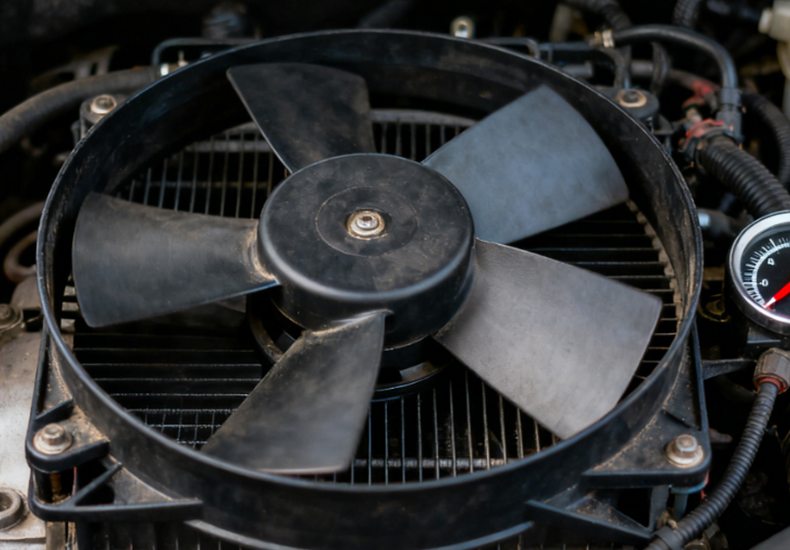
A healthy radiator fan usually runs quietly in the background, so any new or strange noise from the engine bay is worth paying attention to.
A grinding noise can mean the fan motor bearings are worn or running dry.
Rattling or clattering might point to loose mounting hardware, a cracked blade, or debris hitting the fan.
A loud whirring or roaring sound can suggest the radiator fan is out of balance, misaligned, or constantly running at high speed to keep up with rising temperatures.
These noises almost never fix themselves. In most cases, they get louder over time and can end with a complete radiator fan failure. Checking them early can save your fan—and your engine—from much bigger problems later.
Direct Inspection and Troubleshooting for a Cooling Fan
If earlier symptoms point toward a possible cooling fan failure, this section walks you through a few simple and safe diagnostic steps you can perform yourself. Make sure the engine is completely cool, the vehicle is parked securely, and the ignition is off before you begin. Heat can distort components and lead to misleading observations, and touching anything near a hot radiator or radiator fan can cause serious burns.
1.Visual Inspection
Start with a basic but important visual check under the hood.
Examine the radiator fan blades carefully for cracks, chipped edges, warping, or missing sections. Even small imperfections can throw the fan off balance and reduce airflow efficiency. Next, look inside the cooling fan shroud and surrounding areas for foreign objects—leaves, plastic bags, dirt buildup, or small debris that may have been pulled in while driving. Any obstruction can limit the radiator fan’s rotation or airflow.
Also pay attention to items positioned close to the radiator fan, such as loose wires, hoses, or aftermarket add-ons. At high RPM, the fan pulls strong airflow, and even a slightly misplaced hose can get drawn into the blades, causing noise, damage, or system strain.
In many cases, a simple visual inspection is enough to spot the issue—whether it’s a cracked blade, debris jammed in the shroud, or clear signs of physical interference.
2.Verify Whether the Radiator Cooling Fan Turns On
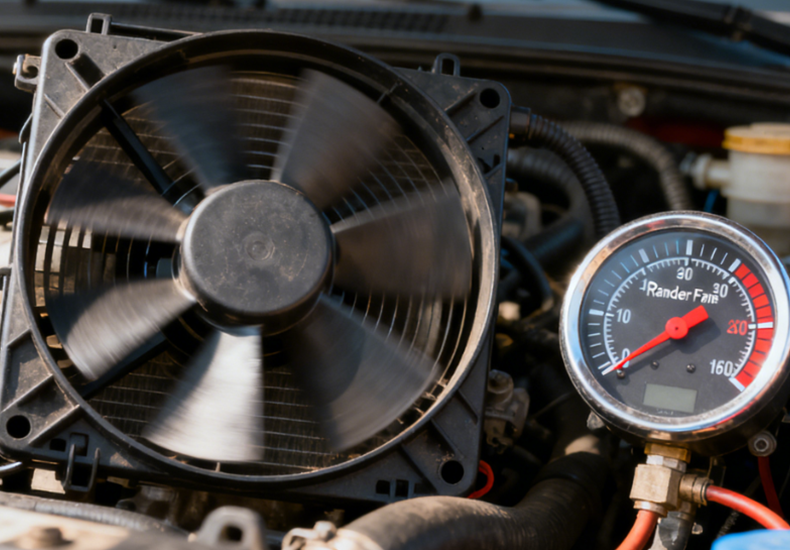
After confirming there are no visible obstructions, check whether the radiator cooling fan engages at the correct time. Most vehicles are designed for the fan to activate automatically in two main situations:
l When the engine temperature reaches a set threshold
l When the A/C system is switched on
Let the engine idle and watch the temperature gauge climb toward its normal range. Once it reaches operating temperature, the radiator cooling fan should cycle on and off to regulate heat. If you’re unsure whether it’s spinning, listen for airflow or feel for warm air movement coming from the grille.
Turning on the A/C can be an even quicker test. The radiator fan plays a critical role in cooling the condenser, so it should activate almost immediately. If the fan stays silent while the engine temperature rises or the A/C is running, that’s a clear sign something is wrong.
Possible causes include a failing radiator fan motor, damaged wiring, a blown fuse, a faulty sensor, or a malfunctioning control module.
3.Check for Coolant Leaks
A failing cooling fan can cause the engine to overheat, increasing internal cooling-system pressure. This added pressure may force coolant through worn gaskets, loose clamps, or aging hoses.
Check the ground beneath your vehicle for coolant puddles, which may appear green, orange, pink, or yellow depending on the coolant type. Also inspect hoses, clamps, and radiator seams for dried residue or crusty deposits—these remain after evaporated coolant and typically indicate leakage.
Although coolant leaks don’t guarantee the radiator fan is the root cause, leaks combined with overheating strongly suggest that insufficient cooling from the radiator fan contributed to the problem. If leaks are severe, additional repairs may be necessary beyond fixing the fan itself.
4.Test the Radiator Fan Motor and Relay
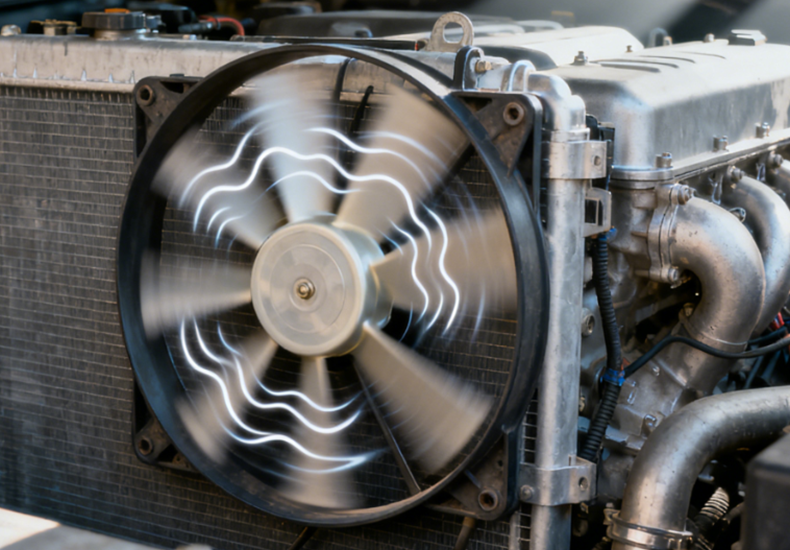
If you're comfortable with basic automotive electrical testing, you can perform a few targeted checks to locate the source of the radiator fan failure.
Fan Motor Test:
Disconnect the radiator fan connector and apply 12 volts directly to the motor while observing proper safety procedures. If the radiator fan doesn’t spin at all, the motor has likely failed internally—possibly due to worn brushes, seized bearings, or burnt windings. A slow or weak spin also indicates a motor nearing the end of its lifespan.
Relay Test:
Locate the cooling fan relay in the fuse box and briefly bypass it using a jumper wire. If the fan runs during this bypass but refuses to operate normally, the issue likely lies in the relay itself or in the control signal that activates it. Intermittent relay failures are common and often lead to inconsistent fan behavior.
These tests can help isolate the underlying cause:
l Motor test fails → radiator fan motor failure
l Relay bypass works → relay or control signal issue
l Both fail → wiring problems, blown fuse, sensor faults, or ECU issues

If you’re unsure about wiring identification or the safety of the testing steps, it’s best to consult a professional mechanic. Incorrect handling can cause electrical shorts or damage other components in the cooling system.
Read more:
https://www.yccfan.com/articledetail/533.html
https://www.yccfan.com/articledetail/why-is-my-cooling-fan-so-loud-in-my-car.html
Conclusion
A failing radiator fan won’t usually stop your car immediately, but it can quietly push your engine toward overheating, coolant leaks, and expensive repairs if ignored.