



Precision Manufacturing in Industrial Cooling Fans
Industrial cooling fans are more than just rotating blades, whereas they are critical components in thermal management systems across industries. From enclosure cooling fans in server cabinets to engine cooling fans in industrial machinery and motor cooling fans in precision equipment, the performance and reliability of these fans directly affect equipment efficiency, lifespan, and safety.
At the heart of high-performance fans lies precision manufacturing. Precision engineering ensures tight tolerances, accurate blade geometry, reliable motor performance, and long-lasting bearings. In industrial applications, even small deviations can compromise airflow, increase noise, reduce efficiency, or accelerate wear. This article explores the principles, practices, and benefits of precision manufacturing in industrial cooling fans.
Key Takeaways
Why Precision Manufacturing Matters
Key Components Requiring Precision
Manufacturing Techniques for Precision Fans Parts
Benefits of Precision Manufacturing
Extended Lifespan and Reduced Maintenance
Applications That Benefit Most
Conclusion
Why Precision Manufacturing Matters
Precision manufacturing is the foundation of high-performance industrial cooling fans. In applications where airflow, temperature control, and equipment reliability are critical, even small deviations in fan components can have significant consequences. Accurate blade geometry, balanced rotors, and properly aligned motor assemblies ensure that fans operate as intended, delivering consistent airflow and pressure without introducing unnecessary turbulence or vibration.
Another key reason precision matters is noise control. Fans with imbalanced blades or loosely assembled components can produce mechanical vibration and tonal noise, which not only affect operator comfort but can also create resonance within enclosures or panels. By manufacturing components with tight tolerances, engineers can minimize vibration, reduce noise levels, and achieve smoother operation—essential for silent or noiseless cooling fan applications.
Longevity and durability are also heavily influenced by precision. Bearings, shafts, and motor housings that are manufactured within exact specifications reduce friction and wear, preventing premature failures in demanding industrial environments. This reliability is particularly important in continuous operation systems, such as industrial motors, control cabinets, or power electronics, where fan downtime can lead to overheating, production interruptions, or costly maintenance.
Finally, precision manufacturing ensures predictable, repeatable performance across production batches. When each fan meets strict design specifications, engineers and system integrators can confidently design cooling systems without needing to compensate for variability. This not only improves thermal efficiency but also enhances energy efficiency, lowers operational costs, and strengthens overall system reliability in industrial applications.
Key Components Requiring Precision
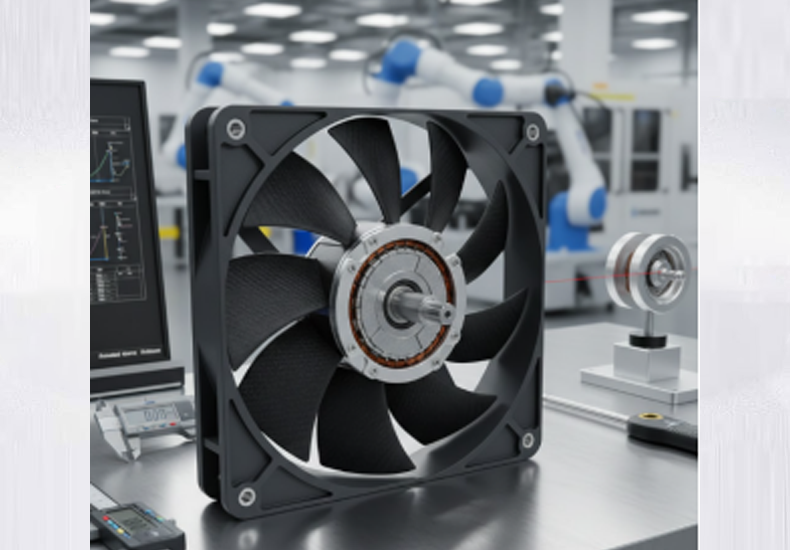
Precision manufacturing applies to every critical component of an industrial cooling fan:
1. Fan Blades
Material: High-strength plastics, aluminum alloys, or composite materials with excellent dimensional stability.
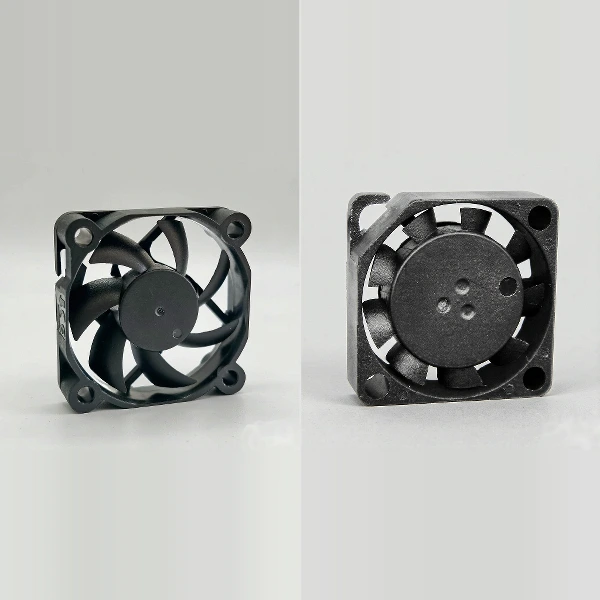
Blade geometry: Precise pitch, curvature, and thickness reduce turbulence and optimize airflow.
Balance: High-speed fans require dynamically balanced blades to prevent vibration and uneven wear.
2. Fan Hub and Shaft
Tight tolerances ensure smooth rotation and minimal wobble.
High-quality bearings (ball, sleeve, or fluid dynamic) are aligned precisely to prevent noise and increase service life.
Motor coupling is carefully controlled to maintain consistent torque and prevent heat buildup.
3. Motor Assembly
Windings and magnetic components must meet exacting specifications to provide consistent speed and power.
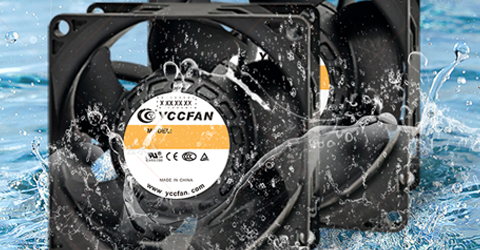
Encapsulation and insulation prevent environmental damage while maintaining thermal performance.
Integration with fan blades ensures optimized airflow without introducing structural vibration.
4. Fan Housing
Dimensional accuracy ensures proper airflow pathways, prevents air leaks, and facilitates mounting.
Material selection affects thermal resistance, vibration damping, and noise absorption.
Finish and surface smoothness reduce turbulence and contribute to quieter operation.
Manufacturing Techniques for Precision Fans Parts
Precision manufacturing relies on advanced techniques and quality controls to ensure performance:
Technique | Description | Advantages | Limitations / Considerations | Typical Applications |
CNC Machining | Computer-controlled machining of fan blades, hubs, and housings. | Extremely high dimensional accuracy; tight tolerances; ideal for complex geometries; consistent repeatability. | Higher cost for high-volume production; longer cycle times than molding. | High-speed DC/AC fans, engine cooling fans, motor cooling fans |
Injection Molding | Molding of plastic fan blades and housings under controlled temperature and pressure. | Excellent for mass production; repeatable dimensions; low material waste; can produce complex shapes. | Mold design is costly; precision depends on temperature and cooling control; shrinkage or warping possible. | Enclosure cooling fans, cabinet cooling fans, 12V DC fans |
Dynamic Balancing | Testing and correcting fan rotors to eliminate imbalance. | Reduces vibration and mechanical noise; increases lifespan; improves airflow consistency. | Requires specialized equipment; adds production step and cost. | All high-speed fans, noiseless/silent cooling fans |
Precision Bearing Assembly | Accurate fitting of bearings to shafts and motor housing. | Ensures smooth rotation, reduces friction, prevents premature wear; critical for long-life fans. | Requires skilled assembly and quality control; sensitive to contamination. | Motor cooling fans, engine cooling fans, industrial AC/DC fans |
Quality Inspection & Testing | Dimensional, performance, vibration, and environmental testing of components. | Ensures reliability, consistent airflow, and noise control; prevents field failures. | Time-consuming; adds cost; requires specialized measurement tools. | All industrial and precision cooling fans |
Comparative Analysis Form Overview
Benefits of Precision Manufacturing
1. Consistent and Predictable Airflow Performance
Precision-manufactured fans deliver the exact airflow and static pressure specified in design. This ensures that critical components such as electronics, motors, and engine systems remain within safe operating temperatures. It is especially important for high-density enclosures, data centers, and compact machinery, where even small airflow inefficiencies can cause overheating.
2. Noise Reduction and Vibration Control
Balanced blades, accurately placed bearings, and smooth housings minimize mechanical vibration and tonal noise. This results in quieter operation, improved operator comfort, and reduced stress on enclosures and mounting structures—critical for silent or noiseless cooling fans used in industrial and commercial applications.
3. Extended Lifespan and Reduced Maintenance
High-precision tolerances and quality materials reduce wear on shafts, bearings, and motor assemblies. Fans can operate reliably over thousands of hours without failure, minimizing downtime and maintenance costs. This benefit is especially valuable in continuous-duty applications such as industrial motors, engine cooling, and AC/DC power electronics fans.
4. Energy Efficiency and Operational Cost Savings
Optimized fan geometry, smooth rotational performance, and precise airflow paths reduce unnecessary energy consumption. Precision manufacturing ensures scalable, repeatable performance across multiple units, helping OEMs and system integrators maintain consistent cooling while lowering operating costs.

Extended Lifespan and Reduced Maintenance
Precision Components Reduce Wear and Tear
Every fan component—from blades and shafts to bearings and motor assemblies—is manufactured and assembled within tight tolerances. Accurate alignment and high-quality materials minimize friction and mechanical stress, enabling fans to operate continuously for thousands of hours without degradation, even in demanding industrial environments.
Lower Maintenance Requirements
High-precision fans require fewer inspections, part replacements, and emergency repairs. Consistent tolerances and balanced assemblies prevent early failure and vibration-related damage, reducing both labor and operational costs and ensuring smoother long-term operation.
Predictable Performance Over Time
Precision-engineered fans maintain optimal airflow, static pressure, and quiet operation throughout their lifecycle. Unlike lower-quality alternatives, these fans do not gradually lose efficiency, ensuring continuous protection of critical components without frequent recalibration or adjustments.
Improved System Reliability
By minimizing the risk of fan failure, precision manufacturing enhances overall system reliability. This reduces unplanned downtime, protects sensitive electronics and machinery, and allows companies to plan maintenance schedules effectively—supporting higher productivity and operational efficiency.
Applications That Benefit Most
Enclosure Cooling Fans
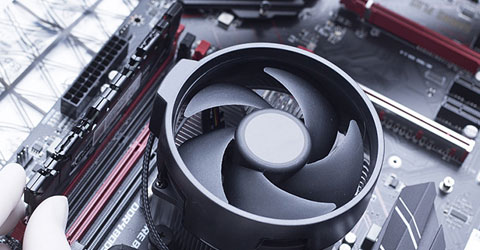
Industrial control panels, server racks, and telecommunication cabinets rely on enclosure cooling fans to maintain optimal operating temperatures for sensitive electronics. Precision manufacturing ensures consistent airflow and quiet operation, preventing hotspots and reducing the risk of component failure. High-precision fans also integrate seamlessly with enclosures, minimizing vibration and structural resonance.
Motor Cooling Fans
Motors in industrial machinery generate significant heat during operation. Precision-engineered motor cooling fans efficiently remove this heat while maintaining quiet operation and long service life. Accurate blade geometry and balanced rotors help prevent motor overheating, improve energy efficiency, and reduce maintenance intervals in continuous-duty applications.
Engine Cooling Fans
Heavy-duty engines in industrial vehicles, construction equipment, or power generation systems require reliable cooling to maintain performance and prevent breakdowns. Precision-manufactured engine cooling fans deliver high airflow and stable pressure under variable load conditions. Tight tolerances and durable materials ensure fans withstand extreme temperatures, vibration, and long operational hours.
Silent and Noiseless Cooling Fans
Applications such as medical equipment, laboratories, offices, or data centers demand silent or noiseless cooling fans. Precision manufacturing reduces tonal noise, mechanical vibration, and airflow turbulence, ensuring a quiet working environment without compromising cooling efficiency. These fans maintain high reliability even in sensitive, noise-critical applications.
DC and AC Cooling Fans
DC cooling fans (including 12V fans) and AC cooling fans are widely used in industrial electronics, power supplies, renewable energy systems, and automation equipment. Precision-engineered fans ensure consistent rotational performance, optimized airflow, and minimal vibration, which is essential for energy efficiency and system reliability in both high- and low-voltage applications.
High-Density or Compact Systems
Precision manufacturing is particularly important for compact or high-density systems, such as edge computing devices, robotics, or tightly packed control panels. In these environments, airflow pathways are limited, and even minor imperfections can cause turbulence, hotspots, or excessive noise. Precision fans maximize cooling efficiency while fitting into tight spaces without compromising performance.
Conclusion
Precision manufacturing ensures industrial cooling fans deliver reliable airflow, reduced noise, and long-lasting performance. From enclosure and motor cooling to silent or engine applications, precision-engineered fans protect critical equipment, reduce maintenance, and improve efficiency.
Ready to upgrade your cooling solutions? Contact our experts today to find the perfect precision fan for your system.
Read more:
https://www.yccfan.com/articledetail/noise-control-in-industrial-cooling-fans.html