






What Are the Different Types of Cooling Fans?
In this guide, we’ll break down the main types of cooling fans by airflow structure—axial, centrifugal/blower, cross-flow, and other variants—then connect those designs to real-world applications, from electronics and HVAC to automotive. Finally, we’ll cover why environmental protection (like IP ratings and corrosion resistance) can be just as important as airflow when you need long-term, stable operation.
Cooling fans categorized by airflow type
Type | Airflow / Structure | Strengths | Best for | Common examples |
Axial Fan | Air moves parallel to the shaft (straight-through) | High airflow, low pressure | Low-resistance ventilation, general cooling | PC case fans, equipment vents, heat sinks |
Centrifugal / Blower | Air in at center, out at 90° | High pressure, handles resistance | Ducted airflow, filters, dense fins | Laptop blowers, AC ducts, control cabinets, dust ventilation |
Cross-flow / Tangential | Long cylindrical impeller creates a wide air sheet | Even, gentle airflow across a surface | Broad area cooling, uniform discharge | AC indoor units, air curtains, surface cooling |
Mixed-Flow | Hybrid of axial + centrifugal | Balanced airflow + pressure | Mid-resistance systems | Compact HVAC, equipment cooling |
Counter-Rotating Axial | Two axial stages, opposite rotation | Higher pressure, focused flow | High-resistance cooling with axial form | High-performance equipment fans |
Vane Axial | Axial fan with guide vanes | Smoother flow, higher static pressure | Ducts, improved efficiency | Industrial ventilation, HVAC |
Squirrel Cage (Centrifugal) | Multi-blade centrifugal wheel | Stable pressure, common HVAC design | Ducted systems, air handling | HVAC blowers, air handlers |
Deeper Breakdown of Small Cooling Fan Designs by Airflow & Structure
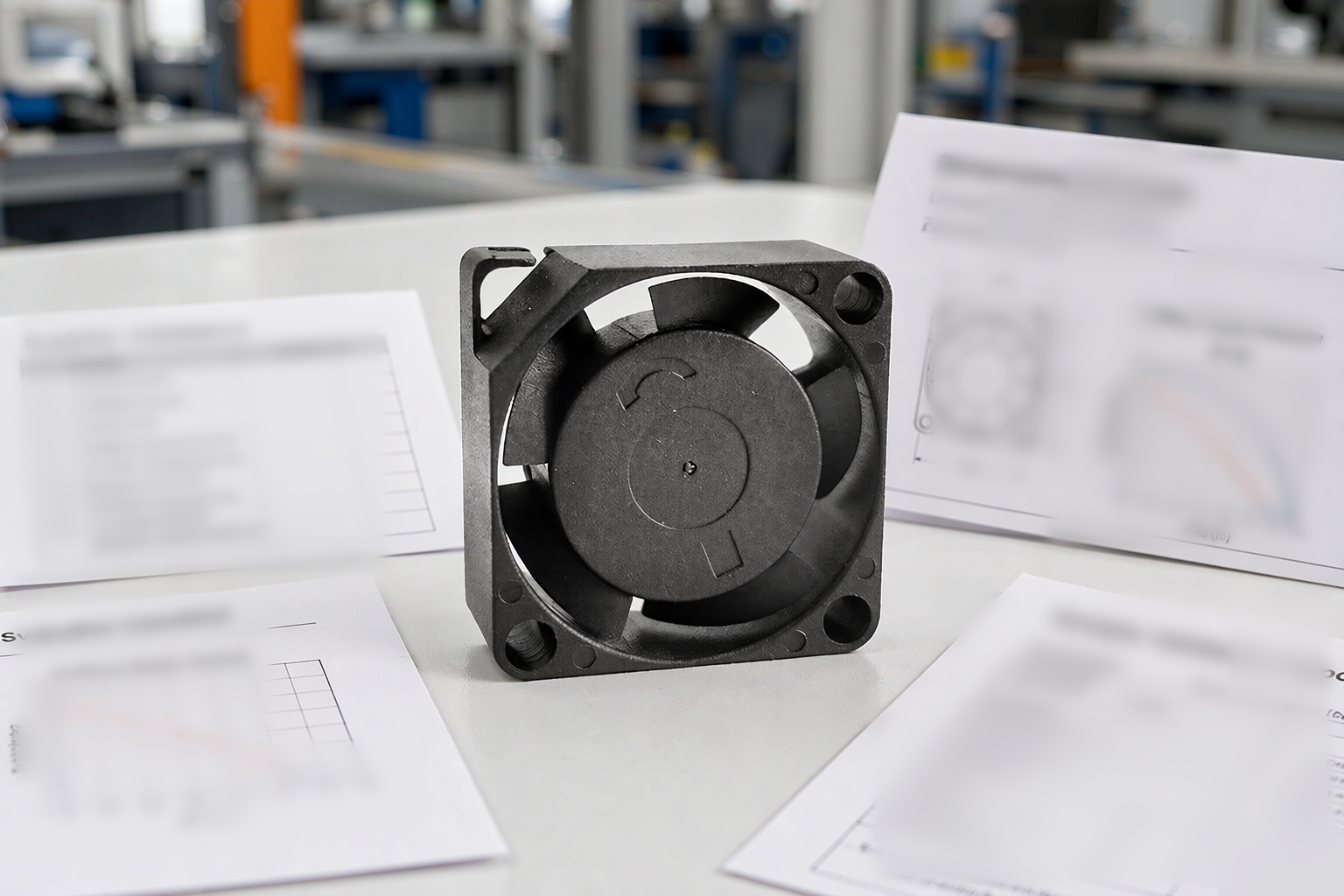
Among DC axial fan types, frame thickness and speed class decide whether a model fits general ventilation or a concentrated hotspot.
1.Axial family variants
An axial cooling fan moves air straight along the shaft, so it performs best in open layouts where the airflow path is short and resistance is low. As soon as you introduce grills, filters, or tighter internal spaces, small design changes can make a big difference. Tube axial fans place the blades inside a short duct to guide the flow and reduce backflow, which is why they’re common in electronics and compact enclosures. Vane axial fans add guide vanes to straighten the airflow, typically improving static pressure and keeping performance steadier when the system isn’t “free-flowing.” For higher-resistance setups, counter-rotating axial designs use two impellers spinning in opposite directions to build more pressure while still keeping the familiar axial form factor.
2.Centrifugal variants
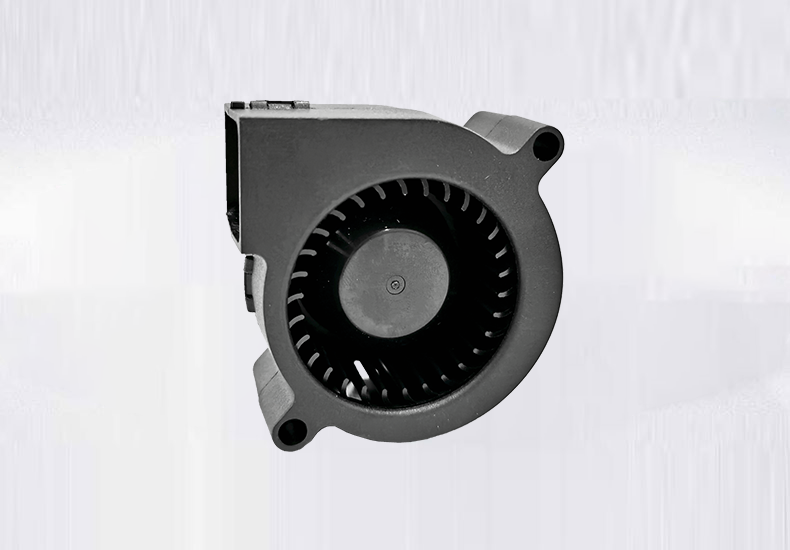
When air has to travel through ducts, tight bends, or dense heat sinks, a centrifugal (blower) small cooling fan is often the better match. It pulls air in and sends it out through a side outlet, which helps it generate the pressure needed to push through restrictive paths. Squirrel cage blowers—built with many narrow blades—are widely used in HVAC and air-handling systems because they produce stable airflow and integrate well with ductwork. Within this category, blade design shapes performance: forward-curved blades can deliver strong airflow at lower speeds, backward-curved blades are often chosen for better efficiency and a broader stable range, and radial blades tend to handle dust and debris better, making them a practical pick for tougher environments.
3.Cross-flow details
A cross-flow (tangential) cooling fan is built for uniform coverage. Instead of creating a narrow, high-velocity jet, it produces a wide, even sheet of air along the length of the impeller, helping reduce temperature differences across a surface. That’s why it’s commonly found in air conditioner indoor units, air curtains, and similar products where smooth airflow and consistent distribution matter more than high pressure.
4.Mixed-flow positioning
A mixed-flow cooling fan sits between axial and centrifugal designs, combining some of the pressure capability of a blower with a form factor closer to an axial fan. It’s a good middle option when a standard axial fan starts to struggle against resistance, but a centrifugal blower feels too bulky or forces an awkward layout. In many compact systems, mixed-flow fans are used to gain “just enough” pressure while keeping integration relatively straightforward.
Mini Cooling Fans by Application & Form Factor
1.Electronics Cooling (PCs, servers, industrial control)
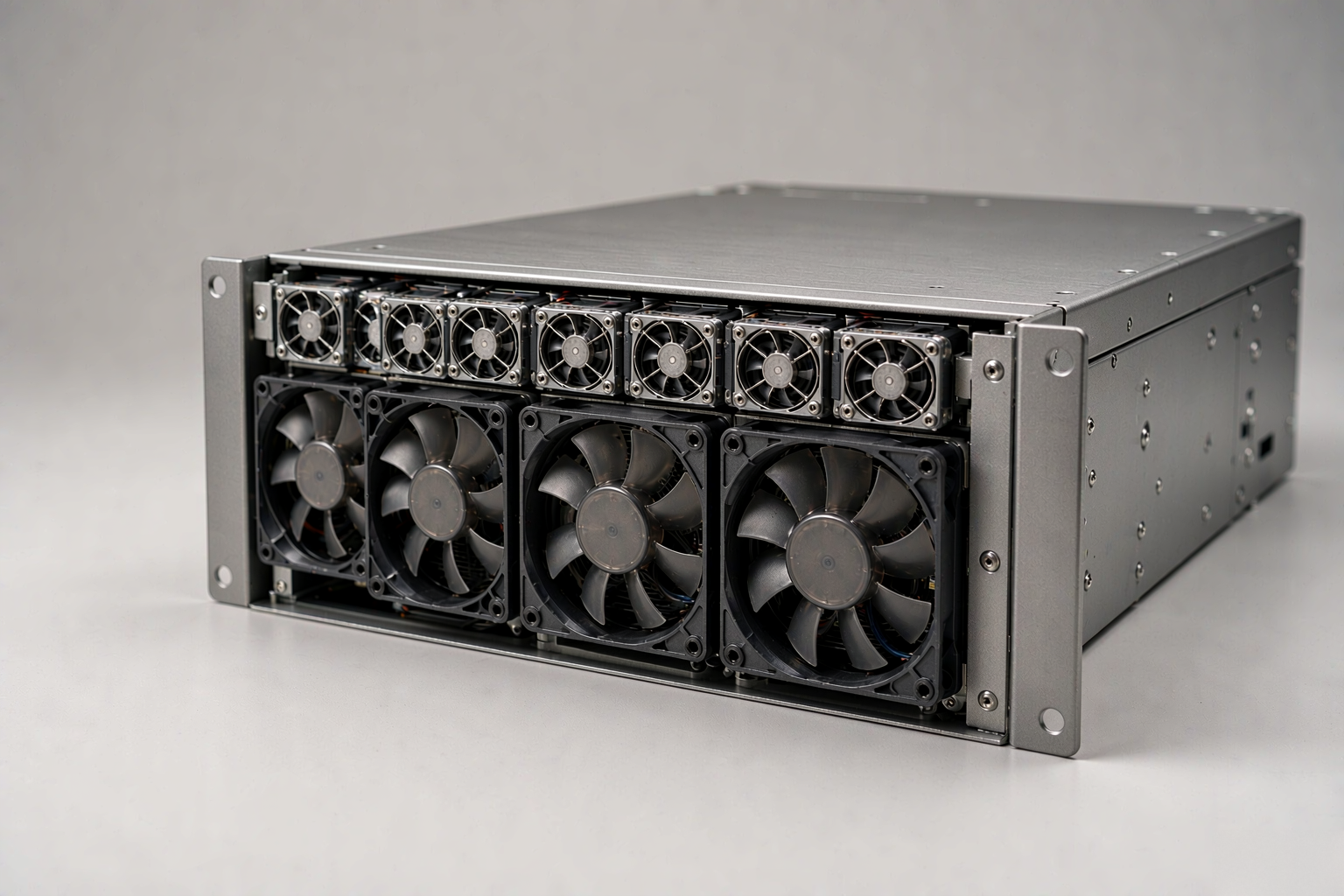
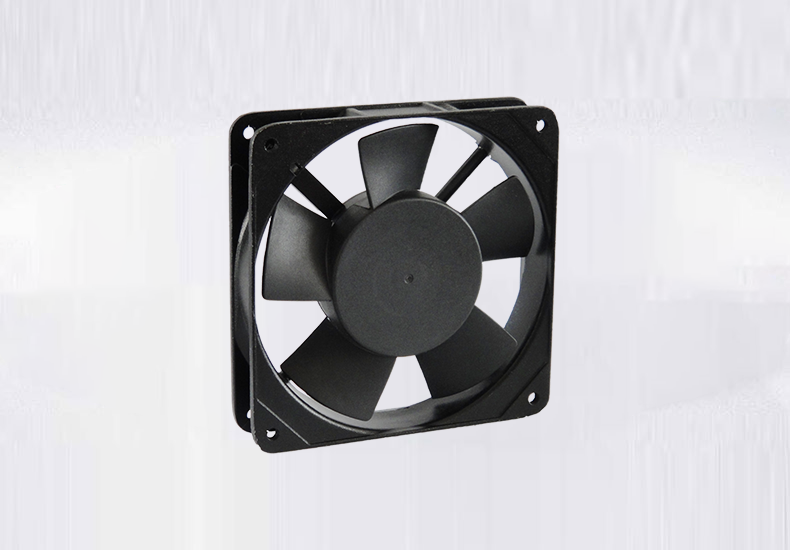
In electronics, choosing a cooling fan is mostly about one thing: how much resistance the air has to fight through. If the airflow path is straightforward—clean front-to-back, few obstructions—axial fans are usually the simplest and most efficient option. As the layout gets tighter or more “blocked” (dense heat sinks, filters, narrow channels, compact housings), blower fans tend to perform more consistently because they handle higher resistance better. You’ll also notice the market moving toward smaller footprints—slim axial fans for space-limited builds, and micro blowers for laptops, mini PCs, and sealed control boxes.
2.HVAC / Industrial Cooling Fan
HVAC and industrial setups vary a lot, so mini fan selection is usually driven by the airflow path. When the job is to move a large volume of air in a relatively open environment, large axial fans are common. Once ducts, filters, long runs, or higher pressure requirements come into play, centrifugal fans often become the better choice because they can push air through the system more reliably. In big open spaces—warehouses, factories, gyms—HVLS (High Volume, Low Speed) fans serve a different purpose: they keep air moving gently over a large area to improve comfort and reduce stagnant zones, without creating strong drafts.
3.Personal / Home Fans
At home, mini cooling fans are judged more by comfort than by pressure performance. Tower fans are popular when you want a slim shape and wide oscillation. Pedestal fans are a go-to for adjustable height and stronger directional airflow. Box fans are simple and effective for basic room ventilation, while desk fans focus on close-range cooling at a workstation. For most users, the deciding factors are straightforward: airflow that feels pleasant, coverage that reaches where you sit, and low noise—especially for bedrooms and offices.
4.Automotive Cooling
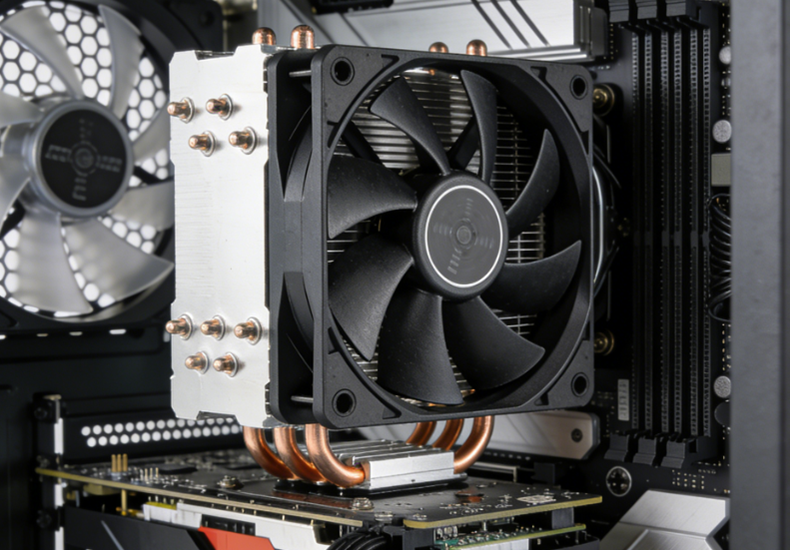
Automotive mini cooling fans live in a tough world: heat, vibration, dust, and constantly changing conditions. Engine cooling typically uses either mechanical fans (often clutch-based) or electric fans that adjust based on temperature and vehicle speed. Modern vehicles increasingly rely on electric fans because they’re easier to control and package—so the fan speeds up when the radiator or condenser needs airflow, then slows down to save energy and reduce noise when it doesn’t.
Industrial Cooling Fans by Power Input
1.AC fans
AC cooling fans are a common choice in HVAC and industrial equipment because they match the power infrastructure already on site and work well for continuous operation. They’re frequently used in larger formats and higher-duty setups where the goal is steady airflow and simple, reliable deployment.
2.DC fans
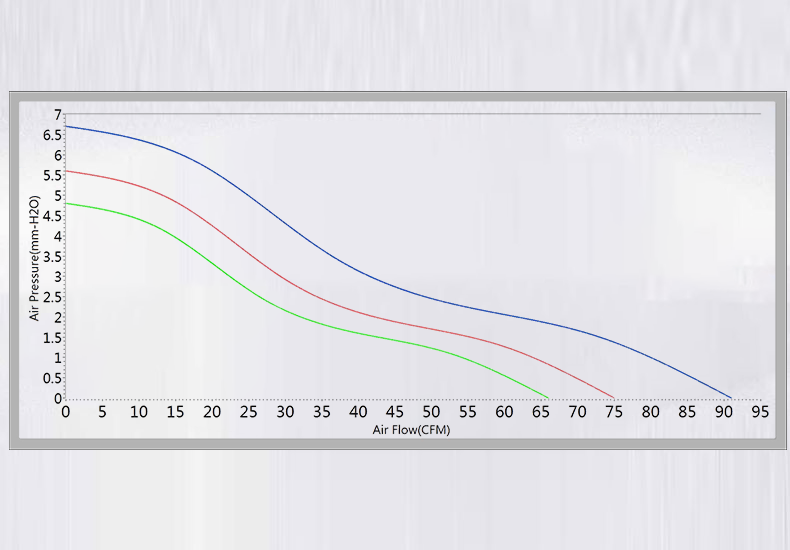
DC cooling fans are the default in electronics because they fit naturally with DC power rails and are easier to manage from a control perspective. Many support PWM speed control, and a tach output is often available for feedback—handy for fan health checks, thermal control loops, and fault alerts in systems like servers and control cabinets.
Environmental-Rated Cooling Fans: IP Ratings, Waterproof Motors & Corrosion Resistance
This is where many projects slip up. You can select the right airflow design, but if the environment rating doesn’t match real conditions, a cooling fan may still fail early—especially outdoors or in humid, dusty, and corrosive environments.
1.What an IP rating really tells you (IP54 / IP67 / IP68)
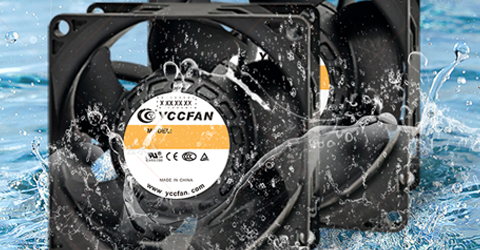
An IP rating is a simple shorthand for two protections: dust ingress (first digit) and water ingress (second digit). In day-to-day terms, it helps you judge whether a cooling fan can cope with dust, splashing, wash-down cleaning, or even immersion. Higher IP levels start to matter when your application involves outdoor cabinets, frequent condensation, heavy dust, regular cleaning routines, or coastal exposure.
2.How IP68 cooling fans are typically built
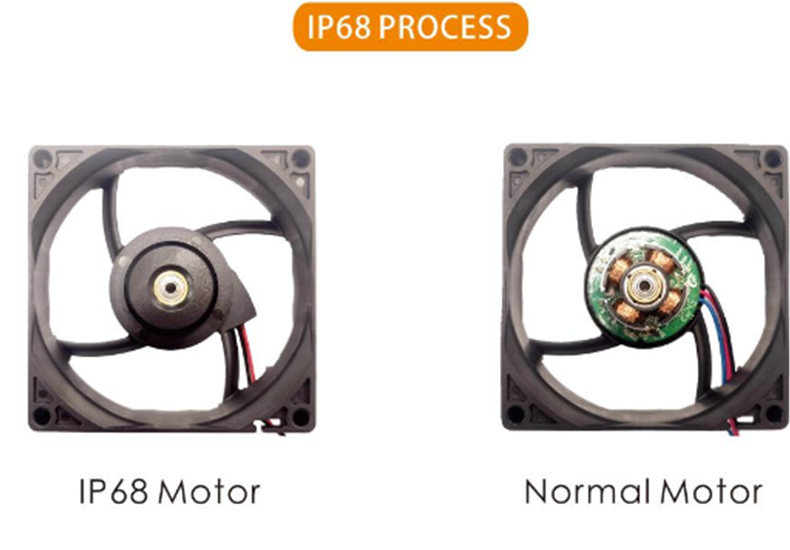
IP68 protection usually comes from a package of design measures, not a single upgrade:
Seal the key leak paths: shaft sealing, housing gaskets, and cable exits are typical weak points—most water ingress starts at these interfaces.
Protect the internals: conformal coating or potting (often PU polyurethane) helps keep moisture out and improves durability in humid or salty air.
These improvements come with trade-offs. Tighter sealing and potting can increase airflow resistance, add weight, raise cost, and sometimes affect thermal behavior. The goal is to choose the protection level that fits your environment—rather than automatically spec’ing the highest IP for every cooling fan.
YCCFAN’s portfolio includes axial fans and blowers, with OEM/ODM customization across common size ranges (roughly 20–250 mm), which can be useful when an application needs a specific form factor plus IP-rated protection.
3.Salt spray & corrosion resistance: why it matters
Salt and corrosive atmospheres can shorten fan life faster than many teams expect—and failures can look “random” later. Typical issues include bearing corrosion, winding/coil damage, connector degradation, and imbalance that shows up as rising noise and vibration. The risk is highest in coastal cabinets, ports, offshore installations, and outdoor telecom/energy deployments with ongoing exposure.

4.Trade-offs: what you gain vs what you may give up
Environmental-rated designs bring clear benefits: better reliability, longer service life, fewer unexpected shutdowns, and reduced maintenance. The trade-offs are real too: higher unit cost, possible performance differences versus a non-sealed fan of the same size, and lower serviceability—especially with heavily potted builds. For a blog, this section reads best with a simple decision table showing when IP68 is truly required and when IP54/55 is already sufficient for the cooling fan’s working environment.
Read more:
https://www.yccfan.com/articledetail/can-i-replace-my-laptop-cooling-fan-myself.html
Conclusion
There’s no “best” cooling fan—only the best match for your airflow path, resistance level, space limits, and operating conditions.
Explore the main types of DC cooling fans to shortlist candidates for your airflow path and resistance level.